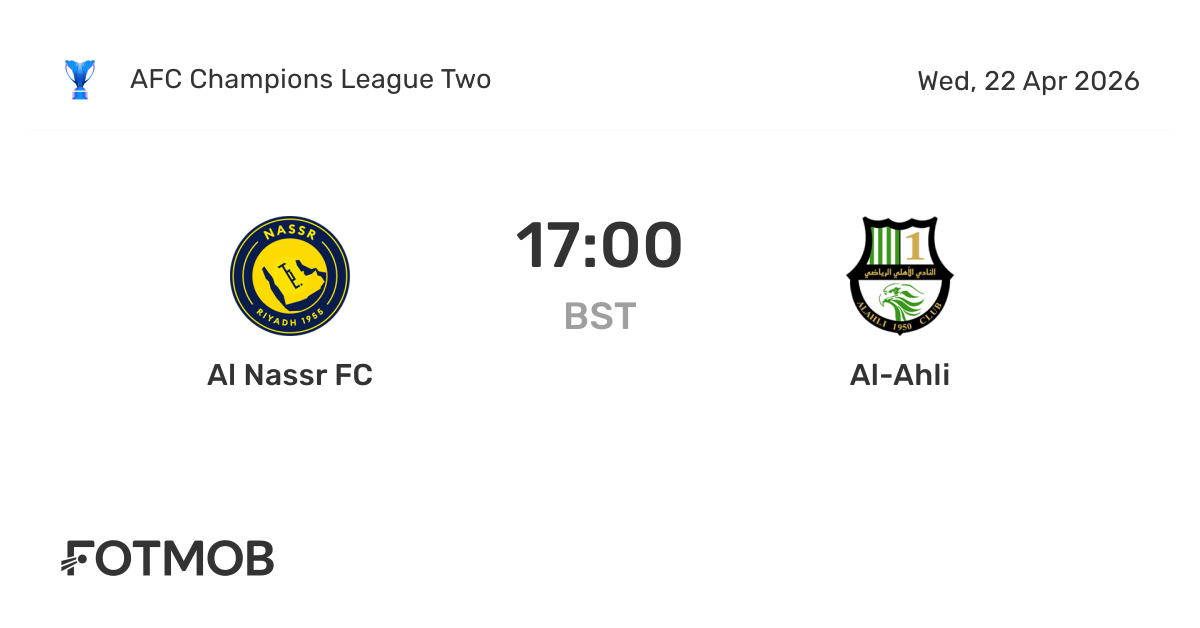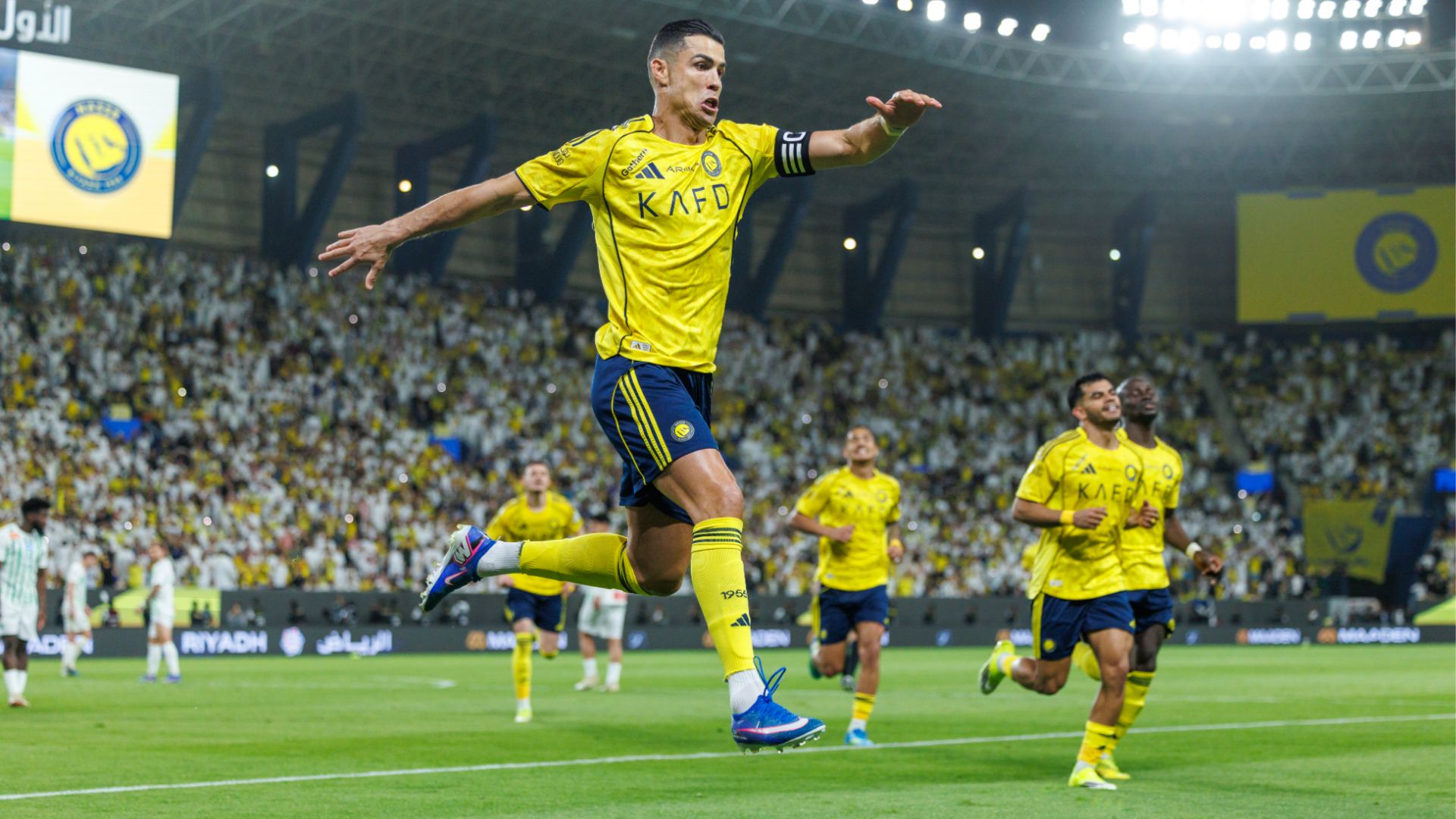
The 2026 AFC Champions League Two semi-final between Al Nassr FC and Qatar’s Al-Ahli, hosted at Dubai’s Zabeel Stadium on April 22, represents a critical intersection of high-capital investment and tactical evolution. Beyond the Riyadh-Doha rivalry, the fixture serves as a stress test for two distinct philosophical approaches to continental dominance.
Systemic Architecture: Verticality vs. Compactness
Al Nassr manager Jorge Jesus has optimized a 4-4-2 system designed to maximize vertical progression. By pairing Cristiano Ronaldo with João Félix, Jesus creates a strike partnership defined by elite positional rotation. This offensive engine is sustained by Kingsley Coman and Sadio Mané, whose roles involve stretching the lateral defensive lines to create interior channels for late midfield runs. The strategy focuses on overwhelming the opponent through sheer offensive volume and high-value crossing opportunities.
Conversely, Al-Ahli employs a 4-2-3-1 configuration that prioritizes mid-block stability. The double pivot of Ibrahima Diallo and Driss Fettouhi is engineered to neutralize Marcelo Brozović’s distribution, forcing Al Nassr into wider, less efficient possession phases. This defensive elasticity allows Julian Draxler to operate as a central creative fulcrum, seeking to exploit the space vacated by Al Nassr’s advancing full-backs during rapid transitions.
Midfield Mechanics and Distribution Flux
The match’s tempo will be dictated by the duel between Brozović’s deep-lying playmaking and Al-Ahli’s screening efficiency. If Brozović is allowed to establish rhythm with Ângelo, Al Nassr can maintain a sustained high press. However, Al-Ahli’s strategy relies on technical proficiency in tight quarters; Draxler’s ability to bypass the initial press is essential for releasing Sekou Yansané and Amidou Doumbouya on the flanks. Erik Expósito’s capacity to function as a physical hold-up presence remains the vital link between Al-Ahli’s defensive shell and their counter-attacking ambitions.
Defensive Vulnerabilities and Depth Constraints
While Al Nassr’s backline is bolstered by the veteran presence of Iñigo Martínez and the athleticism of Mohamed Simakan, injuries to Mubarak Al Buainain and Raghed Najjar have thinned their defensive rotations. This lack of depth may become an operational liability in the final thirty minutes against an Al-Ahli side that enters the fixture with a full squad. Al-Ahli’s defensive unit, led by William Troost-Ekong and Ayoub Amraoui, has remained undefeated in the tournament, though the Ronaldo-Félix partnership represents an unprecedented qualitative leap in the opposition they have faced.
Commercial and Geopolitical Context
The selection of Dubai as a neutral venue maximizes the commercial reach of the AFC’s secondary tier, leveraging the UAE’s infrastructure for global broadcasting. For Al Nassr, success is the required ROI for an aggressive recruitment cycle; for Al-Ahli, it validates a resilient, transition-based developmental model. As the Gulf’s footballing hierarchy continues to shift, this semi-final stands as a definitive benchmark for the competitive parity between the Saudi Pro League and the Qatar Stars League.