
Strategic Realignment at CVG Airport
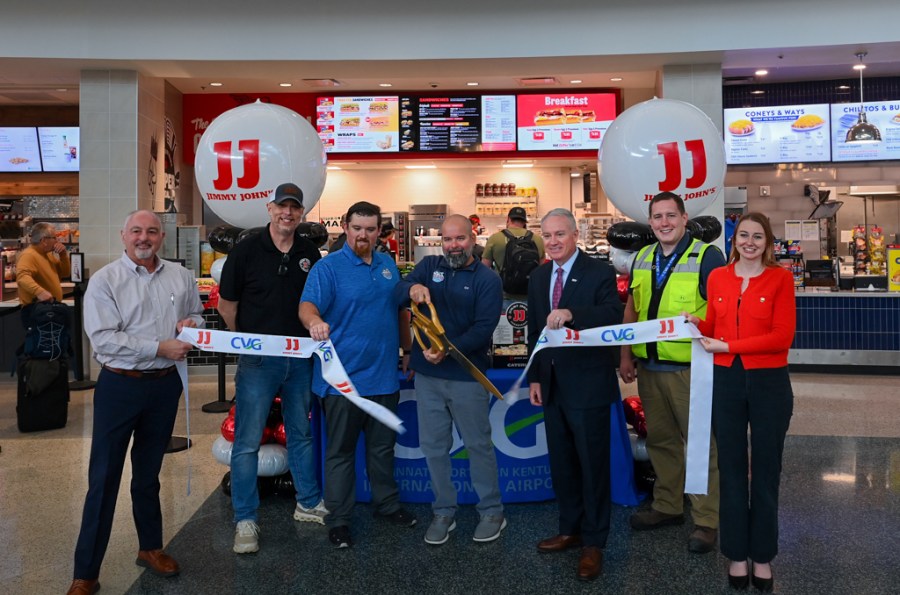
The Cincinnati/Northern Kentucky International Airport (CVG) has reached full operational capacity in its Concourse B food court with the launch of a new Jimmy John’s. This development marks a calculated retail footprint shift, as the incoming tenant occupies the space formerly held by Chick-fil-A.
The transition illustrates a growing trend in infrastructure management: optimizing high-traffic nodes to maximize throughput and profitability. By facilitating the relocation of an existing tenant to a larger footprint, the Kenton County Airport Board has effectively rebalanced its concession portfolio to meet heightened passenger demand.
Operational Efficiency and Throughput
Airport concession strategy centers on optimizing dwell time and average transaction value. The expansion of the incumbent brand suggests a data-driven response to peak-hour congestion, ensuring high-performing operators possess the physical capacity to meet throughput requirements. The introduction of a new quick-service option serves to diversify the portfolio, mitigating risks associated with single-brand reliance while enhancing service continuity during irregular operations.
The Economics of Non-Aeronautical Revenue
Board chair Chad Summe notes these adjustments are integral to passenger satisfaction and long-term financial health. Successful leasing of all available Concourse B space underscores stable demand for airport retail—a vital non-aeronautical revenue stream. By maximizing yield per square foot, CVG offsets operational costs, ultimately maintaining competitive landing fees for airline partners.
Competitive Positioning and Agility
The ability to attract and retain national brands serves as a benchmark for an airport’s competitive standing. As regional hubs vie for traveler loyalty, dining quality acts as a tangible differentiator in airport experience rankings. This realignment highlights the necessity of administrative agility, ensuring that terminal infrastructure remains synchronized with evolving consumer expectations without requiring substantial capital expenditure.
Stakeholder Alignment and Asset Utilization
The tenant swap, which involved moving an incumbent to a larger space while onboarding a new operator, reflects high-level administrative coordination. By maintaining full occupancy, the airport reduces revenue leakage, ensuring Concourse B remains a high-utility asset. Performance metrics from this transition will serve as a baseline for future infrastructure planning and space allocation across the wider terminal complex.