The budgetary impasse in Washington, D.C., regarding Department of Homeland Security (DHS) appropriations has transitioned from a political friction point into a systemic operational risk for United States aviation. As federal funding remains suspended, the Transportation Security Administration (TSA) is experiencing an unprecedented surge in unscheduled absences, pushing staffing levels below critical thresholds required for terminal security.
While the TSA lacks the statutory authority to unilaterally shutter an airport, its mandatory role in passenger and crew screening creates a functional veto over commercial departures. Federal law prohibits the takeoff of any commercial aircraft without standardized screening; therefore, a facility unable to staff its checkpoints effectively loses its operational authorization. Acting Deputy Administrator Adam Stahl has characterized the potential for total suspension of services at regional hubs as a mathematical certainty if labor trends persist.
Quantifying the Staffing Deficit: Regional Case Studies
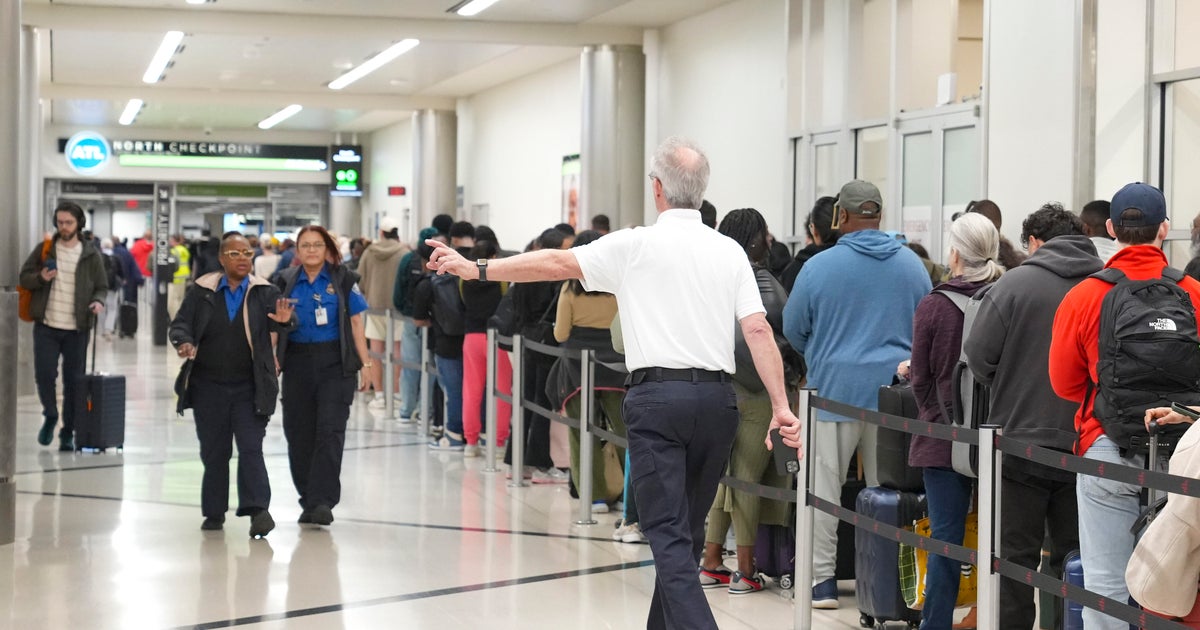
Financial attrition has reached a breaking point as the workforce enters its second pay cycle without compensation. At William P. Hobby Airport in Houston, call-out rates peaked at 40.8%, forcing remaining personnel to manage standard passenger volumes with nearly half the mandated resources. This labor deficit is mirrored across the national airspace (NAS): Louis Armstrong New Orleans International reported a 36% absence rate, while Hartsfield-Jackson Atlanta International surpassed 34%.
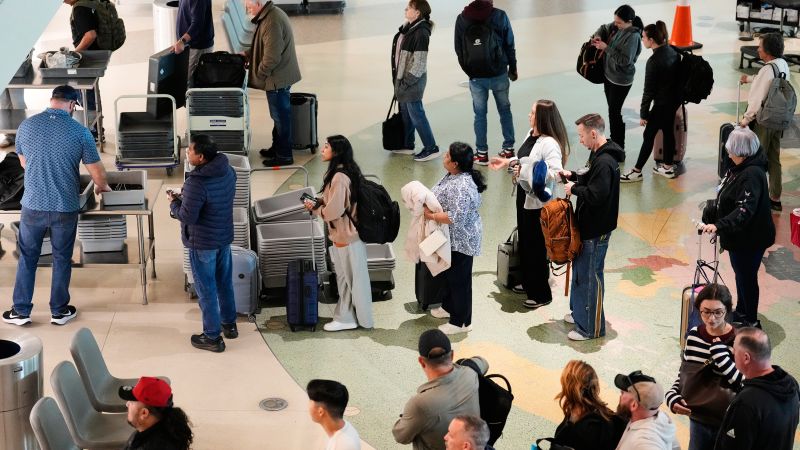
These disruptions create a non-linear impact on throughput. In Atlanta, security wait times have exceeded two hours, compelling travelers to arrive three hours prior to departure. This shift challenges the structural capacity of terminal landside areas, which were not engineered to hold high-density crowds for extended durations, thereby creating secondary safety and logistics concerns for airport authorities.
Regulatory Constraints and Macroeconomic Implications
The intersection of federal safety mandates and labor shortages acts as a hard cap on the operational capacity of the U.S. aviation sector. When staffing falls below the minimum viable security posture, the TSA is forced to consolidate lanes or suspend screening entirely. This regulatory bottleneck generates significant economic drag; the grounding of flights at major hubs ripples through global supply chains and corporate travel schedules, illustrating the fragility of essential infrastructure when decoupled from predictable funding.
Beyond immediate tactical delays, the stalemate threatens long-term institutional stability. Union representatives and agency leadership warn of permanent attrition. The psychological toll of high-stress security work without financial compensation incentivizes experienced officers to migrate to the private sector. Replacing this specialized workforce is a time-intensive process, involving rigorous certification and training that cannot be expedited without compromising national security standards.
Strategic Outlook for the Travel Industry
The timing of the DHS lapse coincides with peak seasonal travel, creating a volatile environment for airlines and hospitality providers. Carriers face mounting costs associated with rebooking logistics and missed connections, while consumer confidence in the reliability of the NAS continues to erode. For stakeholders, the current environment necessitates a defensive posture, relying on real-time data to mitigate the unpredictability of security processing times.
Ultimately, the crisis underscores the vulnerability of critical infrastructure to legislative volatility. By tying TSA funding to broader immigration policy debates, the legislative process has introduced a systemic risk that remains outside the control of aviation stakeholders. Until federal appropriations are restored, the integrity of the U.S. aviation system rests upon a workforce whose participation is increasingly unsustainable.