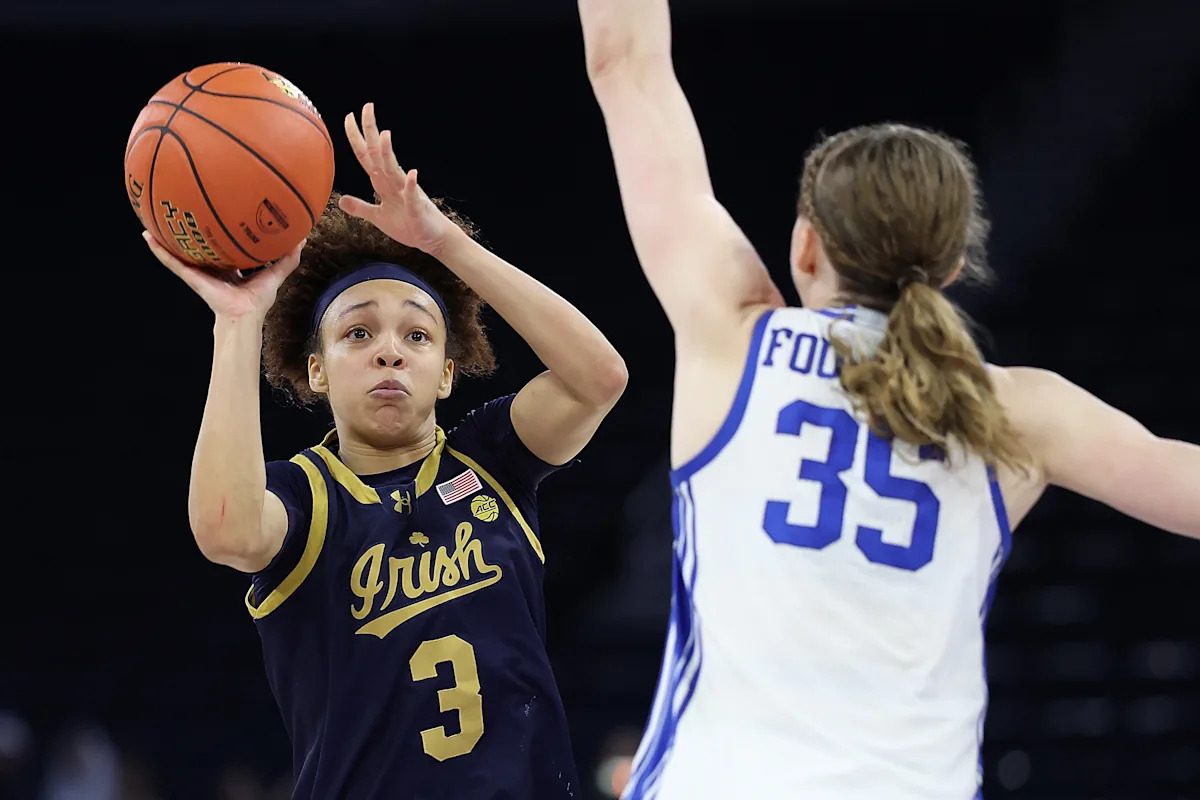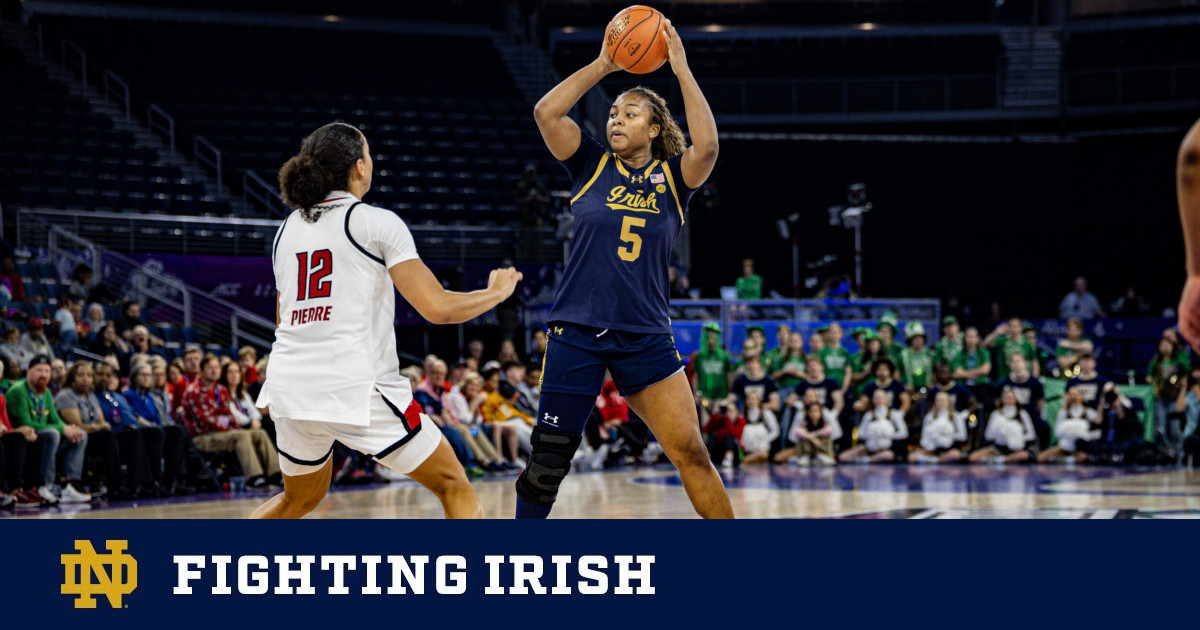
The No. 1 seed Duke Blue Devils punched their ticket to the ACC Tournament championship game following a grueling 65-63 triumph over the No. 5 seed Notre Dame Fighting Irish in Duluth, Georgia. This narrow two-point margin immediately halts Notre Dame’s impressive seven-game competitive run, forcing a sharp recalibration of their postseason trajectory.
Analytical Deep Dive: Defensive Sequencing and Physical Control
Duke’s capacity to secure victory hinges on superior late-game defensive execution. The Blue Devils forced three consecutive failed possessions by Notre Dame in the final sequence, demonstrating higher composure and strategic sequencing under extreme duress. This resilience in high-leverage moments suggests an elevated readiness for single-elimination NCAA Tournament environments.
The core statistical disparity favoring Duke lies in controlling the physical dimensions of the contest. Duke registered 47 rebounds against Notre Dame, along with nine steals. This rebounding dominance in half-court sets denies second-chance opportunities to the opponent and facilitates transition defense, effectively throttling Notre Dame’s offensive flow and exposing systemic vulnerabilities against elite defensive pressure.
Leverage Points: Individual Performance vs. Scheme Cohesion
While Hannah Hidalgo delivered another elite scoring performance with 24 points—her seventh consecutive game exceeding 23 points—the final result illustrates the limitations of relying solely on high-volume individual output against organized, high-intensity defensive schemes. Conversely, Duke’s balanced scoring, led by Taina Mair (16 points) and Toby Fournier (14 points, 8 rebounds, 4 blocks), proved significantly more resilient.
Fournier’s four blocks were crucial structural deterrents at the rim, significantly altering Notre Dame’s shot selection portfolio by forcing contested drives or lower-percentage perimeter attempts, directly impacting their overall offensive efficiency metrics for the game.
Contextual Shift: Streak Termination and Seeding Impact
The termination of Notre Dame’s seven-game win streak marks a definitive structural break in their momentum narrative. Entering the contest at 22-9, the loss transitions the Irish to a 22-10 record, subtly shifting seeding projections and potentially exposing them to different qualities of opponent early in the NCAA bracket.
The earlier quarterfinal success, driven heavily by Hidalgo (25) and Iyana Moore (20), established a high offensive baseline that Duke successfully suppressed in the semifinal. While Moore added four triples (her 10th game with 4+ threes), Duke’s scheme successfully limited the quality and volume of those high-leverage perimeter looks.
Stakeholder Confidence and Tournament Validation
For Duke, this clutch victory over a surging conference rival in a high-leverage semifinal setting validates their top seeding and reinforces the efficacy of their foundational emphasis on defensive rebounding and turnover creation. This institutional validation directly translates to increased confidence entering the final and future national rounds.
For Notre Dame, the narrow margin—erasing a significant 15-2 early deficit—demonstrates high in-game coaching adaptability. However, the ultimate inability to convert in the final possessions underscores a critical need for refinement in late-possession decision-making when facing suffocating defensive pressure.
Forward Trajectory in the ACC Landscape
Duke’s advance sets the stage for a championship confrontation against the winner of the UNC/Louisville semi, positioning them as the benchmark of ACC tournament strength. This maximum exposure in the final enhances national perception and solidifies bracket positioning considerations.
Operationally, Duke imposed a lower tempo and higher turnover environment (14 forced turnovers). Cassandre Prosper’s 13 points confirm her status as a vital offensive component, yet the result suggests her production was successfully contained relative to the defensive attention Duke allocated.
Media Visibility and Competitive Narrative
The high-visibility broadcast on ESPN2 amplified the narrative of Duke’s defensive tenacity against Hidalgo’s individual brilliance. Such exposure is pivotal for program prestige and recruiting momentum in the highly scrutinized landscape of major conference basketball.
Social engagement tracking confirms dedicated following, but the immediate narrative shifts from Notre Dame’s streak to the missed opportunity for the conference crown. Duke’s visible celebrations, exemplified by Taina Mair’s reaction, underscore the psychological premium placed on winning high-stakes, one-possession contests against direct rivals.
Structural Analysis: Imposing Tempo
Duke’s defensive statistics were a structural imposition of their preferred game tempo. By maximizing rebounds and creating turnovers, they negated Notre Dame’s ability to establish offensive rhythm, forcing the trailing team to burn energy overcoming both the scoreboard and systemic inefficiency.
The initial 10-0 Duke run immediately placed Notre Dame in a reactive posture, dependent on individual scoring bursts. While Notre Dame showed resilience (cutting the lead to 15-11), Duke’s ability to finish the first quarter ahead indicated structural robustness against initial counter-punches.
Future Conference Dynamics
This result solidifies Duke’s dominance within the ACC bracket, successfully neutralizing a motivated No. 5 seed. Future ACC title contenders must demonstrate a significantly higher rate of turnover generation and superior interior defense against Duke’s size advantage.
Notre Dame’s performance serves as a critical stress test, highlighting an over-reliance on their primary guards. The 10 points from Vanessa de Jesus show a necessary level of scoring distribution, but the analysis confirms it remains insufficient against top-tier defensive schemes when the primary threats are neutralized.
Post-Game Recalibration Mandate
For Notre Dame, the priority shifts immediately to NCAA Tournament preparation, using the film from this narrow loss to diagnose deficiencies in ball security and offensive spacing under elite defensive duress. Psychological management of the streak’s end is crucial to prevent momentum erosion entering the national tournament.
Duke enters the final with confirmed operational momentum, validated by successfully navigating a tight, one-possession game. The experience of closing out against Notre Dame three times on the final possession is a tangible asset for navigating similar high-leverage scenarios in subsequent national rounds.