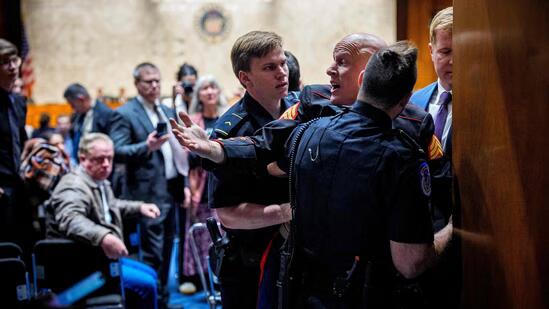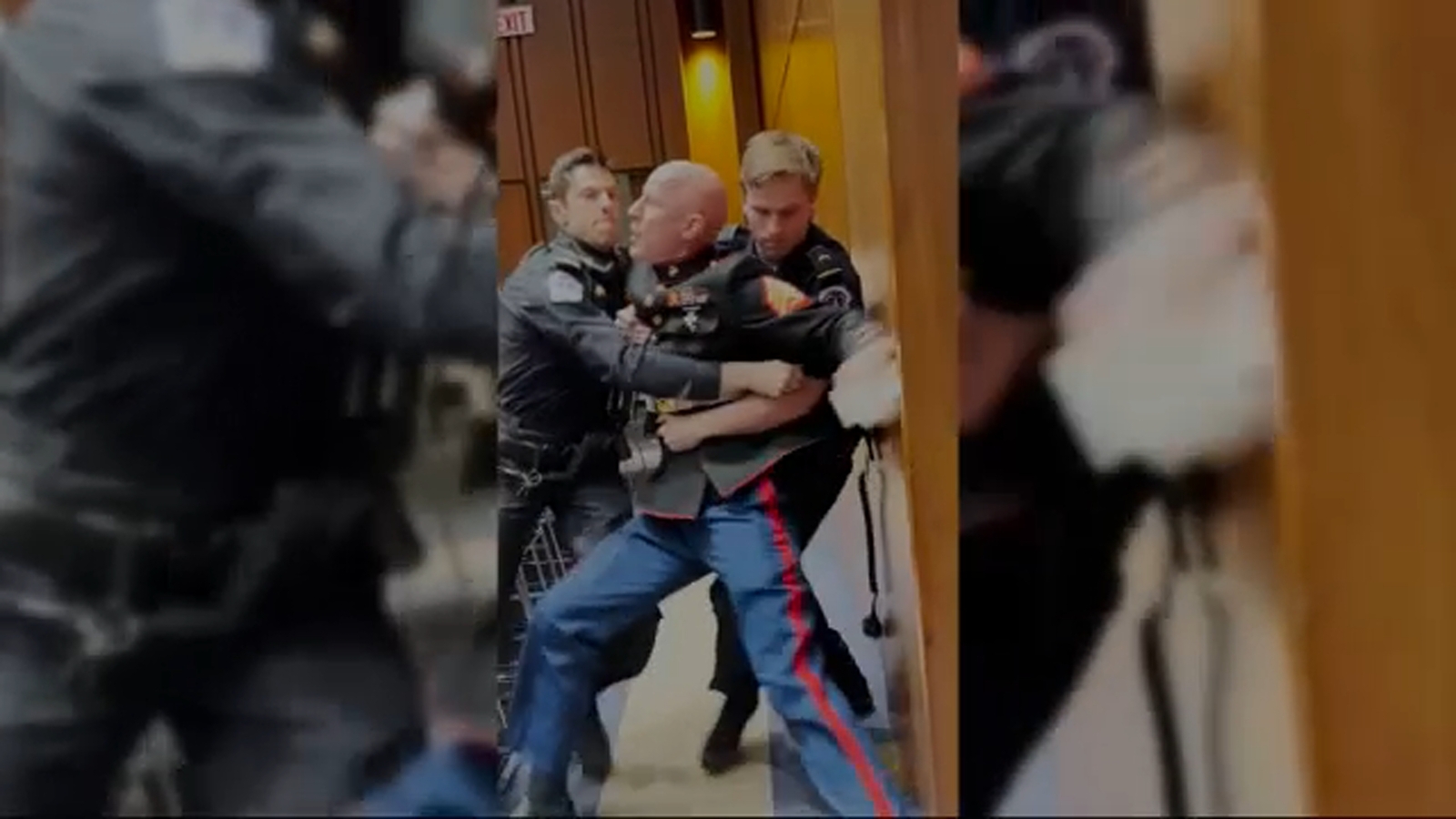
Brian C. McGinnis, a senior firefighter from North Carolina and a Marine Corps veteran, was arrested for disrupting a Senate Armed Services Committee hearing on March 4, 2026. His protest against U.S. policy toward Iran and Israel, which involved vocal objections and physical resistance to Capitol Police and Senator Tim Sheehy, underscored critical intersections of public dissent, national security discourse, and institutional security protocols.
Security Protocols Under Scrutiny
The incident immediately spotlighted security measures within Senate hearing rooms, particularly concerning individuals with a history of political engagement, such as McGinnis’s prior Green Party candidacy. His forceful removal, involving multiple officers and Senator Sheehy’s physical intervention, suggested a breakdown in de-escalation or an immediate perceived threat, exposing vulnerabilities in managing disruptive elements during high-stakes governmental proceedings.
Capitol Police statements detailed McGinnis’s resistance and the dangerous situation he created, citing charges of assaulting an officer, resisting arrest, and unlawful demonstration. This framing positions the event as a criminal act, reinforcing law enforcement authority and the integrity of legislative processes, while also drawing attention to the methods used to restore order.
Escalating Dissent and Policy Implications
McGinnis’s protest, targeting U.S. actions concerning Iran and Israel, signals a segment of public sentiment viewing current foreign policy as conflict-prone. His background as a Marine veteran adds complexity, indicating dissent is emerging from within the veteran community, potentially amplifying its resonance and challenging official narratives.
Such public dissent within a Senate hearing carries strategic implications beyond immediate disruption. It indicates growing intolerance for perceived escalatory foreign policy, particularly in volatile regions. This can pressure policymakers to articulate and justify strategies more clearly, or risk alienating segments of the public, including those with military experience.
Stakeholder Exposure and Institutional Response
For the U.S. Capitol Police, the incident challenges their public image and operational effectiveness, necessitating a defense of their response and a reassessment of protocols for managing protests in secure federal facilities. Senator Sheehy’s direct physical involvement in subduing the protester raises questions about appropriate legislative engagement in law enforcement actions.
The Raleigh Fire Department’s decision to place McGinnis on administrative leave reflects an institutional imperative to maintain public trust and operational continuity, separating his professional duties from personal political actions. This highlights potential reputational and operational risks for public sector employees whose conduct faces public and legal scrutiny.
Media Framing and Public Perception
The widespread dissemination of video footage amplified the incident’s reach, shaping public perception of both the protest and the response. This visual evidence is crucial in public discourse, enabling analysis of events and influencing broader narratives on dissent, law enforcement tactics, and foreign policy debates.
The narrative surrounding McGinnis’s protest is contested: some view him as a courageous dissenter, others as a disruptive threat. This dichotomy reflects societal divisions on foreign policy and the effectiveness of citizen opposition within the established political framework.
Broader Systemic Tensions
This event exemplifies tensions between secure legislative processes and the right to protest. It suggests existing public engagement mechanisms for foreign policy debates may be perceived as insufficient, leading to more direct forms of expression within government spaces.
Policymakers’ strategic decisions regarding the Middle East, particularly Iran and Israel, now face more visible public reaction. The capital required for military or diplomatic initiatives in these regions may encounter increased scrutiny and opposition influenced by such dissent.
Operational and Capital Flow Implications
While immediate financial impact is limited to legal fees and potential departmental costs, broader capital implications involve public sentiment influencing legislative priorities and resource allocation for foreign policy and defense. Sustained opposition could theoretically impact defense spending or diplomatic strategies long-term.
Operationally, the incident necessitates a review of security protocols in legislative settings. This includes balancing public accessibility with preventing disruptions that compromise hearing integrity or participant safety. Investment in enhanced security or revised law enforcement training may be considered.
Performance Leverage and Future Trajectories
Policymakers’ leverage lies in addressing the root policy concerns driving McGinnis’s protest to mitigate future disruptions. Conversely, dismissiveness or an over-securitized response could alienate the public and embolden further dissent, creating a cycle of tension.
The event’s future impact trajectory depends on institutional responses to balancing order and dissent. How Capitol Police and lawmakers handle the aftermath will influence future public-legislative interactions, especially on contentious foreign policy issues.
Institutional Strategy and Media Context
Media framing is crucial. Highlighting specific aspects of the protest and response shapes public opinion and influences political actors’ strategic calculations. The narrative of a veteran protesting war, juxtaposed with forceful removal, creates a powerful visual that complicates official messaging.
Institutions—Senate committees, law enforcement, McGinnis’s employer—must manage reputational fallout. Strategic responses, including policy adjustments or public relations efforts, will shape the evolving landscape of public engagement with government functions.
Cultural and Structural Underpinnings
This incident taps into cultural skepticism towards U.S. foreign policy and a tradition of protest. The structural context involves political discourse increasingly playing out in public, amplified by digital media, making disruptions highly visible and potentially influential.
McGinnis’s identity as a firefighter and Marine veteran challenges stereotypes about protesters and their motivations, complicating straightforward narratives and necessitating nuanced consideration of the issues.
Concluding Analysis: A Microcosm of Broader Tensions
Brian McGinnis’s removal from a Senate hearing mirrors larger societal and political tensions. It highlights debates on U.S. foreign policy in the Middle East, methods of dissent, and security challenges in legislative environments. The incident underscores the need for robust policy debate, effective de-escalation, and a clear understanding of citizen-governmental dynamics.