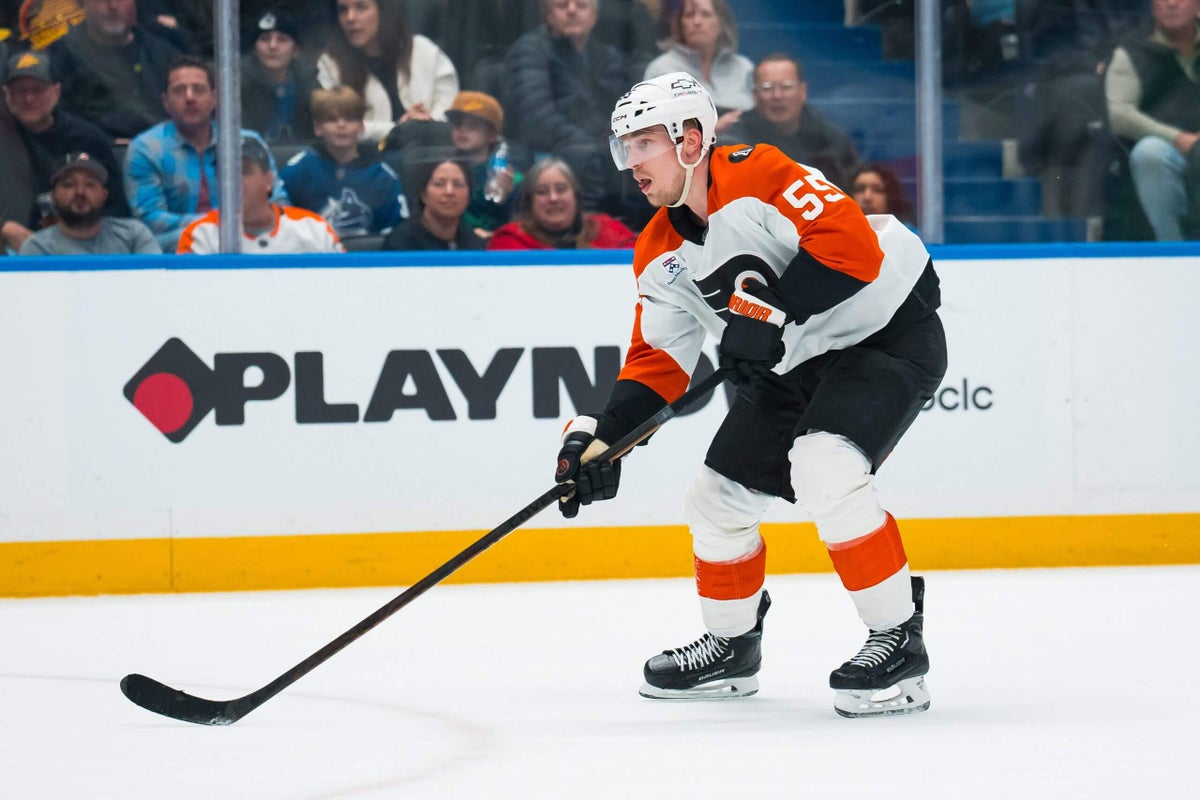
The Philadelphia Flyers have executed a calculated structural realignment ahead of the Friday trade deadline, prioritizing long-term defensive control over middle-six offensive depth. By trading 24-year-old winger Bobby Brink to the Minnesota Wild for defenseman David Jiříček, General Manager Daniel Briere has addressed positional scarcity. This move converts 201 games of NHL experience into a high-pedigree defensive prospect originally selected sixth overall, signaling a shift in the organization’s developmental timeline.
Strategic Analysis of the Brink-Jiříček Exchange
Acquiring Jiříček represents a ‘hockey trade’ that deviates from the standard rental model. While Brink provided consistent production—tallying 26 points in 55 games during the 2025-26 campaign—the Flyers identified an opportunity to reset the developmental clock. Jiříček’s draft pedigree offers a significantly higher ceiling than typical deadline acquisitions. For the Wild, the move secures a local Minnesota product with established NHL minutes; for Philadelphia, it secures a potential top-pair cornerstone with cost-controlled years remaining.
Operationally, vacating Brink’s roster spot allows for internal prospect audits or increased ice time for veterans currently on the block. By transacting now, Briere avoids the risk of Brink’s trade value plateauing, instead liquidating a second-round success story for a premium defensive asset. This reallocation of organizational capital strengthens a blue line that remains the focal point of the Flyers’ rebuilding efforts.
Market Leverage: The Ristolainen Valuation
Rasmus Ristolainen remains the Flyers’ most potent trade chip. His $5.1 million cap hit and contract term through 2026-27 provide ‘hold or sell’ flexibility that pure rentals lack. Ranked No. 15 on The Athletic’s trade board, Ristolainen’s value is inflated by the scarcity of physical, right-shot defenders with postseason utility. The Flyers are positioned to demand a premium, using last year’s Scott Laughton trade—which netted a 2027 first-round pick—as the internal floor for negotiations.
External precedents, such as the Toronto Maple Leafs’ acquisition of Brandon Carlo for a package including a first-round pick and center Fraser Minten, establish the market ceiling. If contenders meet this threshold, the Flyers will likely move Ristolainen to accelerate the accumulation of high-value draft capital. If not, his remaining term ensures he remains a stable veteran presence during the transition period.
Financial Optimization and Institutional Strategy
The acquisition of Jiříček optimizes the Flyers’ salary cap structure by introducing entry-level cost certainty. In a league where top-four defensemen command immense free-agent premiums, internal development is the most efficient path to sustainability. Furthermore, the Flyers retain the ability to weaponize their remaining cap space as a third-party facilitator, potentially absorbing contracts to extract additional draft assets.
Despite sitting within striking distance of a wild card spot, the front office has rejected ‘punting’ or ‘buying’ in favor of a disciplined, dual-track approach. Secondary assets like Garnet Hathaway and pending UFAs such as Nicolas Deslauriers, Carl Grundstrom, and Noah Juulsen represent additional avenues for extracting mid-round picks. This pragmatic philosophy avoids the ‘mushy middle’ of the NHL standings, ensuring the roster becomes younger and more defensively resilient for the 2027 window and beyond.