Perron Trade Dynamics: Roster Necessity Meets Contingent Valuation
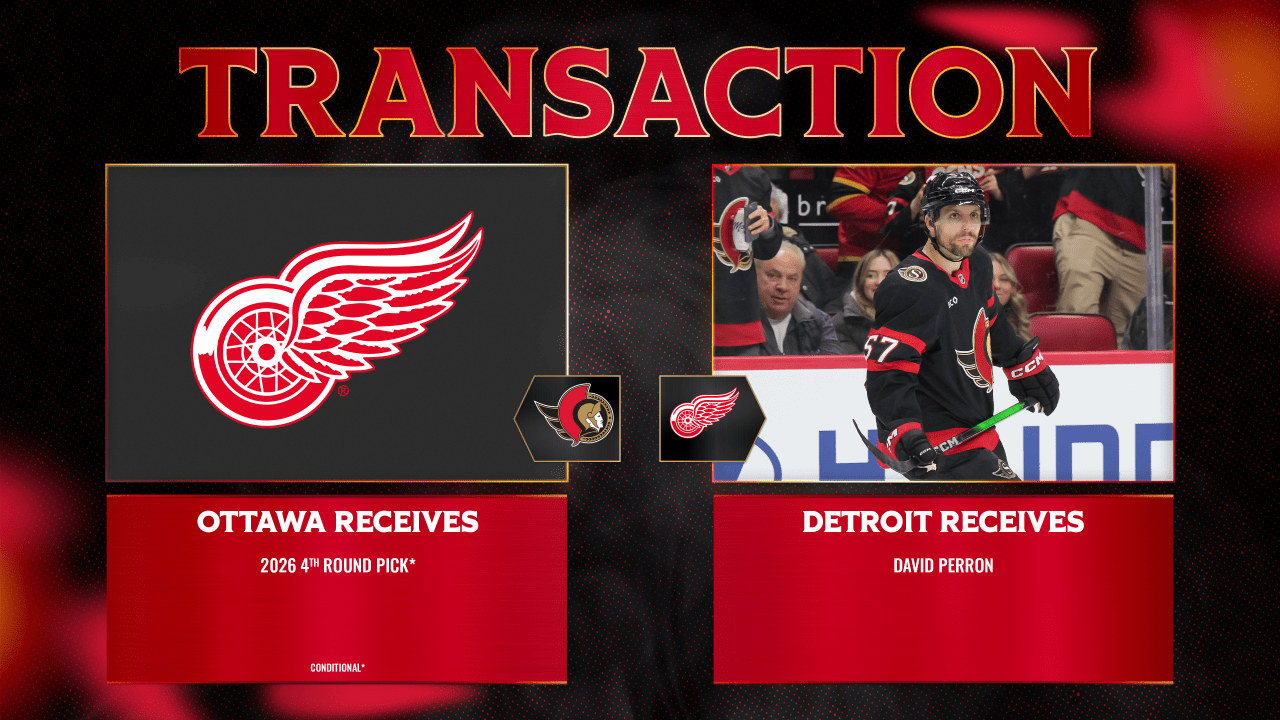
The acquisition of veteran forward David Perron by the Detroit Red Wings from the Ottawa Senators, executed just before the NHL Trade Deadline, represents a calculated intersection of immediate roster demand and nuanced long-term capital planning.
For Detroit, re-acquiring Perron, a familiar presence from their 2022-2024 tenure, addresses a middle-six void, contingent upon his return from groin surgery. The operational challenge involves maximizing competitive utility from a player projected for a 6-7 week recovery, placing high scrutiny on the medical staff for accelerated reintegration before the playoff window narrows.
Contingent Capitalization of Draft Assets
The primary analytical focus rests on the consideration: a conditional 2026 draft pick. This structure reveals Ottawa’s prioritization of asset protection over immediate $4M cap relief concerning a pending UFA.
The baseline asset is Detroit’s 2026 fourth-round pick—a low-leverage starting point, indicating Ottawa’s perceived diminishing on-ice value relative to the player’s age and injury status. However, the escalation clauses introduce significant upside leverage for Ottawa, transforming the pick based on specific performance thresholds tied directly to Detroit’s postseason achievements and Perron’s participation.
Performance Triggers and Value Realization
The first condition dictates an upgrade to Columbus’s fourth-round pick if Perron plays a single game this season or in the playoffs. This satisfies a minimum transactional value realization for Ottawa.
The substantive trigger demands Detroit advancing to the Second Round of the playoffs concurrently with Perron appearing in 50% of First Round games. Fulfillment mandates the exchange of Detroit’s own third-round pick—a substantially higher-value asset in standard NHL management frameworks.
This architecture hedges Ottawa’s return: they secure low-value baseline equity while retaining exposure to Detroit’s competitive execution, effectively monetizing Perron’s potential impact on his new team’s playoff run. Detroit accepts that the cost of short-term enhancement is directly correlated with their playoff success metrics.
Ottawa’s Roster Calculus and Opportunity Cost
Ottawa’s divestiture of Perron (25 points in 49 games pre-injury) signals an internal calculation that his anticipated return timeline would create an operational bottleneck, potentially displacing younger or more cost-effective roster components.
Reports suggest Perron risked being “squeezed out of the lineup” upon return, implying current roster depth has surpassed the utility of retaining veteran insurance. This liquidation, executed while the asset is sidelined, maximizes return on investment when on-ice utility is compromised.
Strategic Asset Cycling and Market Benchmarking
Acquiring a contingent pick, potentially originating from Columbus, demonstrates Ottawa’s engagement in strategic asset cycling—trading immediate depth for future equity suitable for a retooling phase. Contextual history, including Perron’s significant 2023 playoff contribution against Toronto, validates Detroit’s valuation of his experience.
Detroit’s willingness to attach conditions based on their own draft capital signals the perceived scarcity of players combining recent Cup pedigree (Perron won in 2019) with immediate deadline availability, irrespective of injury status. This transaction highlights divergent organizational timelines: Ottawa optimizing the 2026 asset pool versus Detroit prioritizing immediate competitive positioning.
Competitive Signaling and Transactional Benchmarks
The timing, less than 24 hours from the deadline, amplifies the market signal: Detroit actively sought immediate reinforcement, contrasting Ottawa’s posture as a seller capitalizing on expiring contracts.
This trade establishes a preliminary market benchmark for valuing experienced, injured pending UFAs with playoff history, framing negotiations for similar assets. The complex inclusion of the Blue Jackets pick indicates Ottawa’s sophisticated management of previously acquired, redeployed assets.
Risk Assessment and Contractual Velocity
Perron’s $4 million cap hit is manageable for Detroit’s short-term competitive boost, provided the conditions for the higher-value pick are mitigated. Failure to meet the Second Round threshold results in a moderate rental fee for immediate, albeit delayed, veteran contribution—a low-risk maneuver.
Conversely, meeting the threshold implies a premium paid for securing a proven contributor during the critical First Round. The Senators have successfully separated sunk costs from future asset realization, focusing solely on performance-based contingent recovery.