
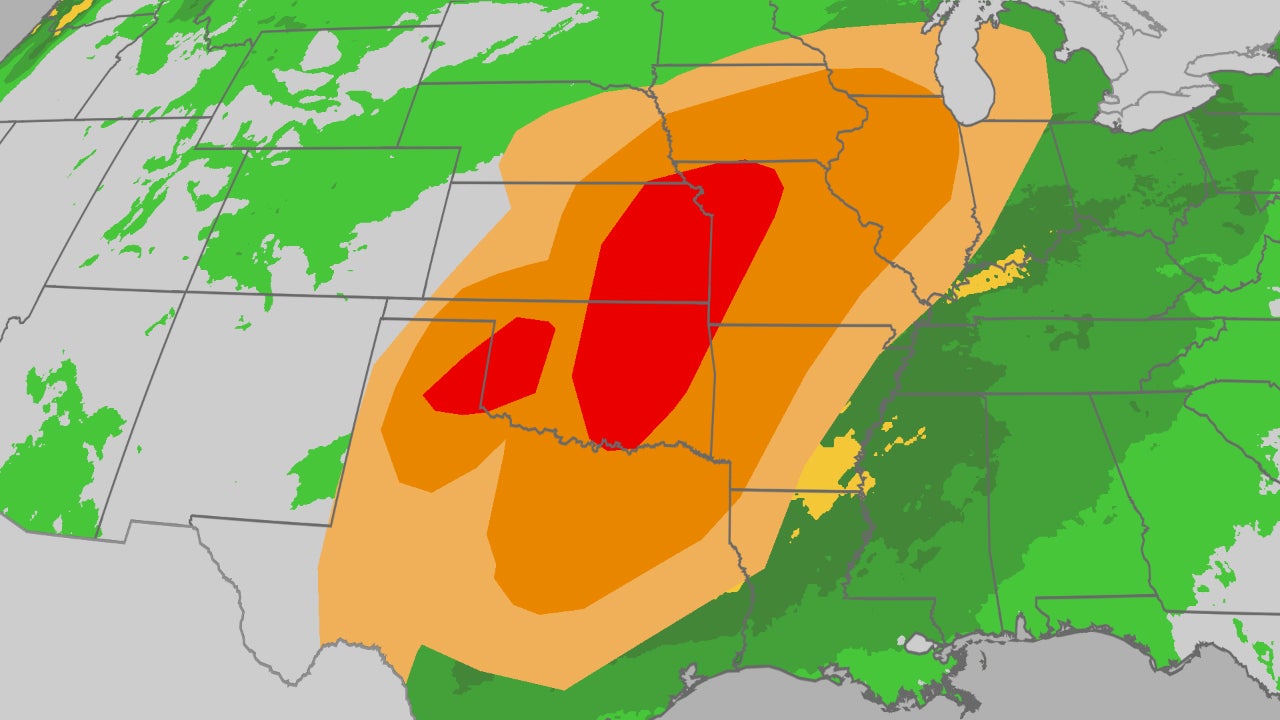
The March 2026 severe weather outbreak across the United States midsection represents a profound operational and strategic challenge for the region’s economic infrastructure. This multi-day event, marked by the potential for intense tornadoes, large hail, and damaging winds, stretches from southern Texas through the Midwest into Iowa. The timing, coinciding with the early March seasonal transition, highlights recurring atmospheric volatility necessitating high-level institutional readiness.
Strategic Implications of a Persistent Weather Pattern
Current meteorological data indicates a stalled weather pattern, fundamentally altering the risk profile for central U.S. stakeholders. Unlike transient systems, a stationary or slow-moving pattern ensures repeated exposure to severe convective activity over several days, compounding stress on emergency management systems and infrastructure by minimizing recovery windows.
For the insurance and reinsurance sectors, prolonged exposure increases the probability of aggregate losses exceeding single-event thresholds. Cumulative hail and wind damage over five to seven days can rival the financial consequences of a major hurricane, especially when impacting high-value urban centers. Actuarial models must integrate this multi-day siege dynamic, challenging the liquidity and response capacity of regional property and casualty insurers.
Operational Triggers: The Texas-Oklahoma Dryline
The dryline, a sharp boundary between contrasting air masses in western Texas and central Oklahoma, is the primary catalyst for this outbreak. It acts as a critical operational trigger for the energy sector, especially grid operators and wind energy producers in the Permian Basin and Great Plains. Rapid shifts in air density and wind direction along the dryline cause sudden power generation and demand fluctuations, requiring real-time load balancing recalibrations.
Aviation and logistics hubs in the Dallas-Fort Worth and Oklahoma City metros face significant volatility from the dryline. The potential for large hail and strong tornadoes mandates preemptive air traffic rerouting and ground asset securing, introducing substantial friction into national supply chains. These safety-driven adjustments incur significant downstream costs for freight carriers and just-in-time manufacturing reliant on the I-35 corridor.
Economic Exposure and Infrastructure Resilience
The forecast’s geographic scope, Texas to Iowa, encompasses a vital U.S. economic artery home to critical agricultural assets, manufacturing centers, and transportation networks highly sensitive to severe weather disruptions. The threat of flooding rain, in addition to wind and hail, complicates management for municipal authorities tasked with overseeing aging drainage infrastructure under repeated heavy precipitation.
In the agricultural sector, the early March timing coincides with initial planting phases for key commodities. While soil moisture is often beneficial, storm intensity can cause significant soil erosion and damage to early-stage infrastructure. Commodity markets reflect the Plains’ systemic importance to global food security by pricing in potential planting delays or crop damage from these multi-day events.
Institutional Readiness and Forecasting Demands
The National Weather Service and Storm Prediction Center face intense operational demand, providing critical data for public and private sector decision-making. Forecast accuracy dictates the activation of emergency protocols for schools, hospitals, and industrial facilities. Effective risk communication across a wide geographic area demonstrates modern meteorological infrastructure sophistication, though human response remains a key variable.
State-level emergency management agencies in Texas, Oklahoma, Kansas, and Iowa are mobilized, coordinating resources for potential search and rescue and rapid debris clearance. The multi-day nature of the threat complicates strategic resource positioning, requiring sustained readiness over a prolonged period and testing mutual aid agreements and state disaster relief reserves.
Urban Vulnerability and Population Density Dynamics
As severe weather outbreaks increasingly intersect with expanding Plains metropolitan areas, the potential for mass-casualty events and catastrophic property damage escalates. Population concentration in cities like Austin, Oklahoma City, and Des Moines presents a high-density target for forecast strong tornadoes. Urban planners and building code agencies face pressure to enhance structural resilience against winds exceeding 200 mph.
The social and economic consequences of a direct tornado strike on a major urban center are profound, potentially causing long-term shifts in local real estate markets and demographic trends. Beyond immediate destruction, disrupted telecommunications and utilities can paralyze economic activity for weeks, forcing a strategic reassessment of urban design and management in high-intensity convective storm regions.
Long-Term Structural Shifts in Weather Risk Management
The recurrence of multi-day severe weather sieges suggests an atmospheric baseline shift necessitating corresponding strategic planning changes. Corporate risk officers increasingly integrate meteorological volatility into long-term capital allocation, recognizing weather as a core operational risk. This trend drives investment in hardened infrastructure, redundant supply chains, and advanced predictive analytics.
Furthermore, public policy and private insurance market interactions will likely evolve as event costs climb. The sustainability of current insurance models in high-risk zones is under discussion, with potential implications for federal disaster assistance programs. The March 2026 outbreak serves as a critical data point in this dialogue, highlighting the need for a more integrated national resilience approach.
Conclusion: Trajectory of Resilience
As the storm system progresses from Texas to Iowa, immediate focus remains on preserving life and property. However, the long-term significance lies in revealing vulnerabilities in the modern economic and institutional landscape. U.S. capacity to absorb and recover from these multi-day sieges will shape the future stability and growth trajectory of the central corridor.
Stakeholders must maintain vigilance as the pattern persists, monitoring the dryline’s evolution and secondary storm system development. Lessons from the March 2026 outbreak will inform future emergency management protocols and infrastructure investments. The immediate priority is effective execution of response strategies against a formidable, persistent atmospheric challenge.

Photo by geralt on Pixabay.