
Strategic Curation: Anchoring Revenue Through Multi-Generational Appeal
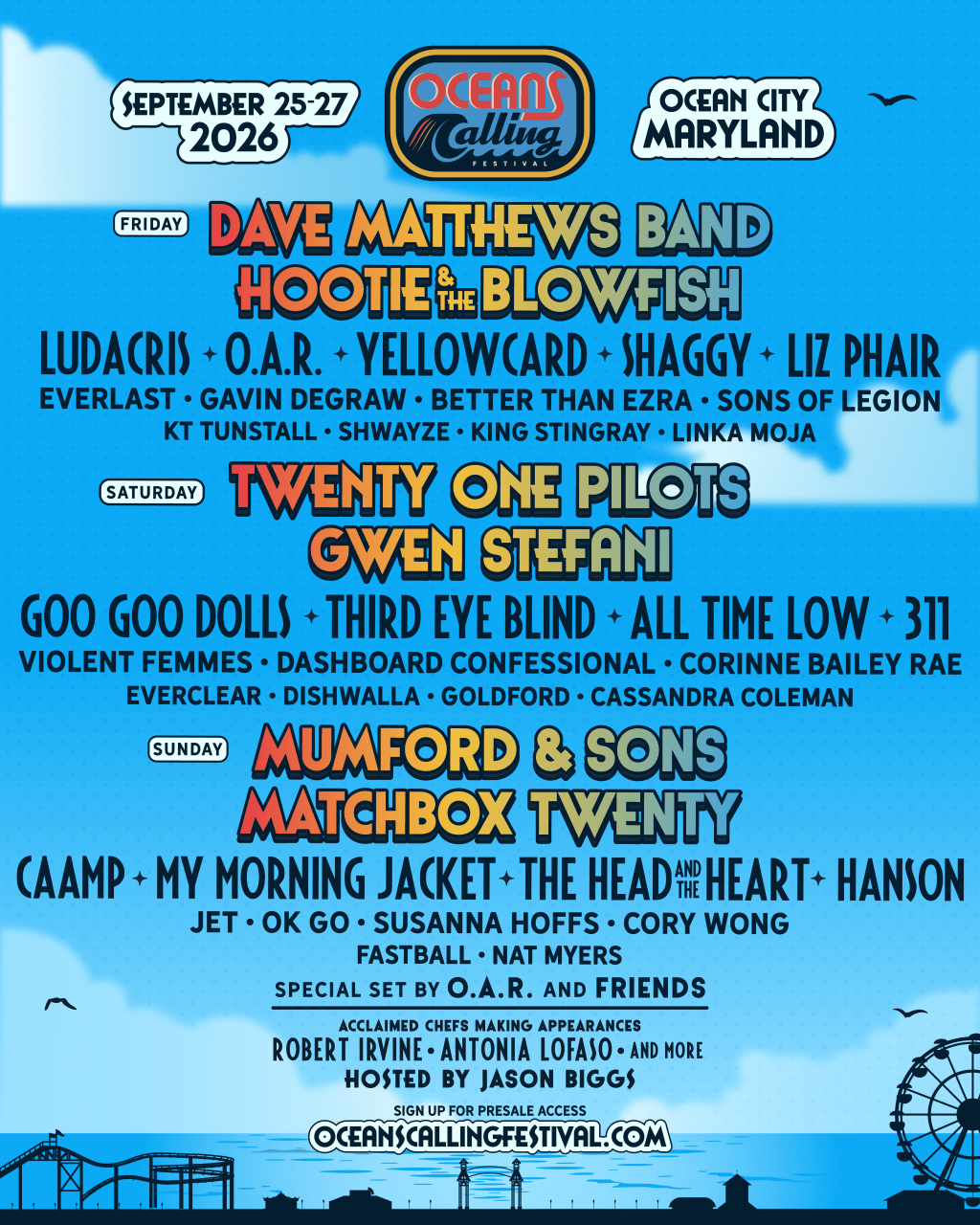
The Oceans Calling 2026 lineup, prominently featuring Dave Matthews Band (DMB), Twenty One Pilots, and Mumford & Sons, signifies a deliberate operational pivot toward securing reliable ticket velocity. This curation prioritizes artists with deep, proven multi-generational fan bases over investments in emerging, volatile acts.
This approach positions the festival as a consistent, high-conversion destination event within the mid-Atlantic corridor. By booking legacy acts—such as Hootie & The Blowfish, Matchbox Twenty, and Third Eye Blind—alongside contemporary draws like Twenty One Pilots and Gwen Stefani, organizers are maximizing ticket sales across a broad, established demographic spectrum.
Mitigating Risk via Performance Heritage and Continuity
The inclusion of artists with sustained touring viability, particularly DMB and Matchbox Twenty, drastically mitigates the financial volatility often associated with genre-specific or unproven emerging artists. This contrasts with models chasing ephemeral cultural relevance, opting instead for predictable revenue streams anchored by catalog recognition.
Furthermore, continuity in booking, evidenced by the return of acts like O.A.R., suggests optimized talent expenditure efficiency, likely resulting from favorable, established contractual relationships or volume discounting structures.
Competitive Market Positioning and Audience Capture
Entering its fourth year, Oceans Calling is aggressively competing for discretionary entertainment capital against larger national festivals. The lineup composition reflects a calculated understanding of the Ocean City, MD market’s tolerance for high-value, familiar programming.
The targeted inclusion of nostalgia segments (Everclear, Better Than Ezra, Dishwalla) aims at the demographic segment less sensitive to price fluctuations and more inclined toward destination events offering concentrated familiarity. This strategy defends market share against competing city-based events.
Operational Complexity in Genre Diversification
Managing a roster spanning jam-band aesthetics (DMB), modern alternative (Twenty One Pilots), and pop-rock (Gwen Stefani) imposes significant logistical demands. This requires sophisticated infrastructure planning to handle diverse stage production specifications and rigorous sound bleed mitigation between disparate sonic profiles.
Financial modeling for this diversity necessitates granular analysis of each act’s specific draw radius and guaranteed fee structure. Success hinges on ensuring this distributed talent budget translates directly into maximized attendance figures for the September dates.
Stakeholder Impact: Shoulder Season Economics
Scheduled for September 25-27, the festival targets Ocean City’s shoulder season, aiming to extend peak economic utility beyond traditional summer occupancy. This places substantial operational pressure on local hospitality infrastructure—lodging and services—to scale efficiently for concentrated influx.
The ability to consistently secure A-list headliners directly impacts Ocean City’s perceived prestige as a commercial event destination, influencing future municipal planning and long-term permitting negotiations.
Analyzing Audience Cultivation Through Continuity
Comparing the 2026 roster to previous headliners (e.g., Green Day, Lenny Kravitz) confirms a pattern prioritizing high name recognition across multiple decades. This continuity is crucial for cultivating a reliable, repeat attendee base, mitigating risks associated with speculative bets on rising stars.
Broadening the appeal via acts like Hanson and Ludacris ensures the primary ticket purchaser finds anchors while providing sufficient secondary variety to satisfy accompanying attendees, boosting overall perceived value.
Financial Underwriting and Talent Budget Strategy
Securing anchors like DMB and Twenty One Pilots implies robust financial backing or highly effective pre-negotiation of performance clauses tied to projected ticket sales. The strategy avoids reliance on a single, prohibitively expensive headliner, instead distributing high-value costs across several proven anchors to optimize perceived value per ticket tier.
Media Lead Time and Promotional Velocity
The March 3, 2026, announcement establishes a substantial lead time for marketing, allowing for sustained promotional cycles across digital and traditional media. The genre mix ensures broad media pickup, maximizing earned media value across specialized music verticals.
Cultural Positioning: Nostalgia as a Value Proposition
The 2026 programming leans heavily on established cultural touchstones, establishing a ‘comfort entertainment’ niche. This strategy deliberately carves out space distinct from festivals focused aggressively on Gen Z viral artists, minimizing direct competitive overlap in established demographic markets. The continued presence of acts like 311 reinforces this commitment to late 20th/early 21st-century staples.
Impact on Competing Regional Booking Cycles
The early confirmation of this caliber of roster directly affects competing regional festivals for the remainder of 2026, forcing them to either escalate their own talent bids or pivot to niche programming to avoid direct artist competition.
Digital Sales Funnel and Data Control
Directing traffic to the official website for ticket availability confirms a digital-first sales strategy. This approach centralizes control over pricing tiers, presale access, and attendee data collection—critical inputs for future financial forecasting and demographic targeting. Website centralization also ensures consistent official narrative dissemination regarding logistics and safety.
Logistical Commitment: Sustaining the Three-Day Format
Maintaining the three-day structure (Sept. 25-27) validates the organizational capacity and financial modeling to sustain continuous 72-hour operations, requiring heavy investment in security, sanitation, and vendor management. This format necessitates a deep bench of supporting acts to ensure sustained engagement from Friday through Sunday night.
Institutional Maturity and Longevity Benchmarks
As it enters its fourth iteration, Oceans Calling is transitioning from establishment to optimization. The 2026 lineup serves as the primary indicator of sustained commitment; failure to maintain high-caliber consistency risks rapid audience attrition in the discerning live event sector. The current trajectory is focused on optimizing operational margins while defending its established market position.

Photo by ebor on Pixabay.