Mechanical Accountability: The Shift in Track Limit Enforcement
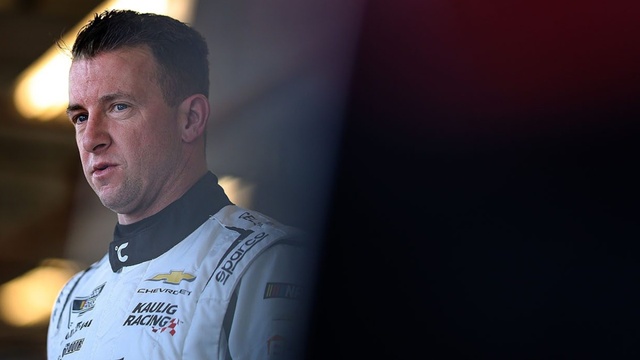
The transition to physical tire packs at the Circuit of the Americas (COTA) represents a paradigm shift in NASCAR’s operational governance. For AJ Allmendinger, this move replaces subjective electronic monitoring with objective mechanical consequences. The introduction of these barriers in high-velocity sectors, specifically the technical ‘esses,’ fundamentally alters the risk-reward calculus, forcing drivers to navigate a hard physical constraint rather than an administrative boundary.
This structural reconfiguration mandates a recalibration of racing lines. Without the safety net of paint-based officiating, the margin for error is eliminated. For Kaulig Racing’s No. 16 entry, the strategic priority shifts toward a delicate equilibrium: extracting maximum aerodynamic velocity while ensuring the structural preservation of the Next Gen chassis across a full race distance.
The Zilisch Benchmark and the Psychology of Aggression
Connor Zilisch’s early performance metrics have established a new competitive baseline for physical limit exploitation. Allmendinger observes that Zilisch’s methodology—skimming tire packs in Turn 4—demonstrates a high-stakes approach where marginal lap-time gains are weighed against catastrophic component failure. This benchmark creates a tactical schism in the field: drivers must choose between adopting high-volatility lines or prioritizing sustainable, conservative trajectories.
For a road-course specialist like Allmendinger, the challenge is localized in matching the raw aggression of younger competitors without compromising the vehicle’s composite body integrity. In an era where track position is the primary currency, the willingness to risk equipment for millisecond advantages remains the definitive differentiator between elite contenders and the mid-field.
Operational Volatility and Visual Obstruction
A critical operational hazard identified in the new configuration is the degradation of visual clarity during pack racing. While the lead vehicle retains an unobstructed view of the tire packs, trailing drivers must rely on the movement of the car ahead to gauge proximity. This lack of direct visual confirmation heightens the risk of blind-entry contact, particularly during rapid transitions.
Consequently, the strategic value of ‘clean air’ is significantly amplified. Beyond cooling and downforce, clean air provides the visual telemetry necessary to exploit track limits with precision. This dynamic suggests that overtaking maneuvers in tire-pack-restricted zones will become increasingly conservative, as the penalty for a blind miscalculation is now an immediate mechanical failure rather than a time penalty.
Economic and Technical Implications of Component Damage
The financial and technical overhead associated with the Next Gen car makes contact with physical barriers a significant organizational risk. Allmendinger notes that contact in the esses is projected to cause substantial impairment to suspension geometry and aerodynamic efficiency. For Kaulig Racing, the cost of replacing specialized composite panels and managing technical attrition can strain seasonal budgets.
Technical crews must now factor ‘impact durability’ into their setup configurations. This may result in a shift toward more robust, albeit slightly slower, vehicle setups to mitigate the fallout of minor barrier contact. The 2026 COTA strategy is thus defined by a trade-off between peak performance and the economic necessity of vehicle longevity.
Institutional Evolution: Toward Self-Enforcing Boundaries
NASCAR’s pivot to physical barriers reflects a broader institutional move toward self-policing environments. By transferring enforcement from the control tower to the track surface, the sanctioning body has streamlined officiating while increasing the competitive stakes. This transparency aligns with global motorsport trends toward immediate accountability and reduced administrative intervention.
The long-term impact of this policy will likely manifest in simulation and driver training protocols. The emphasis is shifting from theoretical track limits to the mastery of physical hazards. For Allmendinger and Kaulig Racing, success in this new era depends on the ability to synthesize these physical constraints into a cohesive, points-yielding strategy that leverages experience over raw risk-taking.