
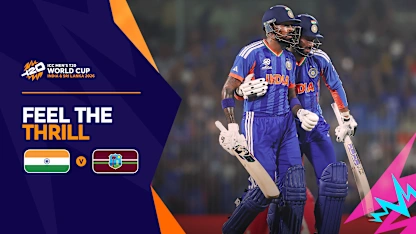
The competitive architecture of the ICC Men’s T20 World Cup 2026 has converged into a high-stakes elimination phase. South Africa’s recent victory over the West Indies fundamentally recalibrated Group 1, stripping away the insulation of Net Run Rate (NRR) dependencies for the Indian contingent. Consequently, the March 1 fixture at Eden Gardens has evolved from a conventional Super 8s match into a virtual quarter-final, where operational precision is the only path to the semi-finals.
Qualification Permutations and Strategic Logic
South Africa’s dominance acted as a primary catalyst, simplifying India’s progression path by removing the mathematical burden of a high-margin victory requirement against Zimbabwe. This clarity allowed the Indian management to pivot from risk-heavy statistical chasing to clinical match-winning strategies. India’s subsequent 72-run triumph over Zimbabwe established a performance baseline, placing immediate defensive pressure on the West Indian side, whose inability to defend totals against top-tier opposition remains a glaring tactical vulnerability.
Technical Evaluation of Pitch Infrastructure
The utilization of a central strip—specifically Pitch No. 5 or 6—at Eden Gardens indicates a surface engineered for high-velocity scoring and consistent vertical bounce. Historical data for these central pitches favors stroke-makers, aligning with the aggressive batting philosophies of both squads. For the West Indies, this creates a paradox: while the conditions suit their boundary-clearing model, the lack of lateral movement offers minimal protection for a bowling unit that has historically struggled with middle-over containment.
India’s tactical leverage resides in their familiarity with Kolkata’s evening dew factor, which typically complicates second-innings bowling. The central square placement ensures equidistant boundaries, demanding sophisticated field-placement rotations and precise pace variations. Success will likely hinge on the ‘bowling gulf’—India’s capacity for multi-phase dominance versus the West Indies’ reliance on top-order over-performance to buffer their defensive inconsistencies.
Institutional Stakes and Market Implications
Beyond the boundary, the match represents a pinnacle of commercial value for the ICC. A host-nation knockout scenario at a venue of Eden Gardens’ magnitude maximizes broadcast engagement and sponsorship leverage. For the West Indies, a semi-final berth is essential for regional financial stability and reputational recovery. Conversely, for India, the domestic expectation of a title makes anything less than a semi-final appearance a structural failure of the national program. The economic momentum of the tournament’s final week is essentially tied to the outcome of this single 40-over contest.
Operational Variables and Weather Contingencies
Meteorological forecasts for March 1 introduce a volatile variable. Any weather-induced reduction in overs would theoretically favor the West Indies’ high-intensity power-hitting model, potentially neutralizing India’s superior tactical depth over a full match duration. Ground staff are under immense pressure to manage moisture levels on the central strip to preserve the high-scoring spectacle promised to global broadcasters. As the tournament reaches this critical juncture, the winner will emerge not just through raw talent, but through the superior navigation of these complex technical and environmental pressures.

Photo by TonW on Pixabay.