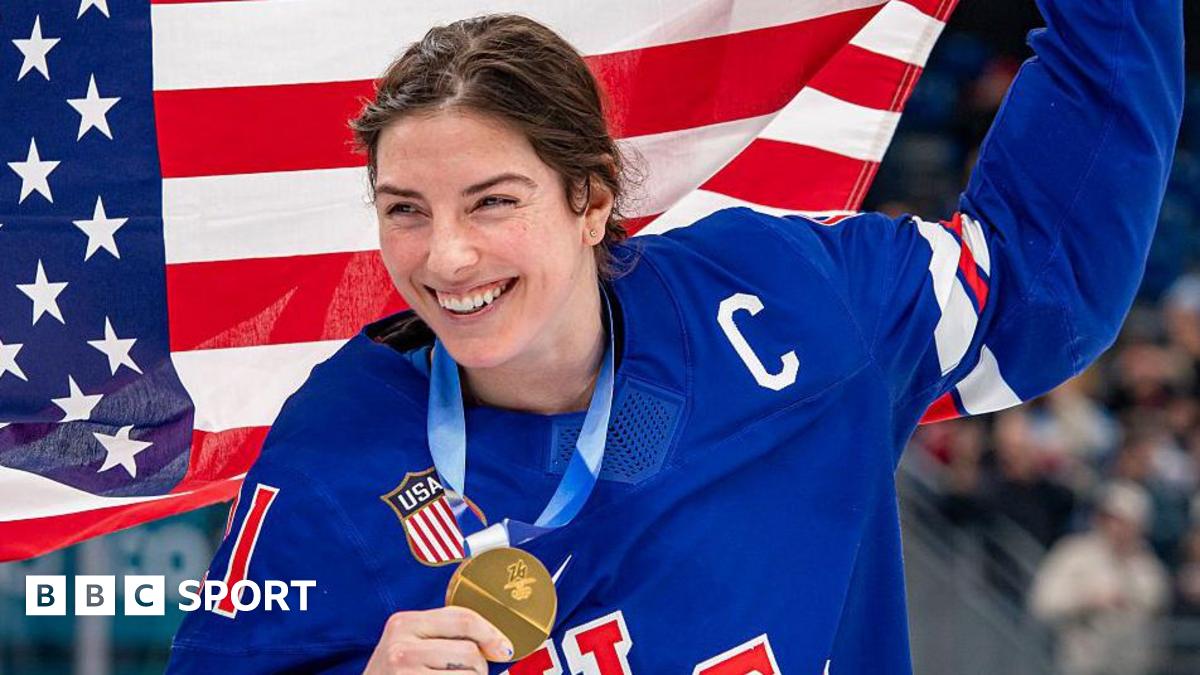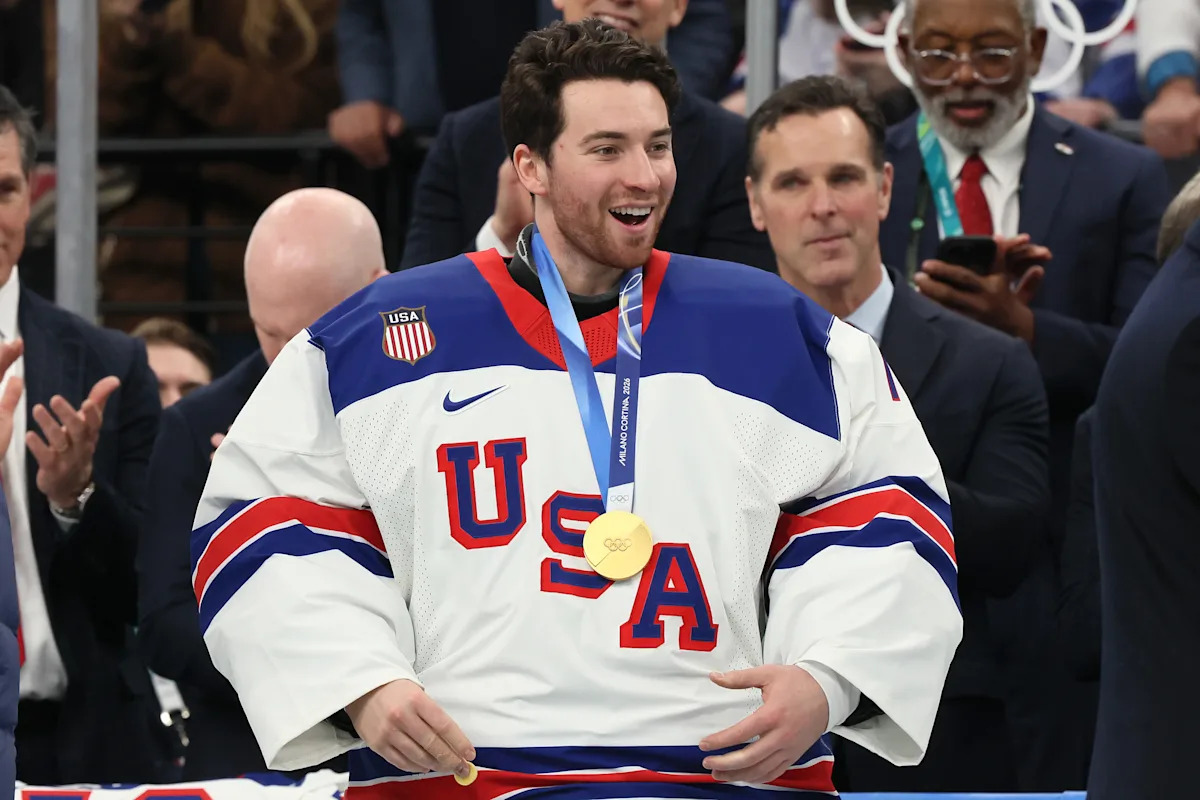
The historic dual gold medal achievement by the U.S. men’s and women’s ice hockey teams at the Milan-Cortina Winter Games has been immediately complicated by political context surrounding recognition protocols.
U.S. Women’s Hockey captain Hilary Knight publicly condemned President Trump’s subsequent White House invitation offer as a “distasteful joke,” signaling a fundamental misalignment between athletic accomplishment and political framing.
The core controversy emerged from a phone call extended to the men’s team, where President Trump, reportedly alongside then-FBI Director Kash Patel, framed inviting the women’s team as a political maneuver to mitigate impeachment risks—a remark allegedly met with locker-room laughter.
Strategic Implications of Recognition Protocol Failures
This incident clearly exposes a systemic vulnerability in managing high-profile athletic success: the symbolic capital of Olympic victory is instantly leveraged for political optics, creating reputational risk for the athletes.
Knight’s assertion that the commentary is “overshadowing” the win highlights the competitive narrative disadvantage imposed on the women’s team; their focus shifts from securing their third all-time gold medal—secured after Knight’s pivotal late-game tying goal—to managing external political deflection.
The women’s team’s subsequent declination of a State of the Union address invitation, citing professional commitments, functions as a calculated strategic maneuver to reclaim messaging control, though it inherently validates the initial distraction.
For the men’s team, the fallout creates an operational challenge in reintegrating into the NHL environment under increased public scrutiny regarding their immediate conduct.
Internal Dynamics and Stakeholder Management
Goalie Jeremy Swayman’s admission that the men’s team “should’ve reacted differently” underscores internal recognition of a lapse in judgment regarding the immediate political environment and the optics of their shared response.
Swayman’s attempt to mitigate damage to intra-team solidarity by emphasizing shared respect was necessary, but the initial audible reaction created a public fissure requiring immediate damage control.
This dynamic places high pressure on organizational structures to establish strict protocols for engaging with political figures, balancing required courtesy against the imperative to protect athlete autonomy and messaging integrity.
The visible presence of FBI Director Patel celebrating with the men’s team further embeds the event within a complex institutional landscape, suggesting a level of political proximity that amplified the sensitivity surrounding the presidential remarks.
Competitive Exposure and Erosion of Earned Media Value
The rare dual gold victory should have maximized media exposure for both USA Hockey programs. Instead, the focus has been diverted, resulting in a tangible loss of earned media value for USA Hockey and its sponsors.
This narrative shift impacts endorsement valuations and future funding priorities for women’s sports development, as athletic prowess yields to political controversy.
Knight, as a five-time Olympic medalist, leverages significant personal brand equity. Her direct critique serves as a high-leverage statement against the trivialization of female athletic accomplishments within a political framework.
The subsequent media cycle, driven by Knight’s critical appearance, forces governing bodies to confront the structural imbalance where female athletes’ achievements are frequently framed relative to, or conditional upon, male counterparts or executive political figures.
The Institutional Cost of Narrative Dilution
The episode reveals the inherent constraint placed upon non-political entities interacting with executive power: the incentive structure often rewards reflexive deference, even when context is inappropriate.
Declining the State of the Union invitation was a necessary counter-move for the women’s team to reclaim agency, but it introduced secondary political interpretation regarding their relationship with the administration, moving beyond the initial hockey context.
Swayman’s characterization of the men’s reaction as a “quick lapse” confirms the difficulty elite athletes face in real-time assessment of high-stakes, unexpected political interactions when celebratory adrenaline lowers cognitive barriers.
This incident functions as a case study in modern sports governance, demonstrating how instantaneous digital dissemination of unvetted moments can override carefully constructed public relations strategies celebrating athletic excellence.
The persisting structural challenge is insulating athletes from political narratives that dilute competitive significance when the platform for recognition is inherently political. The context of the women’s team securing their third gold warrants singular focus, which the exchange undermined.
The disparity in recognition—immediate invitation for men versus conditional acknowledgment for women—highlights an asymmetry in how success is validated, fueling debates over resource parity between men’s and women’s Olympic programs.
Knight’s leverage forces athletic bodies to re-evaluate mandatory engagement protocols with political offices, signaling a necessary shift toward pre-emptive risk assessment for all public appearances.
The underlying tension is the trade-off between maximizing institutional access and maintaining narrative purity, a calculation that, in this instance, favored short-term political engagement over long-term athlete messaging control.
The team’s decision to decline the subsequent invitation suggests a collective assessment that the reputational cost outweighed the symbolic benefit, rooted in the negative framing from the initial phone call. The inclusion of FBI Director Patel further complicated the environment, suggesting pre-existing political proximity amplified the sensitivity.