1. The Asset: Narrative Scarcity and Aesthetic Capital
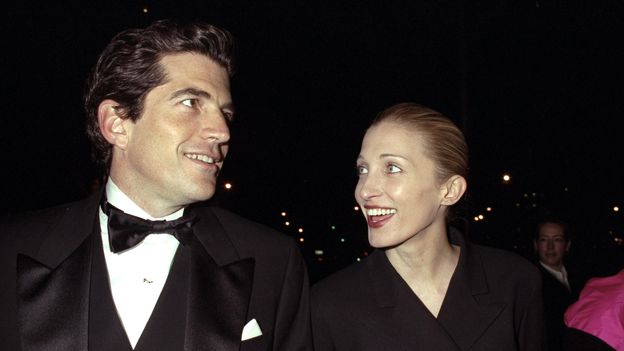
The posthumous commercial power of Carolyn Bessette-Kennedy demonstrates a core principle in modern media: the strategic monetization of scarcity. Her brief public life, marked by a deliberate avoidance of media engagement—resulting in no official interviews and minimal audio recordings—created a narrative vacuum. For content producers, this absence of primary source material is not a limitation but a high-value asset. It reduces narrative constraint and grants maximum creative latitude to reinterpret her story for contemporary audiences, making her IP more adaptable and valuable than that of a well-documented figure. This scarcity is compounded by her aesthetic legacy as an avatar of ‘quiet luxury.’ In a market saturated with overt branding, her minimalist style represents a form of aesthetic capital that can be leveraged to influence consumer trends, creating monetization opportunities for fashion and lifestyle brands associated with a new production.
2. The Engine: Industrialized Production and State Subsidies
The adaptation of Bessette-Kennedy’s story is enabled by an industrialized content pipeline, exemplified by producer Ryan Murphy. His model, described as that of a ‘streaming imperialist,’ relies on iterating proven anthology formats (‘American Crime Story,’ ‘American Horror Story’) to minimize creative risk while maximizing output volume. This high-volume approach directly serves the financial imperatives of streaming platforms, which require a constant influx of new content to mitigate subscriber churn. This production engine is significantly fueled by state-level economic policy, specifically the California Film Commission’s tax-credit program. These subsidies function as a critical financial lever, reducing the effective cost of production and influencing capital allocation. The symbiotic relationship between political stakeholders and industry leaders, highlighted by Governor Gavin Newsom’s interview with Murphy, demonstrates how public funds are strategically deployed to attract and sustain private entertainment investment, creating a feedback loop that validates and perpetuates these policies.
3. The Strategy: Narrative Re-Engineering and Risk Mitigation
Executing a project based on real individuals requires a sophisticated strategy of narrative re-engineering and stakeholder management. The series’ approach involves interpreting the 1990s through a contemporary psychological lens, focusing on themes of media intrusion, privacy, and mental health that resonate with modern audiences. This reframes Bessette-Kennedy’s perceived aloofness as a struggle against the pressures of fame. The inclusion of other real-life figures like Kate Moss and Annette Bening as narrative drivers enhances perceived authenticity and broadens marketing appeal. However, this strategy introduces significant legal and reputational risks related to the use of likenesses and personal histories. Consequently, production requires meticulous legal oversight and a public relations strategy that balances dramatic license with a ‘respectful exploration’ to mitigate potential backlash from the individuals portrayed or their estates, thereby protecting the asset’s value.
4. The Ecosystem: Monetizing Cultural Memory
The Bessette-Kennedy series is a case study in a complex media ecosystem where cultural memory is perpetually re-contextualized and monetized. This system operates on a cycle: it identifies undervalued intellectual property, often from figures whose legacies are narratively scarce; employs an industrialized production model underwritten by public subsidies to efficiently create content; and re-engineers historical narratives to align with current cultural sensibilities. The result is a high-value cultural product that satisfies audience nostalgia while offering a modern analytical perspective. Governor Newsom’s shift in his podcast strategy from engaging political adversaries to featuring ‘friendlier agents of power’ like Murphy is a microcosm of this integration. It represents a pivot toward using cultural capital for policy validation, leveraging the soft power of entertainment to reinforce political and economic agendas. This convergence of media strategy, political economy, and narrative construction demonstrates a highly optimized framework for transforming history into commercially viable content.