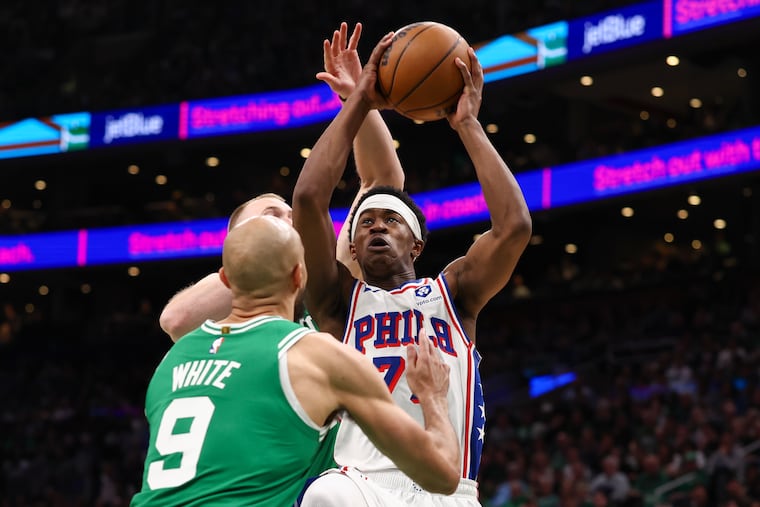
The Philadelphia 76ers’ decisive 111-97 Game 2 victory against the Boston Celtics fundamentally recalibrates the first-round series, now tied 1-1. This road win not only mitigates the immediate strategic deficit stemming from Joel Embiid’s absence but critically reclaims home-court advantage, positioning Philadelphia favorably as the series transitions to Xfinity Mobile Arena.
Philadelphia’s Game 2 operational success was demonstrably predicated on an emergent, high-velocity backcourt strategy spearheaded by rookie VJ Edgecombe and Tyrese Maxey. Edgecombe’s breakout 30-point, nine-rebound performance critically underscored a rapid pivot in the team’s offensive architecture: from a conventional post-centric system to a fluid, transition-dominant, guard-led attack. This tactical adaptability directly addressed the structural challenges posed by Embiid’s sideline status.
Complementing Edgecombe, Tyrese Maxey’s 29-point contribution, particularly his decisive 15-point fourth-quarter surge, illustrated a potent form of offensive leverage that Boston’s defensive schemes struggled to counter. Maxey’s capacity for generating high-efficiency scoring, often in isolation during critical periods, systematically dismantled the Celtics’ previously dominant defensive rotations, fundamentally altering the late-game competitive dynamic.
Medical Governance and the Embiid Recovery Timeline
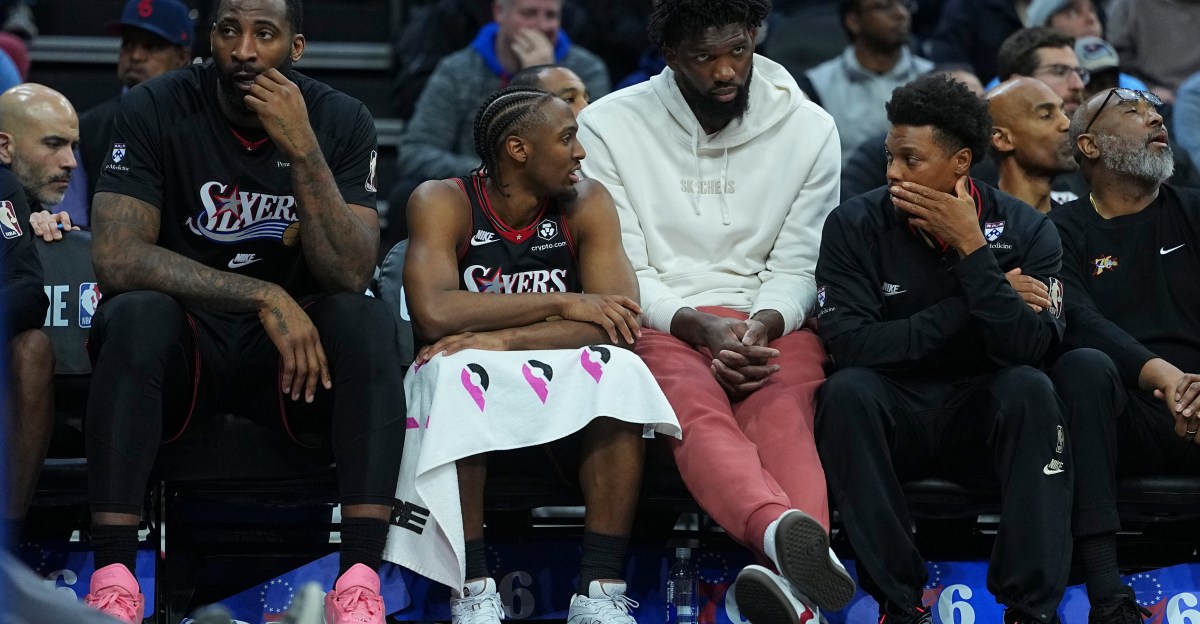
The institutional governance surrounding Joel Embiid’s post-emergency appendectomy return (surgery on April 9th) remains the preeminent variable dictating Philadelphia’s long-term postseason trajectory. While the 76ers confirmed the initiation of a strength and conditioning regimen on Monday, the medical staff navigates a complex, multi-factorial risk-assessment matrix concerning his optimal physiological readiness and re-entry timing.
NBA injury analyst Joel Stotts’ data reveals an average 23-day recovery, with a 17-day median, for in-season appendectomies. As Embiid’s surgery occurred on April 9th, this places his potential return within a statistically plausible window. However, the unexpected Game 2 strategic success now offers a critical buffer, mitigating the immediate pressure to accelerate his reintegration and prioritizing long-term health over short-term expediency.
VJ Edgecombe’s public declaration prioritizing Embiid’s long-term health resonates with a broader organizational philosophy focused on sustainable competitive windows, extending beyond this series. His emphasis on not wanting to “rush” the reigning MVP reinforces a locker room ethos of collective resilience, demonstrating readiness to sustain high-intensity playoff basketball and manage interior defensive responsibilities without their primary rim protector.
Strategic Depth and Roster Optimization
The 76ers’ capacity to secure a double-digit road victory in Boston was significantly bolstered by veteran Paul George’s efficient 19 points. His timely secondary scoring effectively diluted Boston’s defensive intensity, preventing over-indexing of coverage on the primary backcourt creators, Maxey and Edgecombe, and forcing more balanced defensive assignments across the floor.
Andre Drummond’s 10-point, six-rebound contribution, while numerically modest, served as a critical operational bridge in mitigating the profound interior void left by Embiid’s absence. Drummond’s robust ability to occupy crucial paint space, contest shots, and provide physical resistance allowed Philadelphia to maintain defensive integrity and contest the Celtics’ frontcourt, which had been dominant in Game 1, particularly on the offensive glass.
Conversely, the Boston Celtics entered Game 2 with a largely unblemished injury report. Despite Jayson Tatum’s demonstrable return to peak physical form following his March 6th recovery from an Achilles injury, Boston’s failure to leverage this significant health advantage exposed profound tactical vulnerabilities, particularly within their perimeter defense against Philadelphia’s revamped backcourt attack.
Competitive Implications for Game 3
As the series transitions to Philadelphia for Game 3 on Friday, the strategic onus unequivocally shifts to the Celtics’ coaching staff, demanding a refined defensive blueprint to counter the 76ers’ emergent small-ball efficiency. The decisive 12-point third-quarter surge by Philadelphia in Game 2 showcased an offensive synchronicity and rhythm that Boston’s typically robust defensive schemes were conspicuously unable to disrupt or adapt to.
The psychological and strategic momentum seized by Philadelphia in Game 2 is, demonstrably, immense, particularly when juxtaposed against their demoralizing 32-point deficit in Game 1. This profound performance swing not only signals heightened confidence but strongly suggests the 76ers have successfully engineered a sustainable blueprint for competitive viability, one demonstrably not reliant solely on Embiid’s high-usage, post-dominant offensive architecture.
The pivotal Game 3 at Xfinity Mobile Arena will function as a critical litmus test, assessing the sustainability of the Maxey-Edgecombe tandem’s elite production under intensified scrutiny from a fervent home crowd and Boston’s inevitably adjusted scouting reports. Beyond on-court dynamics, the financial and brand equity implications of a protracted playoff run for Philadelphia are substantial, particularly as they validate and integrate high-value rookie talent like Edgecombe into their defined long-term core.
Institutional Risk and Performance Sustainability
Philadelphia’s organizational management faces a complex calculus: balancing the immediate, high-stakes incentive of playoff series advancement against the paramount objective of long-term capital preservation for Joel Embiid. The efficacy and progress of his Monday-initiated conditioning program will be the singular determinant for medical clearance, dictating if Embiid can commence contact drills ahead of Game 3 or Game 4.
From a refined strategic perspective, the 76ers have conclusively demonstrated their capacity to secure a high-stakes road victory, powered by elite backcourt dynamism from Maxey and Edgecombe, complemented by disciplined veteran contributions. This operational proof significantly diminishes any institutional pressure or desperation to prematurely rush Embiid’s return at suboptimal physical readiness, thereby strategically extending his recovery window to ensure his peak efficacy for potential deeper playoff rounds.
The Boston Celtics’ foundational reliance on Jayson Tatum, whose Game 1 output registered 25 points and 11 rebounds, undeniably anchors their offensive schema. However, Philadelphia’s Game 2 triumph exposed a critical vulnerability: Tatum’s individual brilliance, when isolated, can be effectively neutralized and offset by a diversified, multi-pronged offensive attack that systematically exploits Boston’s secondary defensive units and rotational lapses, particularly on the perimeter.
Market and Media Consequences
The dramatic shift in the series narrative carries immediate and substantial implications for broadcast valuations and dynamic betting markets, which had largely discounted Philadelphia following the Game 1 blowout. VJ Edgecombe’s meteoric emergence as a legitimate, high-impact playoff protagonist significantly enhances the 76ers’ brand equity and marketability, resonating with a broader demographic of advanced basketball analysts, talent evaluators, and general fan engagement.
Furthermore, the nuanced medical discourse enveloping Embiid’s appendectomy recovery trajectory provides a compelling case study for sports medicine departments league-wide. The inherent tension between the empirical “23-day average” recovery benchmark and the acute urgency of a high-stakes first-round series against a historic rival like Boston generates an unprecedented, high-pressure ethical and performance environment for the 76ers’ integrated medical and training staff.
Ultimately, the strategic pivot of this series will likely hinge on Boston’s capacity to defensively neutralize the Maxey-Edgecombe offensive dynamism before Joel Embiid’s eventual return. Should Philadelphia sustain its current tactical efficacy and rotational success, they stand poised to advance to the second round, armed with a potentially rested superstar and a backcourt significantly augmented by invaluable high-pressure playoff experience.
Operational Resilience and Tactical Flexibility
The 76ers’ profound tactical recalibration in Game 2 emphatically underscores the critical premium on roster flexibility and schematic adaptability in the contemporary NBA. By decisively pivoting from a traditional, post-up heavy offensive framework to a dynamic, perimeter-oriented attack, head coach Nick Nurse effectively compelled the Celtics to extend their defensive footprint across the entire half-court, thereby systematically stretching their rotational resources and creating exploitable gaps.
This operational resilience and successful tactical deployment serve as a profound testament to the 76ers’ meticulous preparation and VJ Edgecombe’s accelerated professional development. For a rookie to not only contribute but lead a playoff-contending team in scoring on a high-stakes road game speaks to an exceptional level of professional maturity and immediate impact, significantly enhancing both his intrinsic trade value and long-term franchise standing.
As this compelling series progresses, while injury reports, particularly Embiid’s, will undoubtedly command attention, the paramount narrative remains the profound strategic evolution of a Philadelphia team resolutely refusing to be defined or limited by the absence of its cornerstone player. The ensuing 48 hours are undeniably critical for both organizations, meticulously preparing for a pivotal Game 3 that holds the potential to decisively shape the competitive trajectory of their respective postseason campaigns.