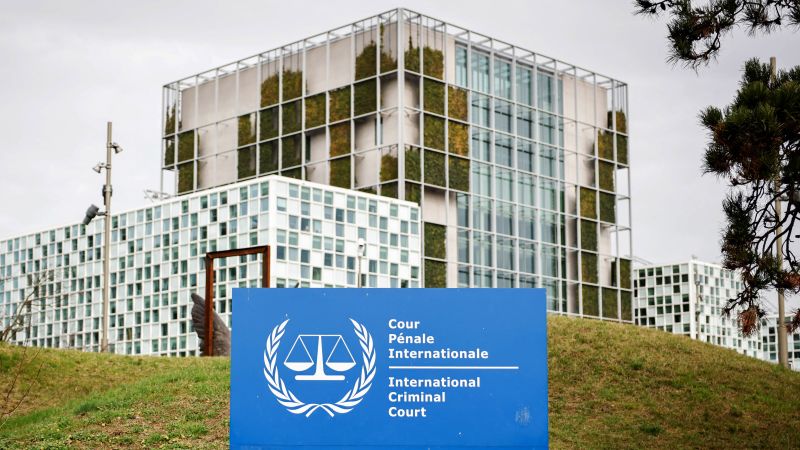
US Escalates Campaign Against International Criminal Court
The United States has imposed sanctions on International Criminal Court (ICC) President Tomoko Akane of Japan and senior trial lawyer Abdoulaye Seye of Senegal. This action represents a significant escalation in the US administration’s declared objective to counter what it perceives as a threat to American sovereignty from the court.
Announced by Secretary of State Marco Rubio, these sanctions target individuals involved in ICC efforts to investigate, arrest, detain, or prosecute officials from states not party to the Rome Statute. This move highlights a fundamental disagreement on legal jurisdiction, with the US asserting its right to shield its nationals from international judicial processes, particularly given its non-membership in the court.
Secretary Rubio characterized the ICC as a “corrupt and fatally politicized supranational court that has maliciously abused its authority and exceeded its mandate.” This strong rhetoric signals a strategic intent to delegitimize the institution and impede its operational capacity, especially concerning investigations that could involve US personnel or allies.
The State Department’s prior statement of intent to “dismantle the threat” posed by the ICC to US sovereignty provides critical context. The administration’s stated goal is to “disable the ICC’s ability to operate, target American servicemen or officials, or otherwise threaten American sovereignty,” reflecting a national security posture that prioritizes avoiding international legal entanglements for its citizens and interests.
Rubio’s call for the ICC’s 125 member states to withdraw from the court indicates a strategy aimed at isolating the institution and diminishing its global legitimacy. This diplomatic and economic pressure seeks to compel member states to reconsider their participation, thereby weakening the court’s foundational support.
The Trump administration previously sanctioned at least 11 other ICC officials, including judges and the chief prosecutor, demonstrating a consistent policy. These measures, typically including asset freezes and travel bans, are intended to create tangible obstacles to the court’s functioning and signal consequences for perceived overreach.
The ICC has denounced the sanctions as measures that “undermine the rule of law,” highlighting the institutional conflict. The court affirms its commitment to its mandate and operational independence, framing the US actions as an affront to international legal principles and a threat to its staff.
The court further stated its resolve: “remains undeterred and stands firmly behind its personnel and behind victims of unimaginable atrocities.” It pledged to “continue to fully discharge its mandate with independence and impartiality, in full accordance with the Rome Statute and in the interest of victims of international crimes,” positioning itself as a defender of victims and international justice, directly challenging the US narrative of a politicized entity.
Historical context reveals a long-standing US executive branch policy, with President Donald Trump having criticized the ICC extensively. The administration’s focus on the ICC’s attempts to investigate the United States and Israel—neither of which are member states—underscores specific geopolitical alignments influencing US policy towards international judicial bodies.
This persistent US stance poses a significant challenge to the ICC’s universal jurisdiction aspirations. By sanctioning leadership and publicly questioning its legitimacy, the US seeks to create a precedent that could encourage other non-member states, or even member states, to resist ICC investigations, thereby fragmenting the international legal order.
The strategic implications for the ICC are profound. The sanctions target individuals and aim to disrupt the court’s financial and logistical operations, potentially impacting its ability to conduct investigations and prosecutions. This creates direct operational risks, diverting resources and potentially affecting the recruitment and retention of international legal professionals.
Moreover, the US campaign has broader implications for the future of international justice. By actively seeking to “dismantle” an institution designed to hold perpetrators of serious international crimes accountable, the US signals a preference for bilateral or ad hoc justice mechanisms, or potentially no accountability for its nationals in certain contexts. This could lead to fragmented international law enforcement, with powerful states opting out of or undermining multilateral legal frameworks.
The competitive landscape for international legal institutions is also affected. US actions could embolden other nations wary of international scrutiny to withdraw from or weaken support for the ICC and similar bodies. This could result in a more fragmented and less effective international legal order, where powerful states are largely immune from external judicial review, altering the global governance balance.
While direct financial sanctions on the ICC are unlikely to cause widespread market disruption, the underlying principle of powerful states challenging international legal norms can create uncertainty for global investors and businesses operating across different jurisdictions. This uncertainty can influence investment decisions and the perceived stability of international legal frameworks.
The media plays a critical role in shaping public perception. The US administration’s framing of the ICC as “corrupt and fatally politicized” is amplified through various channels, influencing international discourse and public opinion in member states. The ICC’s counter-narrative, emphasizing its role in protecting victims and upholding the rule of law, also competes for attention and legitimacy.
The US leverages its economic and geopolitical power in this confrontation. The ability to impose sanctions and exert diplomatic pressure on ICC member states provides a significant advantage, allowing the US to shape the narrative and influence the court’s operational capacity, even without direct participation in its legal framework.
The incentives for the US are clear: protect its citizens and allies from potential prosecution by an international body over which it has no control and whose actions it perceives as infringing on national sovereignty. This aligns with a foreign policy that prioritizes national interests and unilateral action over multilateral cooperation when conflicts arise.
For the ICC, the incentive is to uphold its mandate and demonstrate its continued relevance and effectiveness. The court’s resilience in the face of US pressure is crucial for its credibility and its ability to attract future support and cooperation from member states and the international community.
The exposure for sanctioned individuals is primarily financial and related to freedom of movement. However, the broader exposure is for the ICC itself, facing reputational damage and operational challenges that could undermine its long-term viability and effectiveness in pursuing international justice.
The likely consequences include a potential weakening of the international legal order. If powerful states can shield their nationals from international accountability, it could embolden other states to disregard international law, leading to a less predictable and more volatile global security environment.
Strategic decisions by the US administration reflect a calculated approach, prioritizing national sovereignty and security interests as defined by the executive branch. This approach challenges established norms of international cooperation and accountability underpinning institutions like the ICC.
This conflict highlights a fundamental tension between national sovereignty and international legal obligations. US sanctions against ICC officials are strategic maneuvers in a broader struggle over the authority and reach of international law.
The institutional implications are significant for the future of international criminal justice. US actions could prompt a recalibration of how international courts interact with powerful states, potentially forcing a re-evaluation of jurisdiction, enforcement, and the principles of universal accountability.
The cultural impact, though less direct, is also noteworthy. The US narrative of the ICC as a politicized entity can foster skepticism towards international institutions among its populace and potentially in allied nations, reinforcing a more nationalistic outlook on global affairs.
Structural drivers behind this US policy stem from a long-standing debate on the balance of power between sovereign states and international organizations. The perception that international bodies can usurp national authority is a recurring theme, particularly for administrations emphasizing unilateralism.
Risk distribution is uneven. The US, as a superpower, can better absorb diplomatic fallout than the ICC, a supranational body with limited enforcement power. The ICC’s primary risk lies in maintaining its operational capacity and international legitimacy against sustained opposition from a key global actor.
Sector-wide implications extend to other international organizations. The success of the US strategy could encourage similar challenges to other international bodies, leading to a broader erosion of multilateral governance and a return to a more state-centric international system.
A forward-looking evaluation suggests this confrontation will likely persist, with the US continuing pressure and the ICC asserting its mandate. This creates an ongoing dynamic of tension and negotiation over the future of international justice.