Strategic Shifts in Platform Exclusivity and Software Lifecycle
The February 2026 State of Play signaled a definitive evolution in Sony Interactive Entertainment’s approach to platform exclusivity and revenue capture. By announcing the PC release of Death Stranding 2: On the Beach for March 19, less than a year after its console debut, the organization has notably compressed the traditional exclusivity window. This decision suggests a prioritization of secondary market liquidity over the long-tail console hardware pull, reflecting a broader industry move toward multi-platform distribution within the same fiscal cycle.
This compressed timeline serves as a strategic hedge against the rising costs of triple-A development. By accelerating the transition to PC, Kojima Productions and Sony maximize the marketing momentum generated during the initial launch phase while capturing a wider demographic that may not be invested in the PlayStation ecosystem. This shift indicates that the historical model of multi-year console exclusivity is being reevaluated in favor of high-impact, short-term competitive advantages.
The Institutional Logic of Legacy IP Preservation
The announcement of a remake for the original God of War trilogy alongside the shadow-drop of God of War: Sons of Sparta demonstrates a dual-pronged strategy for intellectual property management. Remakes function as high-yield, lower-risk financial instruments that leverage existing brand equity to fund more speculative ventures. By updating legacy titles to current technical standards, Sony ensures that its foundational catalog remains monetizable and relevant to a modern audience that may have missed the original hardware cycles.
Simultaneously, the immediate availability of God of War: Sons of Sparta on PlayStation 5 represents a shift toward surprise-release models designed to disrupt traditional marketing cycles. This tactic minimizes the window for competitive noise and captures consumer spend through immediate gratification, a move that requires significant operational confidence in the product’s quality and brand power. This integrated approach allows Sony to maintain a continuous presence in the market while balancing the costs of new development with the reliability of established franchises.
Independent Studio Integration and Portfolio Expansion
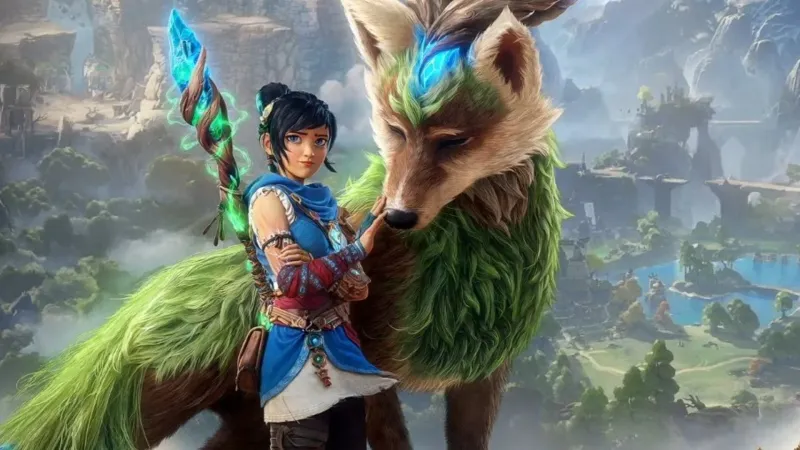
The reveal of Kena: Scars of Kosmora by Ember Lab highlights the strategic importance of second-party partnerships in maintaining portfolio diversity. Ember Lab’s expansion of the Kena universe, slated for a 2026 release on both PlayStation and PC, illustrates a collaborative model where independent studios provide stylistic variety that complements Sony’s internal high-fidelity output. This relationship allows the publisher to mitigate risk by distributing development across external entities while retaining significant influence over key content windows.
Kena: Scars of Kosmora transitions the protagonist into a more mature role, reflecting a narrative progression that mirrors the maturing audience of the original title. The inclusion of new mechanics, such as the evolution of spirit companions into mounts, suggests an increase in mechanical complexity and scope. This evolution is necessary to maintain competitiveness in the 3D action-platformer genre, which has seen increased pressure from both large-scale publishers and rising independent creators.
Live Service Expansion via Established Single-Player Foundations
Ghost of Yōtei Legends, set for release on March 10, functions as a critical component of Sony’s live-service strategy within the framework of a successful single-player brand. By launching this four-player cooperative mode as part of Patch 1.5, the organization is attempting to extend the operational lifespan of the Ghost of Yōtei ecosystem. This model incentivizes long-term player retention through class-based gameplay and cooperative objectives, moving away from the one-off consumption pattern typical of narrative-driven games.
The introduction of the Yōtei Six as demonic adversaries provides a structural foundation for recurring content updates and engagement loops. This strategic layering of multiplayer components onto single-player hits allows Sony to experiment with live-service revenue streams without the reputational risk associated with standalone multiplayer titles. It establishes a repeatable framework where high-quality narrative experiences serve as the gateway for more sustainable, long-term service models.
Operational Significance of Original Licensed Narratives
The debut of a story trailer for 007 First Light by IO Interactive marks a significant entry into the licensed media space for the 2026 roadmap. This original take on the James Bond origin story, set in Iceland, indicates a strategic focus on globally recognized intellectual property that carries built-in market awareness. For IO Interactive, the project represents a diversification away from its established stealth-action roots toward a more cinematic, narrative-heavy structure.
From a platform perspective, 007 First Light serves as a prestige title that can anchor marketing efforts across both European and North American territories. The focus on the MI6 00 programme’s revival suggests a narrative framework that could support potential future expansions or sequels, provided the initial entry meets internal performance benchmarks. This project exemplifies the trend of utilizing established cultural icons to lower the barrier for consumer entry while providing the high-fidelity experiences expected from the PlayStation 5 hardware.
Synthesis of Long-Term Competitive Impacts
The collective announcements from the February 2026 State of Play reveal a sophisticated balancing act between innovation and preservation. Sony is increasingly reliant on a mix of remakes to ensure financial stability, short exclusivity windows to maximize audience reach, and integrated multiplayer modes to drive engagement. This structural approach minimizes the vulnerability of the ecosystem to individual product failures by spreading risk across multiple delivery models and release cadences.
The move toward PC availability for flagship titles like Death Stranding 2 suggests that the definition of the PlayStation ecosystem is expanding beyond the hardware itself to encompass a broader software-as-a-service identity. As capital continues to move toward proven franchises and cross-platform accessibility, the traditional barriers between console-specific markets are likely to continue eroding. This evolution positions Sony to remain a dominant force in the global gaming market by adapting its distribution and development strategies to meet changing economic and consumer realities.