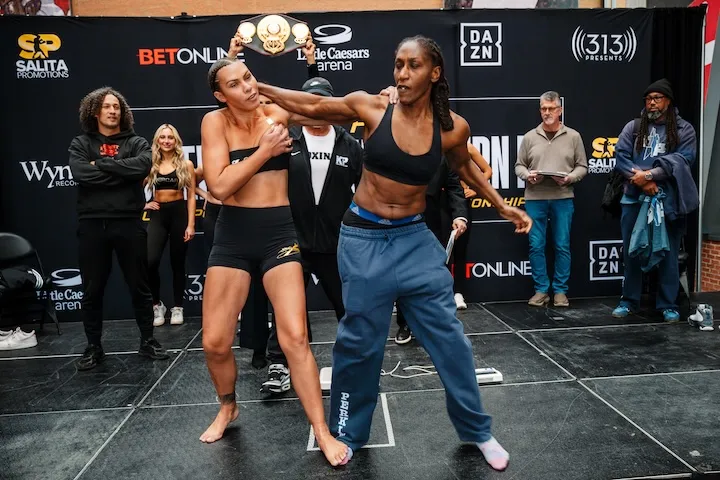
The technical and physical recalibration of Danielle Perkins reached its zenith with a sixth-round stoppage of Che Kenneally, securing the vacant WBA light heavyweight championship. This victory serves as a definitive validation of Perkins’ strategic transition from the heavyweight ranks, where she previously challenged for undisputed honors. By aligning her competitive weight with her natural physiological output at the 175-pound limit, Perkins exhibited a vastly improved power-to-speed ratio that proved insurmountable for the incumbent contender.
Promotional Synergy and Divisional Calibration
Perkins’ move reflects a sophisticated shift in market positioning. Now managed and promoted by Claressa Shields, Perkins benefits from a unique vertical integration of elite ring experience and promotional leverage. This partnership provides the institutional capital necessary to navigate a light heavyweight division that has historically lacked depth. Her arrival recalibrates the competitive hierarchy, introducing a champion with high-pedigree amateur credentials and heavyweight durability into a weight class ripe for consolidation.
Deconstructing the Experience Asymmetry
The bout’s narrative was defined by the disparity in opposition quality. Perkins explicitly targeted Kenneally’s 5-0 record, characterizing it as the product of protected matchmaking against debutants and smaller opponents. By applying sustained, high-volume pressure, Perkins introduced a “dangerous situation” that Kenneally’s technical foundations were unprepared to withstand. While Kenneally found brief success with lead rights in the opening frame, her defensive structure collapsed under the psychological and physical tax of elite-level offensive output.
Tactical Execution and Athletic Foundation
Leveraging her background as a former professional basketball player, Perkins maintained superior conditioning and lateral mobility—attributes often absent in the heavier divisions. This athletic base allowed her to sustain a pace that neutralized Kenneally’s height and reach advantages. The sixth-round knockout resulted from cumulative damage, highlighting a systemic failure in Kenneally’s ability to adapt to world-class pacing. For the 43-year-old Perkins, the victory maximizes the commercial value of a narrow but high-impact performance window.
Institutional Implications and Future Trajectories
The WBA’s sanctioning of this bout establishes a clear lineage for the 175-pound title, incentivizing immediate high-profile defenses or unification matches. While the loss necessitates a significant career recalibration for Kenneally, Perkins now holds substantial leverage in negotiations for undisputed status. This performance signals that the light heavyweight division will no longer be defined by regional development but by the rigorous standards of international elite competition.