
New Jersey Blizzard Response: Analysis of Governance, Risk Management, and Operational Challenges
The implementation of a statewide travel ban in New Jersey, triggered by a blizzard described by Governor Mikie Sherrill as potentially the worst since 1996, exposed critical operational and strategic challenges for public institutions and private enterprises. The mandatory restriction, which covered all 21 counties, marked a rare and significant intervention in economic activity, forcing a re-evaluation of emergency response protocols and infrastructure resilience across the state. While the ban was lifted after approximately 15 hours, the lingering hazardous conditions underscored the difficulty of balancing public safety with the imperative to restore commercial and logistical continuity.
The governor’s declaration of a state of emergency provided the necessary legal framework to enforce the travel ban, reflecting a high-stakes, preemptive decision driven by forecasts of potentially life-threatening conditions. This measure effectively halted non-essential movement across a densely populated and economically vital region. The decision to lift the ban at noon on Monday, despite persistent snow cover and limited visibility in some areas, indicates a calculated transition from mandatory restriction to individual risk assessment. This shift transferred the burden of safety from state enforcement to personal responsibility as the immediate threat subsided, prioritizing the resumption of economic activity over absolute public safety in non-life-threatening conditions.
Institutional Resilience Case Study: The Rowan University Model
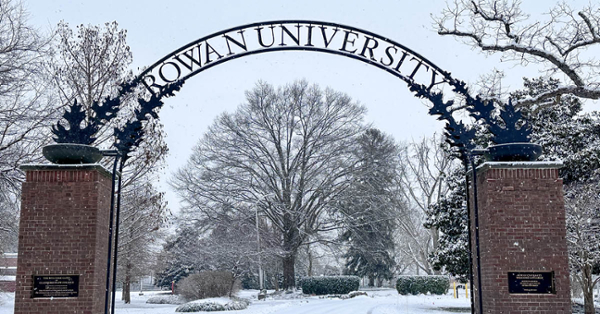
The response of institutions like Rowan University provides a detailed case study in operational continuity planning during severe weather events. The university’s decision to close all campuses from Sunday evening through Monday demonstrates a proactive approach to mitigating risk for its student body and non-essential staff. This action, taken in anticipation of the inclement weather, contrasts with a reactive approach that might wait for conditions to worsen, highlighting a shift toward preemptive risk management in institutional policy.
The university’s communication strategy differentiated between essential and non-essential personnel, a critical component of institutional resilience planning. By requiring essential employees to coordinate with supervisors, the university ensured that core functions, particularly those related to on-campus student welfare and infrastructure maintenance, could continue without interruption. This tiered approach minimizes operational downtime while prioritizing safety for the majority of the workforce, reflecting a standard practice in large organizations with diverse operational requirements.
Furthermore, the specific guidance provided for various schools within the university system reveals a nuanced understanding of operational dependencies. The decision to issue separate instructions for Cooper Medical School, Virtua Health School of Osteopathic Medicine, and Shreiber School of Veterinary Medicine acknowledges the unique requirements of medical education and healthcare services. These programs often involve clinical rotations, patient care, or animal welfare responsibilities that cannot be entirely suspended during a weather event, necessitating customized protocols for essential staffing or virtual instruction where possible.
The university’s choice to keep certain facilities open for on-campus students—specifically the Wellness Center, recreation facilities, and student centers—underscores a commitment to maintaining a baseline quality of life for resident populations. This approach recognizes that on-campus students, unable to travel off-site, require access to essential services and recreational outlets. It highlights the logistical complexity of managing a residential campus during a lockdown, where the institution assumes a comprehensive duty of care for its population beyond academic instruction.
Economic Impact and Supply Chain Vulnerability Analysis
A statewide travel ban, even for a limited duration, has significant economic ramifications, particularly for logistics and supply chain operations. The widespread flight cancellations and restriction on ground transportation disrupt air cargo and passenger travel, creating cascading delays in global supply chains. The immediate impact on just-in-time inventory systems and local commerce highlights a significant vulnerability for densely populated regions where logistical efficiency is paramount.
The economic cost of a mandatory shutdown extends beyond immediate revenue loss for businesses. It includes lost productivity from non-essential workers unable to commute, increased costs associated with business interruption insurance claims, and potential supply shortages in critical sectors like food and healthcare. The decision to lift the ban at noon on Monday, while urging caution, represents a calculated attempt to mitigate these economic pressures by allowing a gradual resumption of activity, prioritizing the restoration of commercial flow over absolute public safety in non-life-threatening conditions.
The governor’s comparison to the 1996 storm suggests that state officials are operating with a memory of significant economic disruption. This historical benchmark informs current policy decisions, influencing the balance between preemptive action and economic cost. The rarity of a statewide blizzard warning across all 21 counties underscores the exceptional nature of the event, justifying measures that would otherwise be considered economically prohibitive for a less severe storm.
Media Strategy and Risk Communication: The Naming Controversy
The naming of the storm as “Hernando” by The Weather Channel introduces a complex dynamic in media strategy and risk communication. The source notes that The Weather Channel has named winter storms since the 2012-2013 season, following the precedent set by Superstorm Sandy. This practice, while criticized by some, serves a specific strategic purpose for the media organization: to increase audience engagement and differentiate its content in a competitive landscape.
The Weather Channel’s justification for naming high-impact winter storms—to bring significant snow and/or ice and affect multiple regions—is intended to elevate the perceived severity of the event. By assigning a name, the media outlet attempts to create a distinct identity for the storm, making it more memorable and potentially increasing public compliance with safety warnings. This strategy leverages the public’s familiarity with named hurricanes, officially designated by institutional bodies like the National Hurricane Center, to enhance the perceived authority and urgency of its reporting.
However, critics argue that a commercial media entity should not assume the role of naming natural phenomena, a function traditionally reserved for government or scientific bodies. This practice can sensationalize weather events, potentially leading to public fatigue or skepticism if less severe storms are named, thereby diminishing the impact of warnings for truly catastrophic events. The strategic decision to name storms thus presents a trade-off between increased audience engagement and potential reputational risk regarding journalistic objectivity.
The media’s role in risk communication during a statewide emergency is critical. The governor’s public statements urging residents to take the storm seriously and abide by the travel ban highlight the importance of consistent messaging between government officials and media outlets. The naming of the storm by a media entity, while potentially controversial, contributes to the overall narrative of severity that public officials rely on to ensure compliance with emergency orders. This interplay between official warnings and media branding shapes public perception and response during critical events.
Long-Term Implications for Infrastructure and Policy Adaptation
The logistical challenge of implementing a mandatory travel ban across all 21 counties of New Jersey is significant, given the state’s diverse geography and population density. New Jersey includes highly urbanized areas, suburban commuter corridors, and rural regions, each with unique infrastructure and transportation needs. A uniform travel ban requires coordinated enforcement by state police, local law enforcement agencies, and emergency management personnel across these varied jurisdictions.
The severity of the blizzard and the resulting statewide travel ban raise questions about long-term infrastructure investment and policy adaptation. The event provides data points for assessing the effectiveness of current snow removal equipment, communication systems, and emergency response protocols. The need for crews to continue working to clear roads and restore safe travel suggests a potential gap between existing resources and the demands of a high-impact, statewide storm.
Future policy discussions may focus on increasing capital investment in snow removal equipment, improving inter-agency communication systems, and developing more sophisticated, localized response plans that can be implemented without a uniform statewide ban. The university’s successful implementation of virtual instruction protocols for specific schools, as implied by the source, demonstrates the value of investing in remote learning capabilities. This investment, initially driven by events like Superstorm Sandy and later accelerated by the COVID-19 pandemic, provides a critical layer of operational resilience that allows academic activities to continue even when physical campuses are inaccessible.

Photo by jplenio on Pixabay.