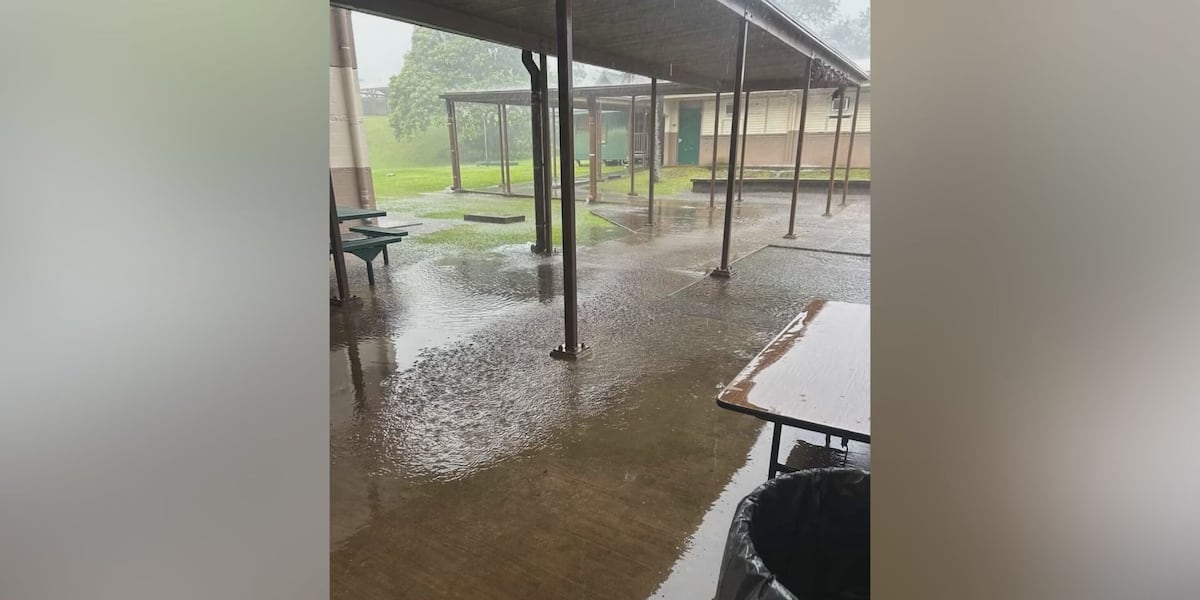
The Hawaii Department of Education (HIDOE) is navigating an acute fiscal and operational crisis as the financial toll from recent Kona low storms reached an estimated $171 million. Presented by Superintendent Keith Hayashi to the state Board of Education, this valuation underscores the intersection of extreme weather volatility and aging capital assets, requiring immediate emergency remediation and long-term structural reinvestment.
The recovery effort is quantified by an administrative backlog of over 500 storm-related work orders and 42 active insurance claims. This volume indicates widespread degradation of facility integrity, stretching the department’s internal maintenance capacity and necessitating a strategic reliance on private-sector contractors for complex structural repairs and environmental stabilization.
Critical Operational Disruptions and Remediation Protocols
The Konawaena Middle and High School campuses sustained the most severe impact, with floodwaters reaching four feet within interior structures. Such significant water intrusion mandates rigorous environmental remediation protocols, including comprehensive mold mitigation and the removal of saturated porous materials to maintain institutional air quality standards. Consequently, Konawaena shifted to distance learning, a transition that highlights the necessity of digital pedagogical flexibility in response to physical campus failures.
In the Manoa region, Noelani and Hokulani schools suffered substantial damage, with Hokulani students requiring relocation to satellite campuses. This logistical shift involves the optimization of temporary classroom space and the coordination of specialized transportation, illustrating the administrative complexity of maintaining educational continuity during regional disasters.
Infrastructure Vulnerabilities and Geographic Constraints
The reported failures—ranging from clogged drainage systems to total roof collapses—expose systemic vulnerabilities within the state’s educational facilities. When municipal and campus drainage systems fail to handle high-volume precipitation, the resulting hydrostatic pressure exacerbates ceiling and flooring failures, exponentially increasing recovery costs. Furthermore, road closures in East Maui isolated Hana High & Elementary School, demonstrating the interdependence between educational operations and municipal infrastructure stability.
In Wailuku, the closure of Henry Perrine Baldwin High School due to a lack of running water—caused by an adjacent construction project—further compounded the department’s challenges. While not storm-related, this utility failure emphasizes the fragility of school operations during periods of broader regional stress and the critical need for inter-agency coordination with utility providers.
Fiscal Outlook and Risk Management Strategy
The $171 million estimate serves as a primary data point for upcoming legislative budget requests. The DOE must now navigate the complexities of insurance indemnification, which rarely covers the total cost of modernizing facilities to current resilience standards. Superintendent Hayashi’s observations regarding the ‘unprecedented’ nature of the damage suggest a pivot in facility planning, where historical weather patterns no longer serve as a reliable baseline for risk assessment.
As the department prioritizes its 500+ work orders, health and safety compliance remain the immediate focus, followed by structural stabilization. The long-term recovery will require a sustained commitment to building climate-resilient environments, ensuring that Hawaii’s schools can withstand the increasing frequency of high-intensity weather events.