
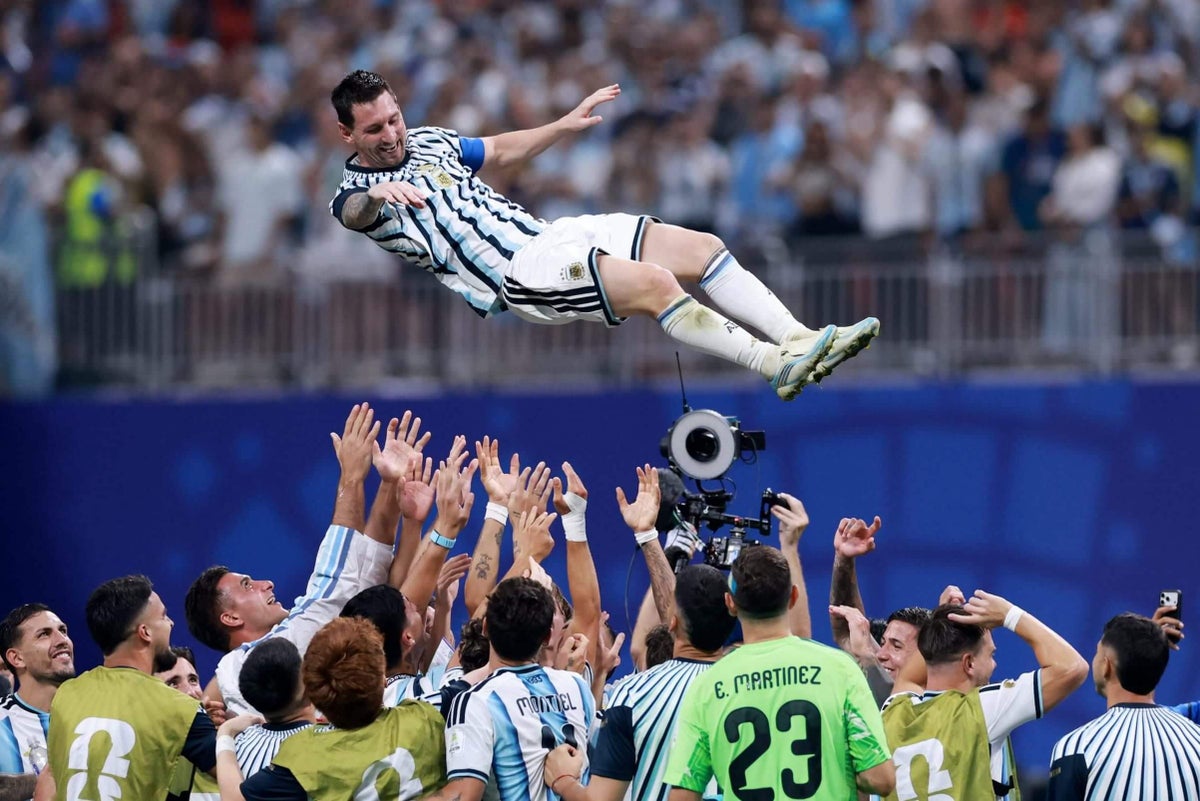
FIFA World Cup Quarterfinals: A Nexus of Strategic, Economic, and Operational Dynamics
The 2026 FIFA World Cup has reached its quarterfinal stage, a pivotal juncture that profoundly amplifies strategic, economic, and operational considerations for all stakeholders. This phase transcends mere athletic competition, transforming into a high-stakes business arena where every on-field outcome reverberates across a vast commercial ecosystem.
The progression of national teams through these knockout rounds directly shapes media narratives, intensifies fan engagement, and significantly influences the financial returns for global broadcasters, host cities, and national federations. It also critically impacts individual player valuations and brand equities, underscoring the intricate interdependencies within this global sports phenomenon.
Operational Excellence: Athlete Welfare, Competitive Integrity, and Strategic Logistics
FIFA’s meticulously structured tournament schedule, incorporating designated rest days, represents a sophisticated operational strategy. This design prioritizes athlete welfare and performance sustainability, crucial for maintaining the competitive integrity and premium product quality of the World Cup’s decisive stages. Such strategic pauses, like the one mid-week after intense early rounds, are vital recovery periods, mitigating injury risks and enabling star players to perform at their peak. This directly safeguards the commercial value and global viewership of the tournament’s high-stakes climax.
Beyond physical recovery, these strategic rest periods provide essential time for coaching staff to conduct tactical refinements, comprehensive player fitness assessments, and mental conditioning. This directly impacts competitive balance, fostering potential upsets that further amplify media interest and audience anticipation. For host cities and venue operators, these breaks are critical windows for essential infrastructure maintenance, logistical recalibrations, and security reviews. Ensuring seamless transitions between rounds is paramount for upholding the tournament’s global reputation and guaranteeing a consistent, high-quality fan experience across diverse venues.
Broadcast Rights Monetization: Strategic Distribution and Digital Engagement
The intricate broadcast rights architecture, exemplified by agreements with major networks and their dedicated streaming platforms, represents a colossal financial investment and a foundational pillar of the World Cup’s revenue model. These multi-platform distribution strategies are critical for achieving expansive global reach and optimizing the monetization of premium live sports content.
This dual distribution approach strategically addresses the evolving media consumption landscape, ensuring maximum audience accessibility and engagement. By catering to diverse demographics, technological preferences, and viewing habits—from traditional linear TV to on-demand streaming—broadcasters can unlock higher total viewership and advertising yield through sophisticated market segmentation.
For rights holders, securing exclusivity for an event of the World Cup’s magnitude is a strategic imperative, driving substantial subscriber acquisition and advertising revenue streams. The provision of unique, high-stakes live content offers a distinct competitive advantage in an increasingly fragmented media market, strengthening brand loyalty and enhancing market positioning within the sports media ecosystem.
The drama of key matches directly correlates with surges in viewership metrics, which in turn dictate advertising rates, sponsorship valuations, and future media rights negotiation power. High-drama encounters and compelling competitive narratives validate the profound investments made by media partners, delivering tangible ROI through sustained audience attention.
Furthermore, the integration of advanced streaming services facilitates granular data analytics on viewer behavior, offering invaluable insights for content personalization, targeted advertising campaigns, and predictive consumption modeling. This digital layer adds significant sophistication to the commercial exploitation of sports content, extending monetization opportunities far beyond conventional linear broadcasts and informing future strategic content development.
Host City Economics: Infrastructure Investment, Tourism Multipliers, and Brand Legacy
The selection of host cities and iconic venues, such as MetLife Stadium for the final on July 19th, underscores the profound economic and infrastructural commitments required to stage a FIFA World Cup. These venues become critical economic anchors, driving substantial inbound tourism, hospitality revenue, and localized commercial activity. The decision to host is a calculated investment, aimed at generating significant economic multipliers.
Hosting World Cup matches catalyzes extensive economic activity, encompassing direct consumer spending by international and domestic fans on accommodation, F&B, retail, and transportation, alongside indirect benefits for local supply chains and service providers. This capital influx delivers a substantial, albeit temporary, boost to regional GDP, often justifying the considerable public and private investments in state-of-the-art stadium infrastructure and broader urban development initiatives.
The unparalleled global visibility afforded to host cities through comprehensive international broadcasts offers invaluable marketing and branding opportunities. Showcasing urban landscapes, cultural attractions, and logistical prowess to billions of viewers can yield significant long-term benefits for tourism, foreign direct investment, and international trade, extending the event’s economic impact far beyond its duration.
Executing the complex operational logistics of these mega-events demands sophisticated coordination across local governance, security agencies, public services, and transportation networks. The successful management of vast crowds and intricate event schedules serves as a powerful demonstration of a city’s capability and resilience, enhancing its global reputation and attractiveness for future major international gatherings and commercial ventures.
The enduring legacy of hosting often includes accelerated upgrades to public infrastructure, modernization of transport systems, and a measurable enhancement of civic pride. These tangible and intangible returns contribute strategically to a city’s global positioning, influencing its future competitiveness in attracting further economic, cultural, and sporting endeavors.
Athlete Brand Equity: Performance, Market Valuation, and Narrative Generation
Individual player performances throughout the FIFA World Cup are directly correlated with their market valuation and long-term brand equity. Exceptional displays of skill and leadership in this unparalleled global showcase amplify a player’s commercial appeal, leading to significantly enhanced endorsement portfolios and a potential surge in transfer market value. The compelling narratives surrounding individual achievements, such as a “Golden Boot Race” or pivotal match-winning moments, generate immense media attention, benefiting both the athletes and their associated commercial partners.
Beyond individual stars, team narratives exert profound influence. The emergence of an “underdog” team, exemplified by Morocco’s surprising 2022 semi-final run, demonstrates the potent impact of competitive disruption. Such stories captivate global audiences, elevating the profile of entire national teams, catalyzing new sponsorship deals, and stimulating investment in national football development programs. These narratives foster emotional connections, translating into broader fan bases and increased commercial opportunities.
The dynamic interplay of pre-tournament expectations (e.g., highly-ranked favorites vs. resilient dark horses) and actual on-field performance fuels extensive media speculation and deepens fan engagement. This dramatic tension is indispensable for sustaining the tournament’s commercial viability and cultural resonance. The amplified pressure of knockout rounds, where a single result determines a team’s destiny, frequently produces legendary moments that transcend sport, cementing the World Cup’s enduring cultural and economic significance.
FIFA’s Strategic Imperatives: Global Development, Revenue Optimization, and Brand Governance
The comprehensive architecture and execution of the 2026 FIFA World Cup are direct manifestations of FIFA’s core strategic imperatives: to globalize football participation, optimize commercial revenue streams, and accelerate development across all member associations. The expanded tournament format, featuring 104 matches, epitomizes an ambitious vision for broader global inclusion and enhanced market penetration.
Orchestrating an event of this unprecedented scale demands intricate, multi-dimensional planning. This encompasses robust regulatory frameworks, sophisticated commercial partnership management, and seamless logistical coordination across numerous jurisdictions. FIFA’s governance extends beyond competitive rules to upholding ethical standards, promoting fair play, and leveraging the sport’s universal values for global advocacy.
The substantial financial success generated by the World Cup is strategically re-invested, fueling FIFA’s global football development programs. This includes critical funding for grassroots initiatives, infrastructure development, coaching accreditation, and talent pathways. This virtuous cycle, linking revenue generation to developmental investment, is foundational for the sport’s long-term sustainability, competitive balance, and global growth trajectory.
Beyond its sporting and economic functions, the World Cup operates as a paramount platform for international diplomacy and profound cultural exchange. By uniting diverse nations and billions of fans, it generates significant institutional impact, contributing to global soft power, fostering cross-cultural understanding, and reinforcing FIFA’s role as a key international non-governmental organization.
The anticipation building towards the final at MetLife Stadium on July 19th symbolizes the successful culmination of these interconnected strategic efforts. The crowning of a champion transcends a sporting triumph; it signifies the impeccable execution of a complex, global enterprise with far-reaching economic, social, and cultural implications that redefine the landscape of international sport.
Market Dynamics: Fan Engagement, Consumer Behavior, and Sustained Commercial Value
The temporary cessation of matches, such as mid-week breaks, strikingly illustrates the profound void left in the global entertainment landscape. This phenomenon underscores the immense cultural resonance and economic gravity of the World Cup, which captures the undivided attention of billions and significantly recalibrates global consumer behavior patterns.
The intense collective experience of “joy and pain” intrinsically linked to World Cup football directly translates into robust market activity. This includes exponential growth in merchandise sales, an surge in legalized sports betting, and elevated consumption of ancillary media content. The tournament operates as a potent economic catalyst, influencing discretionary spending and driving significant commercial transactions on a global scale.
Fan engagement extends far beyond passive viewership, embracing active digital participation in online communities, social media discourse, and interactive platforms. This pervasive digital ecosystem not only amplifies the tournament’s reach but also unlocks sophisticated avenues for commercialization through data-driven targeted advertising, influencer marketing, and integrated sponsored content strategies.
The compelling narratives woven from team performances and individual heroic acts—be they dramatic comebacks or unexpected eliminations—become global cultural touchstones. These stories perpetuate media cycles, generate watercooler conversations, and sustain public interest even during periods without live matches, thereby maintaining the tournament’s overall commercial momentum and cultural ubiquity.
The strategic timing of rest days, while primarily safeguarding player welfare, also serves a critical function in audience management. This controlled release of content meticulously builds anticipation for subsequent rounds, ensuring that the “jeopardy, excitement, and anticipation” are progressively amplified, maximizing engagement and commercial returns as the competition hurtles towards its climax.
Risk Management: High-Stakes Knockout Rounds and Stakeholder Exposure
The transition to knockout rounds fundamentally reconfigures the risk profile for all participating entities—national teams, governing federations, and a vast network of commercial partners. The “sudden death” format introduces an extreme level of competitive exposure where a singular tactical misstep or a moment of individual brilliance can trigger immediate, irreversible, and profoundly consequential outcomes, both athletically and financially.
For national teams, the existential threat of elimination intensifies strategic decision-making, often compelling a recalibration towards either highly conservative, risk-averse tactics or bold, aggressive gambits. The outcome has direct and cascading impacts on national prestige, future funding allocations for football development programs, player marketability, and the career trajectories of athletes and coaching leadership.
Broadcasters and sponsors confront a highly dynamic risk landscape. The premature elimination of a favored team or a marquee player can significantly disrupt viewership projections, dilute advertising ROI, and diminish the perceived value of their substantial investments. While the inherent unpredictability of knockout football fuels unparalleled drama and audience engagement, it simultaneously injects a considerable element of commercial volatility and uncertainty into financial models.
Dramatic climaxes, such as tense penalty shootouts or last-minute game-changing goals, are integral to the tournament’s enduring allure. However, these moments also represent periods of maximal emotional and financial exposure for every stakeholder. The profound emotional investment cultivated among fans translates into immense commercial value, yet concurrently amplifies the market impact of both triumphant success and devastating failure.
Ultimately, the World Cup’s knockout stages serve as an unparalleled case study in high-stakes risk management, where operational resilience, strategic foresight, and the capacity to deliver peak performance under immense pressure must converge flawlessly. The definitive outcomes of these matches send ripple effects throughout the entire global sports ecosystem, profoundly shaping future market dynamics, institutional strategies, and the competitive landscape for years to come.

Photo by jorono on Pixabay.