
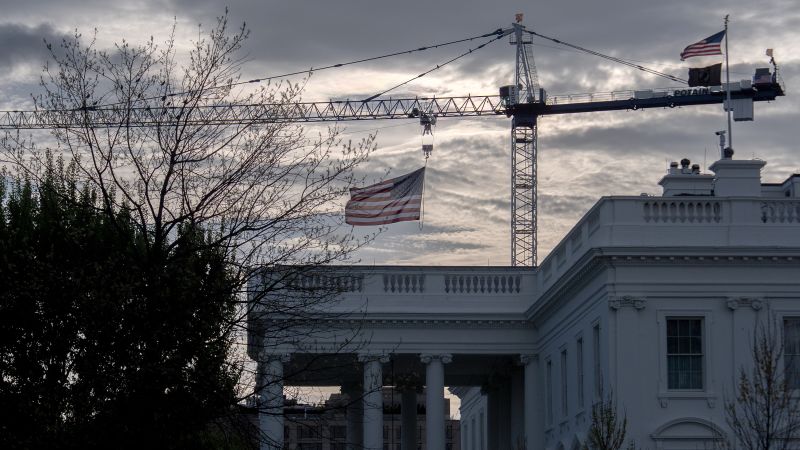
In a 2-1 decision, the DC Circuit Court of Appeals has granted the executive branch a temporary reprieve, allowing construction of the $400 million White House ballroom to continue until at least April 17. The ruling stays a previous injunction by U.S. District Judge Richard Leon, who had challenged the administration’s unilateral spending authority without explicit congressional appropriation.
Constitutional Friction and the Power of the Purse
The litigation highlights a fundamental tension between Article I legislative oversight and Article II executive autonomy. Opponents of the project argue that the massive expenditure on the former East Wing site bypasses the constitutional ‘power of the purse.’ Conversely, the administration frames the project as a necessary evolution of the executive residence, suggesting that specific legislative mandates for individual structural components are not required for maintaining federal property.
The Doctrine of National Security Interdependence
The appellate court’s intervention hinges on a ‘national security shield.’ Government counsel argued that the ballroom is physically and functionally integrated with classified subterranean security upgrades. To halt surface-level work, the administration contends, would be to leave critical defense infrastructure exposed. The majority opinion noted that the current record lacks the granularity to determine if the ballroom can be decoupled from these vital safety systems without creating tactical vulnerabilities at the seat of government.
Procedural Deficiencies and Judicial Restraint
Describing the existing legal record as ‘hurried,’ the DC Circuit signaled that Judge Leon’s initial injunction lacked the evidentiary depth required for such a high-stakes intervention. By remanding the case for further fact-finding, the appellate court is forcing a technical reconciliation between legal requirements and physical safety protocols. The burden now lies with the lower court to determine if a ‘surgical injunction’ is feasible or if the project’s security and hospitality elements are inextricably linked.
Institutional Precedent and Supreme Court Pathways
The stay until April 17 provides a strategic window for the administration to seek emergency relief from the Supreme Court. The 2-1 split reflects a lack of judicial consensus regarding the limits of presidential authority over federal estates. If the national security justification prevails, it could establish a precedent for expansive executive discretion in infrastructure projects, provided they are categorized as essential for protection and operational continuity.

Photo by Felix-Mittermeier on Pixabay.