Visual Framing and Strategic Collisions at Wembley Stadium
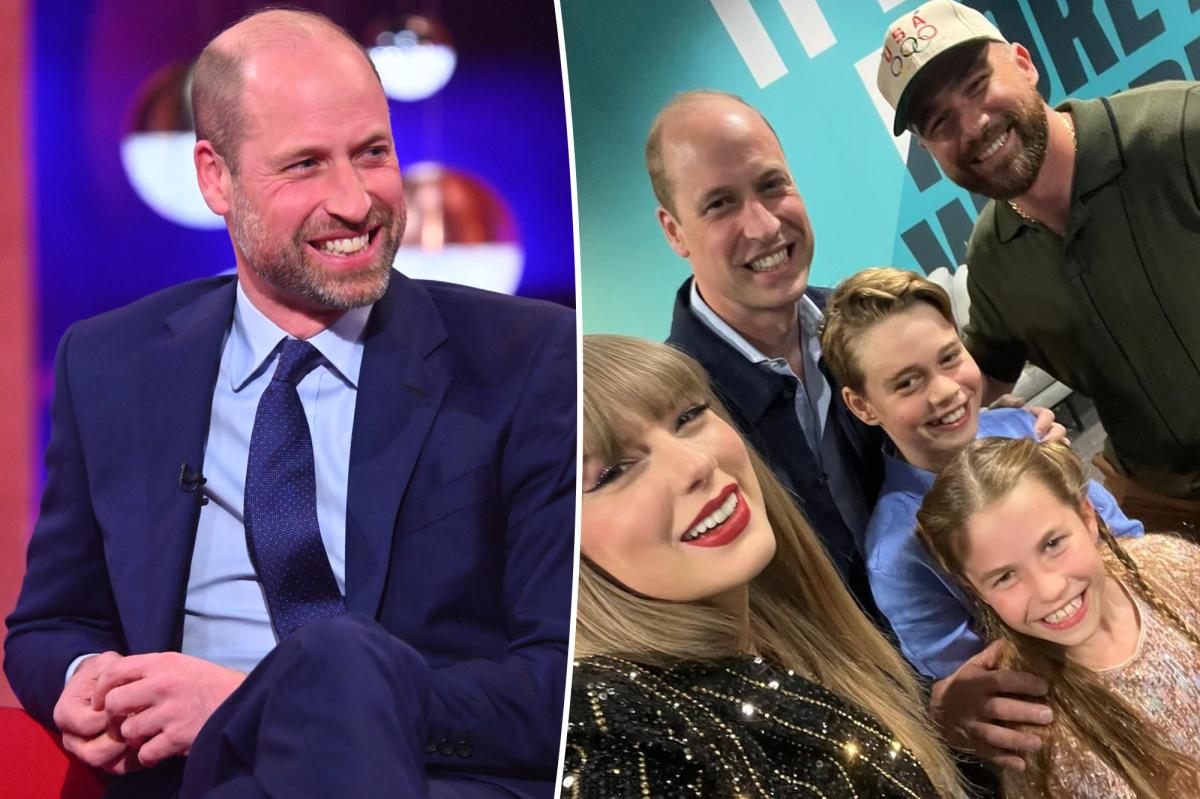
During an appearance on The Graham Norton Show, Prince William addressed the backstage mechanics behind the viral June 2024 photograph taken during Taylor Swift’s Eras Tour at Wembley Stadium. Accompanied by Prince George and Princess Charlotte, the Prince of Wales engaged in an impromptu photo opportunity that rapidly intersected institutional monarchy, American sports media, and global pop celebrity. William disclosed that he humorously attempted to steer Kansas City Chiefs tight end Travis Kelce out of the camera’s primary field of view, intending to preserve a composition limited strictly to the royal family and Swift.
The retrospective account illustrates the inherent tensions of unchoreographed digital encounters. Royal protocol traditionally relies on controlled compositions that safeguard institutional dignity. In this setting, the casual, physical spontaneity introduced by Kelce—punctuated by a friendly hand on William’s back—collided with conventional monarchical portraiture. The athlete’s repeated entry into the viewfinder challenged standard royal framing practices, producing two divergent visual assets: a targeted, protocol-aligned portrait featuring solely Swift and the royals, and an expansive ensemble photograph that captured global digital engagement.
The Dual Architecture of Social-First Public Relations
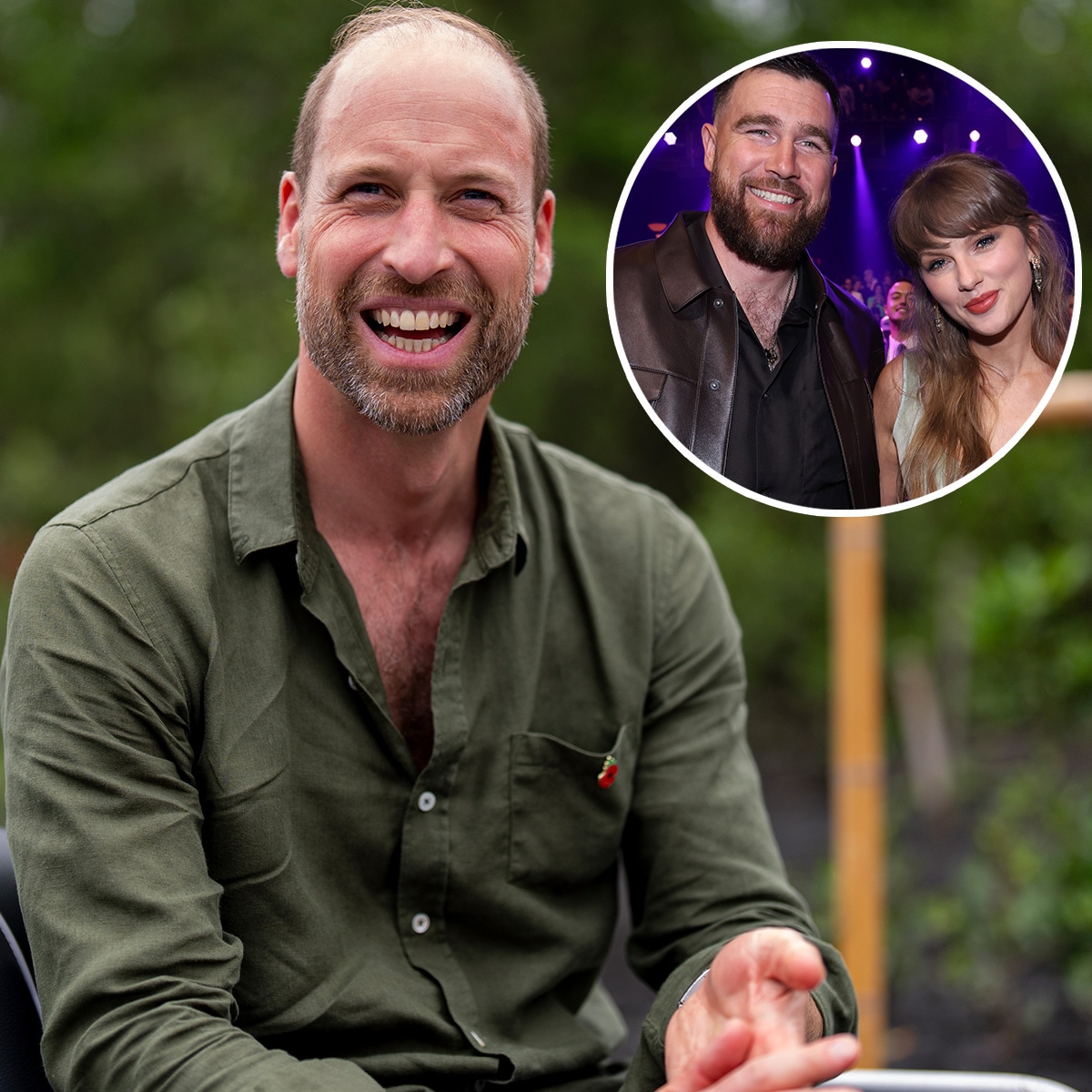
The resulting visual artifact acquired elevated significance when Swift used the ensemble image to make her relationship with Kelce ‘Instagram official.’ While the royal delegation pursued a direct cultural greeting for the young prince and princess, Swift’s communications apparatus converted the interaction into an unprecedented platform for a personal milestone. This asymmetric information environment reveals how institutional participants can inadvertently anchor external commercial and interpersonal narratives.
For Swift, contextualizing her relationship alongside the future British monarch conferred unique reputational prestige and accelerated algorithmic reach across disparate consumer demographics. For the royal household, the interaction served as an exercise in generational soft power, bridging the British constitutional establishment with younger, digitally native audiences without formal diplomatic staging. The resulting viral surge demonstrated that modern public diplomacy increasingly relies on decentralized social media channels rather than traditional institutional dispatches.
Broadcast Media and Narrative Re-anchoring
William’s decision to revisit the encounter on broadcast television exemplifies deliberate narrative re-anchoring. By deploying self-deprecating humor in a conversational entertainment forum, the Prince demystified an unscripted backstage negotiation without projecting institutional rigidity. The framing of Kelce’s persistent positioning as a playful obstacle humanized royal media management while preserving personal boundaries.
Ultimately, the broadcast segment completes the lifecycle of an unscripted cultural artifact. Mobile photography inherently bypasses rigid royal press access, shifting visual control from accredited photographers to platform algorithms and private accounts. By retroactively detailing the operational reality of the selfie, William reclaimed communicative agency, demonstrating how the modern British monarchy navigates mobile-first celebrity ecosystems while preserving institutional relevance.