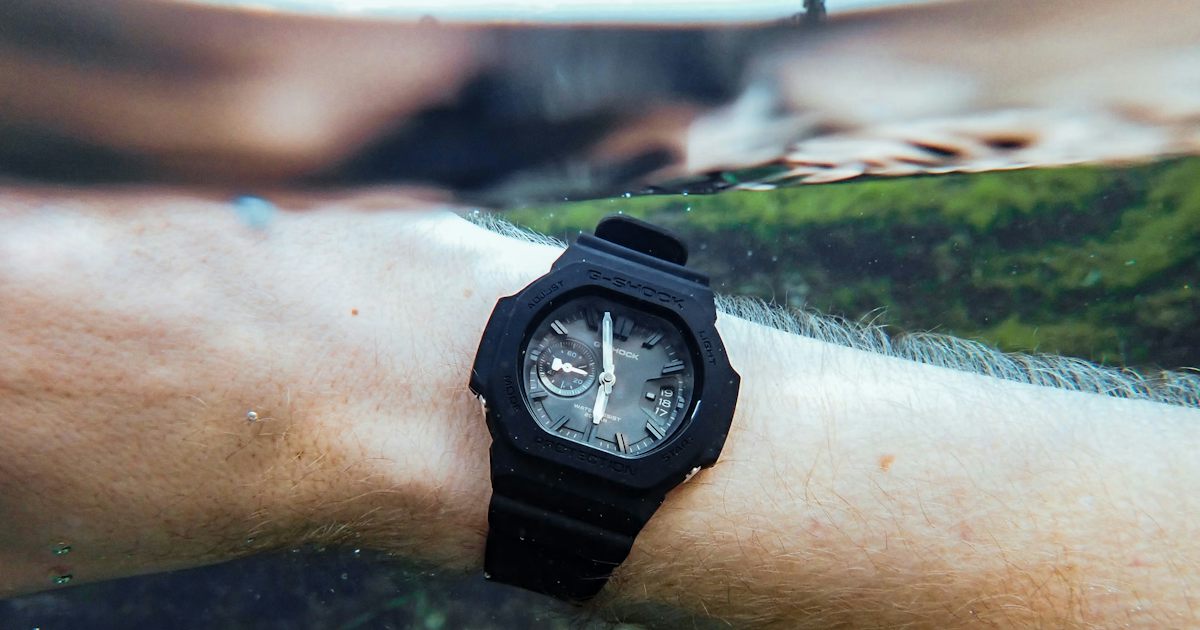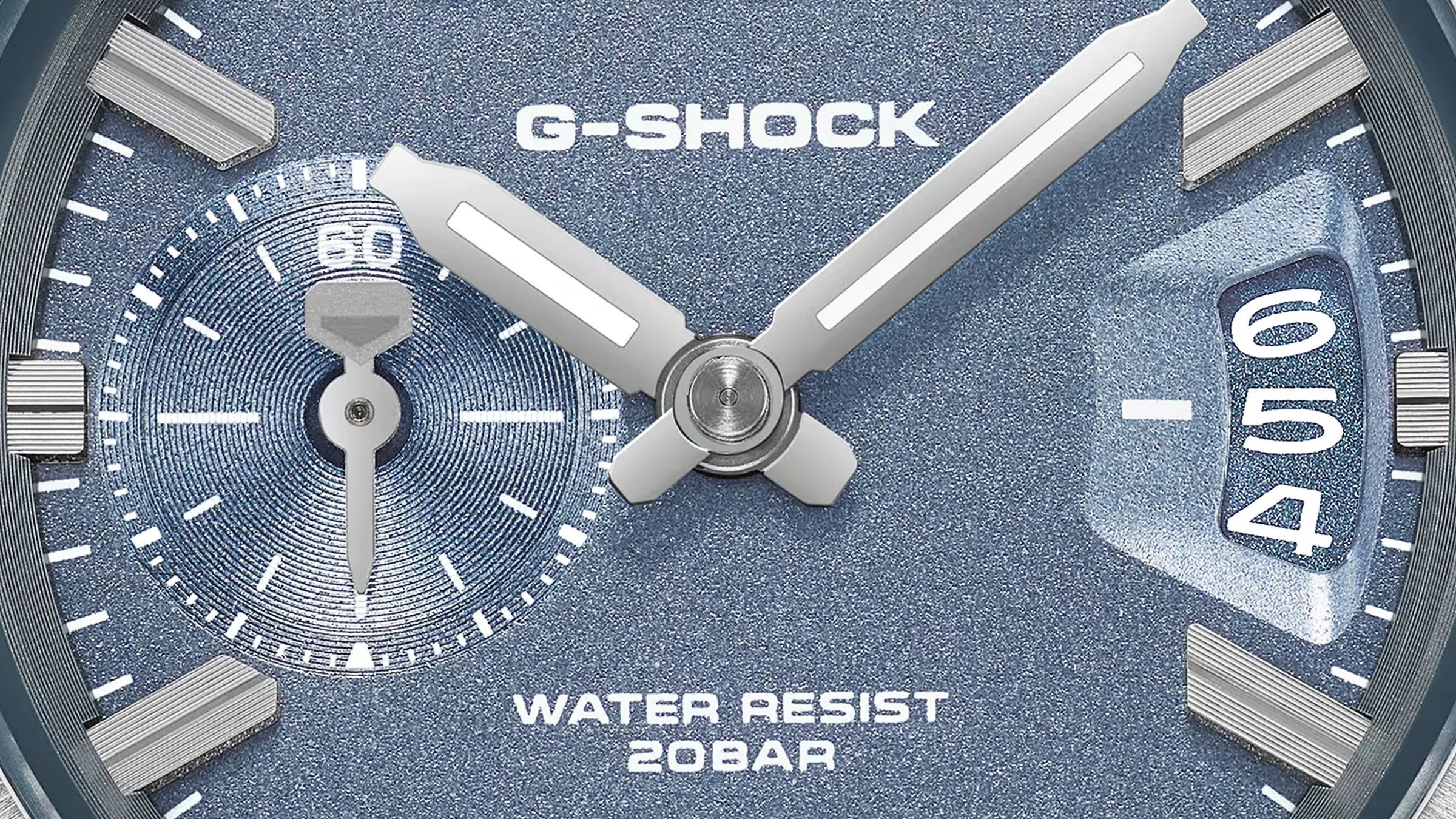
Casio has officially introduced the G-Shock 2500 series, marking its most consequential architectural rollout since the commercial ascendancy of the 2100 line. Documented through hands-on evaluation by Hodinkee Australia, the nine-reference international launch spans both resin and stainless-steel executions. Entering the catalog with baseline pricing below A$300, the 2500 series anchors Casio’s high-volume industrial tier while standing in stark commercial contrast to esoteric halo projects like the six-figure A$100,000+ Blue Rose Project.
Analog Architecture: Operational Subtraction as Design Strategy
The defining technical pivot of the 2500 series is its uncompromising analog configuration. Deviating sharply from the hybrid digital-analog formats common to modern shock-resistant timepieces, the dial completely excises liquid crystal displays, auxiliary sensor indicators, and Bluetooth telemetry modules. Timekeeping is distilled into a central two-hand layout, a running small-seconds subdial, and an integrated date aperture.
By rejecting connected electronics and secondary multi-function menus, Casio insulates the 2500 platform from the software deprecation inherent to connected wearables. The resulting layout favors immediate legibility and classic horological balance over the segmented, multi-tier data presentations of earlier G-Shock generations, positioning the watch as a dedicated instrument within traditional analog paradigms.
The Dual Narrative: Brand Heritage Versus Horological Semiotics
The rollout has exposed an engaging tension between Casio’s corporate lineage and enthusiast semiotics. Officially, Casio roots the 2500’s geometry in the evolutionary DNA of the foundational 1983 DW-5000C—the model that codified the brand’s ruggedized identity through four perimeter pushers, an integrated resin strap, and extreme drop-test verification from third-floor facility windows. Casio cites this heritage to explain the 2500’s softened corners, octagonal bezel cues, and retention of the tactile four-pusher flank layout.
Conversely, global collector communities and horological media immediately recognized unmistakable parallels to late-twentieth-century luxury sports watch taxonomy. Prominent lateral case shoulders—evoking the porthole-hinge architecture introduced by Gérald Genta’s 1976 Patek Philippe Nautilus—prompted the informal community moniker “CasioNaut.” Just as the octagonal 2100 series became widely known as the “CasiOak,” organic grassroots nomenclature has effectively bypassed official alphanumeric designations, driving pre-release engagement across digital collector channels.
Material Stratification and Global Commercial Footprint
Casio’s launch strategy deploys two distinct manufacturing tracks across the initial nine references. Molded resin variants maximize shock attenuation, structural elasticity, and featherweight mass at an accessible price point under A$300. Concurrently, metal-cased references address the demand for finished surfaces, mass-loaded wrist presence, and architectural refinement suitable for professional environments.
Delivering complex lateral contours and tightly toleranced bezel transitions across disparate material matrices demonstrates Casio’s mature production scalability. This simultaneous multi-tier release allows retail partners to serve traditional utility buyers alongside fashion-conscious luxury enthusiasts. As the collection moves into widespread November retail deployment, the 2500 platform reinforces Casio’s core philosophy: democratizing iconic, sculptural case geometries through ruggedized, maintenance-free quartz engineering.