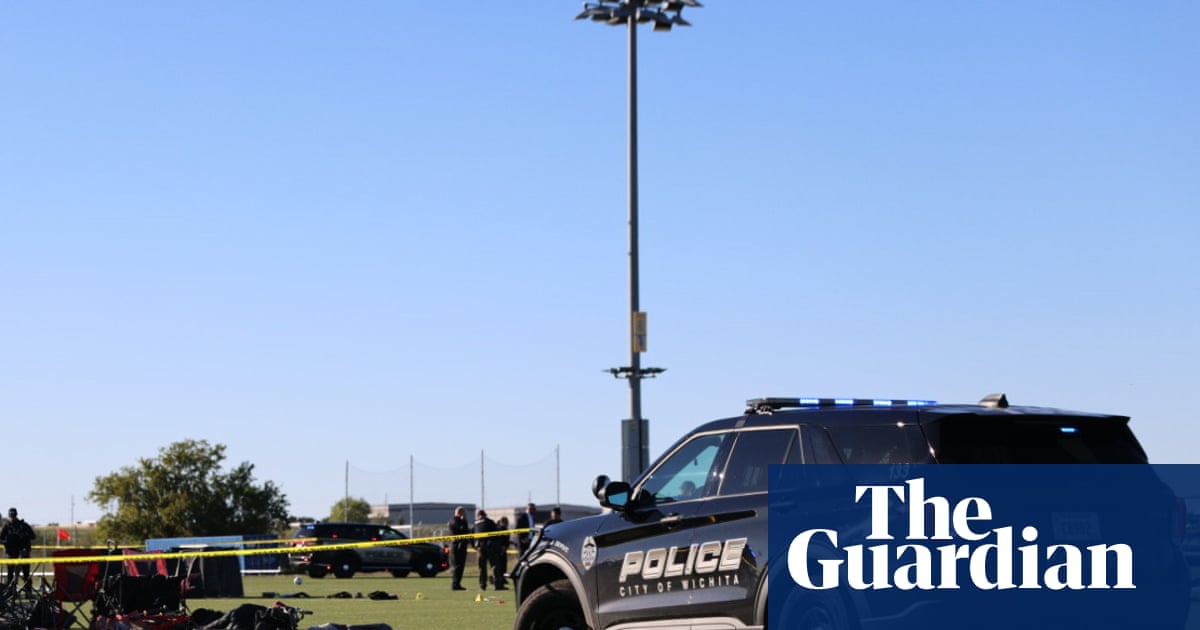
Wichita, Kansas — Municipal law enforcement and county prosecutors have deferred immediate criminal charges following a catastrophic vehicular incident at the Stryker Sports Complex. The decision to release the 34-year-old female driver, though procedurally standard, underscores the intricate legal and forensic evidentiary thresholds inherent in complex vehicular homicide investigations, emphasizing the foundational principle of presumption of innocence until robust evidence supports culpability.
The tragic event unfolded on a Saturday afternoon around 3:30 p.m. near 29th Street and Greenwich Road in northeast Wichita, when a pickup truck breached a perimeter and entered an active youth soccer match. The collision tragically claimed the lives of six-year-old Cole Adrian and 35-year-old Nicholas Schafer, while injuring ten other spectators and participants, highlighting the devastating impact of such an unforeseen breach.
The decision by the Wichita Police Department and the local District Attorney’s office to release the motorist without immediate criminal charges is a critical operational choice rooted in established legal protocols. This determination reflects stringent evidentiary requirements, necessitating comprehensive forensic analysis to substantiate either criminal intent (e.g., mens rea) or gross negligence before formal arraignment, preventing premature charges that could jeopardize future prosecution based on incomplete data.
Procedural Thresholds and Evidentiary Requirements
In multi-casualty motor vehicle collisions, investigative protocols mandate a rigorous hierarchy of forensic verification to establish culpability. Police leadership confirmed that formal charges are strictly contingent upon two independent, exhaustive technical determinations: comprehensive chemical toxicology screenings of the driver and a forensic mechanical inspection of the incident vehicle.
The administrative rationale for deferring charges is strategically linked to statutory speedy trial provisions. Prematurely filing charges activates strict discovery deadlines and mandates prosecutors to present foundational evidence expeditiously. Without finalized state laboratory reports—specifically toxicology and mechanical analyses—prosecutors risk procedural challenges that could undermine the integrity of future judicial proceedings and potentially lead to case dismissal.
A pivotal aspect of vehicular crash investigations involves meticulously distinguishing between disparate causal factors: deliberate action (e.g., criminal intent or recklessness), various degrees of negligence, biological impairment (e.g., intoxication), or unforeseen catastrophic mechanical failure. The mandated exhaustive mechanical teardown of the pickup truck is therefore crucial; crash reconstruction specialists must systematically eliminate vehicle defects—such as sudden throttle malfunction, braking system failure, or steering linkage detachment—as primary or contributing causal elements before attributing culpability solely to driver action.
Concurrently, biological samples submitted for critical toxicology testing frequently encounter systemic administrative backlogs within municipal and regional forensic laboratories. Until these certified reports conclusively confirm or refute the presence of impairing substances—including controlled substances, alcohol, or specific prescription compounds—prosecutorial bodies lack the indispensable evidentiary foundation required to legally sustain aggravated vehicular homicide charges, which often demand proof of impairment.
Investigative Protocol Across Multi-Victim Incident Scenes
The investigative scope at the Stryker Sports Complex presented formidable operational complexities, stemming from the sheer volume of witnesses and the physical distribution of victims across an expansive recreational area. Law enforcement meticulously conducted over 30 individual formal witness interviews, a critical undertaking for reconstructing the event, before consulting with the district attorney’s office regarding the driver’s custody status and potential charges.
The casualty profile underscores the devastating and indiscriminate nature of the incident. The two fatalities, six-year-old Cole Adrian and 35-year-old Nicholas Schafer, both hailed from McPherson, Kansas, approximately an hour north of Wichita. This detail poignantly illustrates the regional draw of competitive youth athletic events and the widespread community impact of such tragedies.
Official injury registries confirmed ten additional casualties spanning a broad demographic range, further complicating individual medical documentation and injury severity classifications. Among the injured were five minors: two five-year-olds, two eight-year-old boys, and a nine-year-old girl. Adult casualties ranged in age from 28 to 68 years old, collectively presenting a multifaceted challenge for medical and legal classification.
Each reported injury constitutes a distinct prosecutorial element, necessitating meticulous institutional documentation, comprehensive emergency room records, and individual forensic statements. The compilation of numerous medical narratives, correlated with multi-directional field trajectories and witness accounts, demands exceptionally rigorous administrative coordination among hospital staff, investigative detectives, and municipal prosecutors to build a robust evidentiary chain.
Institutional Exposure and Public Facility Perimeter Controls
The catastrophic entry of a standard consumer vehicle onto an active athletic pitch unequivocally exposes critical vulnerabilities in perimeter security and vehicle mitigation design at public recreational venues. Regional facilities such as the Stryker Sports Complex, which host dense gatherings of families and youth teams, frequently rely on inadequate safeguards like standard curbs and turf setbacks to delineate parking zones from active play areas, revealing a systemic risk.
When a motor vehicle breaches these perimeter lines during operational hours, municipal oversight bodies and facility operators confront immediate and significant exposure to tort liability concerning facility design and protective zoning standards. Civil liability frameworks will meticulously assess whether robust physical barriers, engineered bollards, or reinforced access gates could have effectively arrested vehicular momentum and prevented the vehicle from entering densely populated spectator areas.
The broader sports ecosystem across south-central Kansas thrives on continuous inter-county travel between athletic hubs, as tragically demonstrated by the McPherson competitive youth soccer club whose participants were directly impacted. This incident forces institutional stakeholders, from youth sports organizations to municipal planners, to confront the inherent operational vulnerability of standard recreational facilities to unexpected vehicular ingress, prompting a re-evaluation of safety protocols.
Investigative conclusions regarding vehicle approach paths and critical facility entry points are poised to establish new, rigorous baseline standards for regional sports facility risk management. Consequently, facility directors and municipal risk pools face emergent and imperative requirements to comprehensively reconsider physical setbacks, robust traffic control barriers, and enhanced access infrastructure across all comparable multi-field campuses, transforming public safety policy.
Information Vulnerability and Law Enforcement Communication
The inevitable temporal gap between a mass casualty incident and the public announcement of formal charges routinely precipitates acute institutional communication challenges. During this inherent ‘information vacuum,’ unsubstantiated narratives and malicious disinformation can rapidly proliferate across distributed digital networks, compelling regional agencies into reactive and defensive clarification cycles that divert critical resources.
In an unusual and proactive measure, the Sedgwick County Sheriff’s Office issued formal public warnings to counter targeted disinformation circulating extensively on social media platforms. False digital claims incorrectly alleged that a law enforcement official, specifically naming Deputy Rachel Taylor, was operating the vehicle during the fatal Stryker Sports Complex incident, illustrating the speed and reach of misinformation.
The Sheriff’s Office unequivocally refuted these egregious allegations, affirming that Deputy Taylor had no involvement with the vehicle or its operation at the Stryker Sports Complex. The agency rightfully characterized the viral distribution of such unsubstantiated claims as a significant operational hazard that not only generates secondary reputational harm but also obstructs and complicates the legitimate municipal investigation.
This public relations challenge acutely highlights the persistent institutional friction between the deliberate pacing required for investigative integrity and the instantaneous demands of modern digital media environments. While thorough investigations necessitate quiet procedural discipline and often lengthy laboratory turnaround times, any perceived information vacuum is quickly exploited by speculative attributions and targeted attacks against public entities and individual officers, compromising public trust and investigative focus.
Prosecutorial Strategy and Long-Term Legal Exposure
Crucially, the formal release of the driver does not equate to institutional exoneration or an abandonment of potential state prosecution. This strategic decision fundamentally repositions municipal and county prosecutors to file precisely calibrated charges only once the complete forensic portfolio—encompassing both toxicology and mechanical analyses—transits from preliminary hypothesis to authenticated legal fact, thus maximizing the strength of any future case.
Should the mechanical examination conclusively expose no vehicle defect, the prosecutorial focus will intensely narrow onto driver behavior, environmental factors, and the definitive biological test results, establishing a pathway toward criminal culpability. Conversely, if mechanical evaluation substantiates an unforeseen and critical vehicle malfunction, the operational focus will pivot sharply away from criminal culpability and toward regulatory review, product liability, and manufacturing liability structures, altering the entire legal trajectory.
Statements by Wichita Police Chief Joe Sullivan, reinforced by operational briefings led by Captain Aaron Moses, emphatically underscore the Wichita Police Department’s unwavering commitment to achieving full forensic resolution. Chief Sullivan reaffirmed that significant investigative resources remain strategically allocated to developing an exact, verifiable, and unimpeachable accounting of all mechanical and operational vectors that contributed to and shaped this tragic incident.
Consequently, until the District Attorney’s office receives the definitive, finalized documentation from state mechanical analysts and toxicology laboratories, the case remains an active, open investigation without formal indictments. The institutional handling of this profound matter serves as a definitive case study in the critical importance of procedural prioritization and forensic rigor over rapid, politically expedient charging decisions, especially under intense public and media scrutiny.