
Crisis Unfolds: Operational Friction in Sacramento State’s Emergency Response
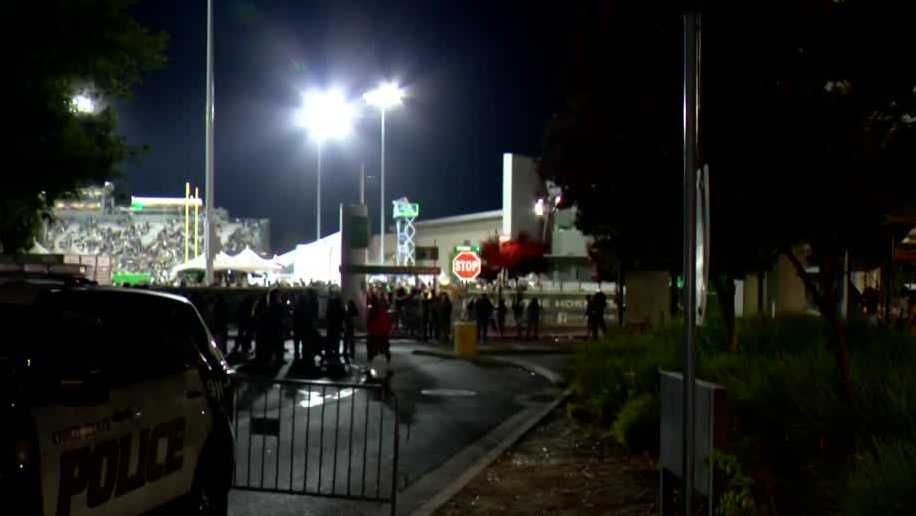
The reported discharge of firearms near Hornet Stadium during Sacramento State University’s inaugural home football game critically exposed systemic vulnerabilities within campus emergency management and event security protocols. While swift university confirmation of no injuries and neutralized threat was crucial, the unfolding sequence of events highlighted a significant disparity between initial tactical reports and verified institutional statements. The shelter-in-place order, prompted by shots fired at Parking Structure III adjacent to the stadium, underscored the immense operational complexity of securing high-density athletic events, where limited egress points exacerbate logistical challenges for rapid law enforcement deployment and crowd management.
Perimeter Breaches & Crowd Control: Challenges in Stadium Event Security
As a primary transit hub for Hornet Stadium, Parking Structure III’s security breach directly threatened the operational integrity of a marquee athletic event. Its immediate proximity to the venue mandated an instant lockdown, a decision laden with profound implications for crowd control and the heightened risk of secondary panic among attendees. The tactical response, involving the temporary detention of several individuals ultimately deemed uninvolved, vividly illustrated the inherent complexities of suspect identification within high-stress, high-traffic environments. Obscured visual confirmation due to environmental factors and the rapid, often chaotic, movement of spectators routinely challenges law enforcement in such scenarios. Furthermore, the university’s sustained silence regarding ongoing suspect searches creates a strategic information vacuum. While potentially a calculated measure to preserve investigative integrity, this lack of transparency cultivates unresolved concern among all stakeholders—students, faculty, and the wider community—about the incident’s root cause and the lingering threat landscape.
Information Lag: Communication Breakdown and Credibility Erosion
The rapid dissemination of a campus-wide alert via digital platforms demonstrated an immediate commitment to transparency, yet the subsequent retraction of a suspect’s detention status revealed critical fissures in the institutional verification pipeline. This abrupt pivot from an initial ‘suspect in custody’ report to a ‘no suspect detained’ clarification presented a profound challenge for the university’s communications office. Spokesperson Michelle Willard’s subsequent statements became an exercise in damage control, aiming to reconcile conflicting narratives while projecting institutional control amidst uncertainty. The incident starkly illustrated how the velocity of social media in contemporary campus safety contexts often overwhelms the deliberate pace of official police verification, compelling institutions into a reactive communication posture. While the Sacramento State Police Department’s use of social media for the initial ‘Dangerous situation!’ alert exemplified modern threat mitigation, the subsequent erosion of detail accuracy jeopardized its efficacy. The long-term reputational impact hinges on how this communication lapse is addressed in post-incident analysis; institutional credibility, a delicate asset, suffers when such command-and-control protocol failures manifest during critical safety events.
Economic & Reputational Repercussions: The Incident’s Impact on Athletics
Beyond immediate operational challenges, the incident carries significant economic and reputational repercussions for Sacramento State Athletics. The season’s inaugural home game, a cornerstone for revenue generation, alumni engagement, and recruitment, now faces a considerable risk premium. This perceived safety deficit could deter future attendance and erode the university’s athletic brand equity. Proactive mitigation will necessitate increased capital expenditure on advanced surveillance technologies and augmented security personnel for future game days. The institution must meticulously recalibrate its security posture, balancing a welcoming fan experience with stringent perimeter control and robust rapid-response capabilities, especially around critical infrastructure like parking facilities. Moreover, the incident is poised to trigger an exhaustive review of the university’s liability exposure and insurance parameters for large-scale public gatherings. The compounded factors of an unapprehended suspect and initial misinformation regarding a detention are likely to provoke heightened scrutiny from regulatory bodies, campus safety advocates, and potentially influence future policy formulation.
Structural Flaws: Parking Structures as Systemic Security Vulnerabilities
The architectural reliance on multi-level parking structures immediately adjacent to high-capacity venues like Hornet Stadium inherently introduces significant systemic vulnerabilities. These structures, by design, offer concealment and multiple escape vectors for potential perpetrators, severely complicating law enforcement’s pursuit and apprehension efforts. While the eventual ‘all clear’ signal provided immediate relief, it critically failed to address the foundational security breach that permitted the reported discharge of firearms. The enduring absence of an apprehended suspect leaves the investigation in a protracted state of flux, denying the campus community definitive closure and fostering a persistent climate of heightened vigilance. Consequently, institutional leadership faces an imperative to conduct a comprehensive post-incident audit. This audit must critically evaluate the efficacy of the emergency alert system and the symbiotic coordination between campus police and external municipal law enforcement agencies. The overarching objective must be to drastically reduce the latency between frontline tactical intelligence and official public statements, thereby ensuring the timeliness and unimpeachable accuracy of all future alerts.
Beyond the Immediate: Psychological & Trust Impacts on Stakeholders
The reverberations of a stadium-wide shelter-in-place order extend far beyond the immediate tactical response, imposing a significant psychological toll on students and faculty. The pervasive ‘Dangerous situation!’ alert can cultivate a lingering sense of insecurity, fundamentally altering the campus climate and eroding trust in the learning environment’s safety. External stakeholders, particularly parents and donors—critical conduits of financial and social capital—will justifiably demand a rigorous accounting of both the security lapses and the subsequent communication errors. The university’s capacity to deliver a transparent, data-driven, and actionable explanation will be paramount in preserving their sustained support and investment. In essence, the Sacramento State incident emerges as a compelling contemporary case study. It starkly illuminates the intricate complexities of modern campus security and underscores the non-negotiable imperative for a seamless integration of tactical response, agile digital communication, and steadfast institutional leadership to competently manage the multifaceted risks inherent in a university’s public safety mandate.
Forward Momentum: Learning from Sacramento State’s Crisis Management
As the investigation into the Hornet Stadium incident progresses, the strategic focus inexorably shifts from immediate tactical actions to the overarching implications for Sacramento State University. The lingering absence of an apprehended suspect remains a critical impediment to delivering a definitive sense of finality to both the campus community and the wider public. Consequently, the university’s forthcoming actions will be subjected to intense scrutiny by peer institutions and security experts, all keenly observing for transferable lessons in crisis management, rapid response, and public communication. The institutional capacity to critically analyze and adapt from the discrepancies in initial incident reporting will serve as a vital metric of its resilience and its unwavering commitment to continuous enhancement of safety protocols. In an increasingly competitive higher education landscape, where campus safety is a paramount determinant for prospective students and their families, Sacramento State’s comprehensive response to this incident will indelibly shape its competitive positioning and reinforce its reputation as a secure environment for academic pursuit and large-scale public engagements.

Photo by fernandozhiminaicela on Pixabay.