Dynamic Meteorological Convergence Over New England
A complex meteorological pattern, characterized by significant synoptic forcing, has converged over the northern New England region, instigating widespread alerts for severe thunderstorms, high winds, and potential tornadic activity. This atmospheric confluence highlights the intricate interplay between large-scale weather systems and localized environmental factors, posing substantial challenges for public safety and regional operational continuity.
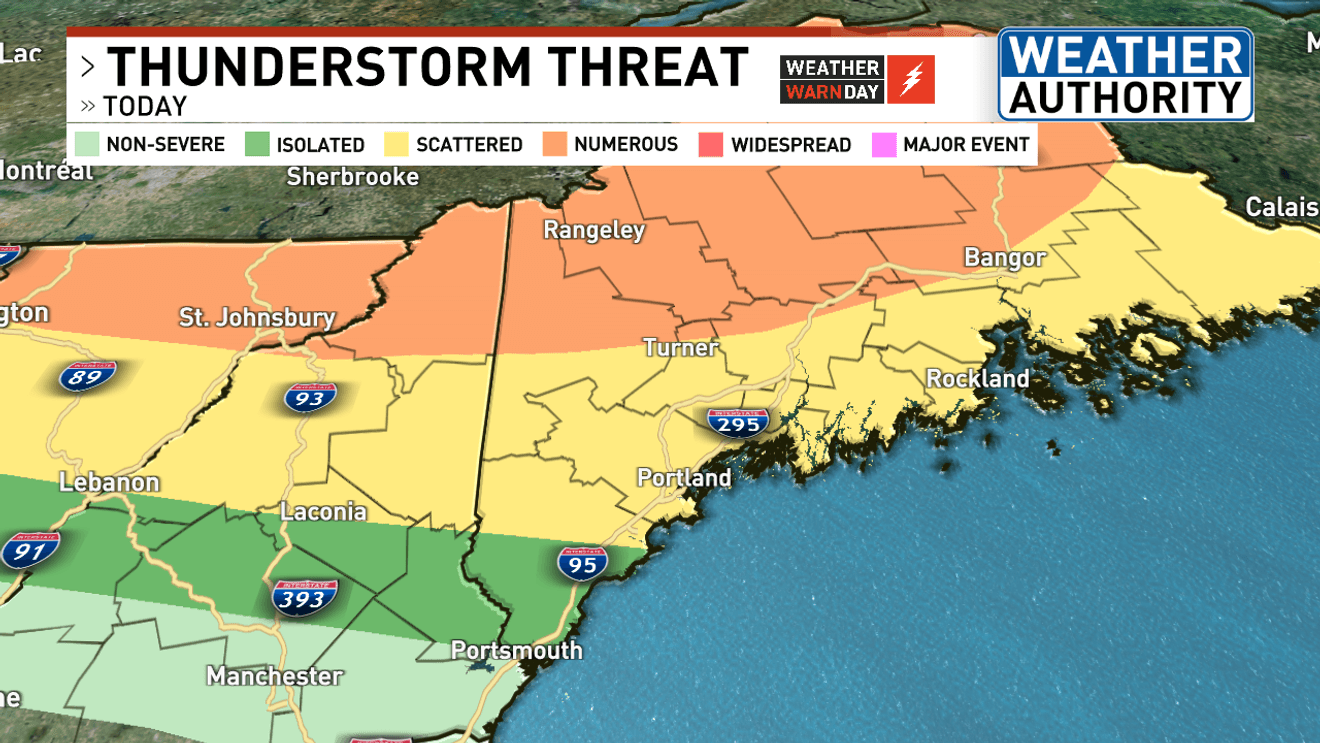
The National Weather Service (NWS) issued a Severe Thunderstorm Watch, active until early Wednesday, encompassing northern and central Vermont, New York’s North Country, and northern New Hampshire. This advisory underscores a heightened risk profile, indicating conditions highly conducive to the rapid development of hazardous weather phenomena, demanding immediate public and emergency service vigilance.
Forecasters detailed the primary threats: damaging wind gusts projected to reach up to 70 miles per hour, hail potentially two inches in diameter, frequent lightning, and torrential downpours. These specific parameters highlight the destructive potential for critical infrastructure, agricultural assets, and outdoor properties across the affected zones, emphasizing a substantial economic and safety exposure.
Further intensifying the risk assessment, the NWS communicated a non-guaranteed but distinct possibility of one or two tornadoes within the watch area. This nuanced probabilistic forecast necessitates an elevated state of readiness among residents and emergency services, recognizing the localized, rapid-onset, and often unpredictable nature of tornadic events.
Adding a critical layer of environmental complexity, a dense plume of wildfire smoke, originating from distant sources, has drifted over the region, significantly affecting Maine and northern New Hampshire. While this smoke imparts a distinctive yellowish-orange atmospheric hue, its primary meteorological influence involves attenuating incoming solar radiation, thereby subtly modifying surface heating and the available thermodynamic energy for storm development.
Crucially, despite the smoke’s moderating effect on surface temperatures and its impact on radiative forcing, meteorologists confirmed it would not impede the overall development or intensity of severe thunderstorms. This distinction is vital for public understanding, preventing visual atmospheric anomalies from leading to a misjudgment of the underlying severe weather threat and ensuring appropriate response.
Synergistic Responses and Enhanced Preparedness Protocols
The escalating severe weather threat has catalyzed a multifaceted mobilization among diverse stakeholders, ranging from formal meteorological agencies to engaged citizen responders, in a concerted effort to mitigate risk and ensure public safety. This integrated, albeit sometimes informal, network is indispensable for navigating dynamic and rapidly evolving weather events effectively.
News organizations, operating as vital conduits of real-time situational intelligence, strategically deployed crews to directly track conditions in affected areas, such as northern New Hampshire. Their on-the-ground observations—detailing heavy rain, lightning flashes, and the acoustic signatures of hail—provide immediate, granular awareness that critically augments official governmental advisories and public information campaigns.
The presence of dedicated storm chasers in the northern Granite State exemplifies a specialized form of public engagement and citizen science within severe weather events. Individuals like Henry Swenson from Massachusetts approach these phenomena with a professional understanding of their inherent dangers, predictive patterns, and observational requirements, contributing to decentralized intelligence gathering.
Storm chasers frequently operate with a dual mandate: to meticulously document meteorological phenomena for scientific and public awareness, and to provide immediate, localized assistance where needed. Griffin Klien from Maine, for instance, highlighted carrying essential equipment such as a chainsaw and an augmented first aid kit, underscoring the self-reliant and community-oriented aspect of their preparedness and their capacity to bridge immediate response gaps.
This proactive stance by storm chasers offers a critical, albeit informal, augmentation to established official emergency response capabilities. Their ability to rapidly assess damage, provide initial aid, and report conditions in remote or immediately inaccessible areas can prove invaluable during the chaotic aftermath of severe weather, prior to full institutional deployment.
For vulnerable populations, particularly campers situated in mountainous terrain and across northern New Hampshire, explicit emphasis was placed on the imperative to seek safe, robust shelter during severe events. This guidance reflects a strategic focus on preventing casualties in areas where natural shelter may be inherently insufficient or could create a false sense of security against high winds and falling debris.
The concurrent issuance of heat advisories, remaining in effect until early evening, introduced an additional environmental challenge. While the wildfire smoke paradoxically contributed to tempering the extreme heat, the combined stressor of high temperatures and impending severe weather presented a complex risk matrix for public health and safety officials, necessitating integrated messaging.
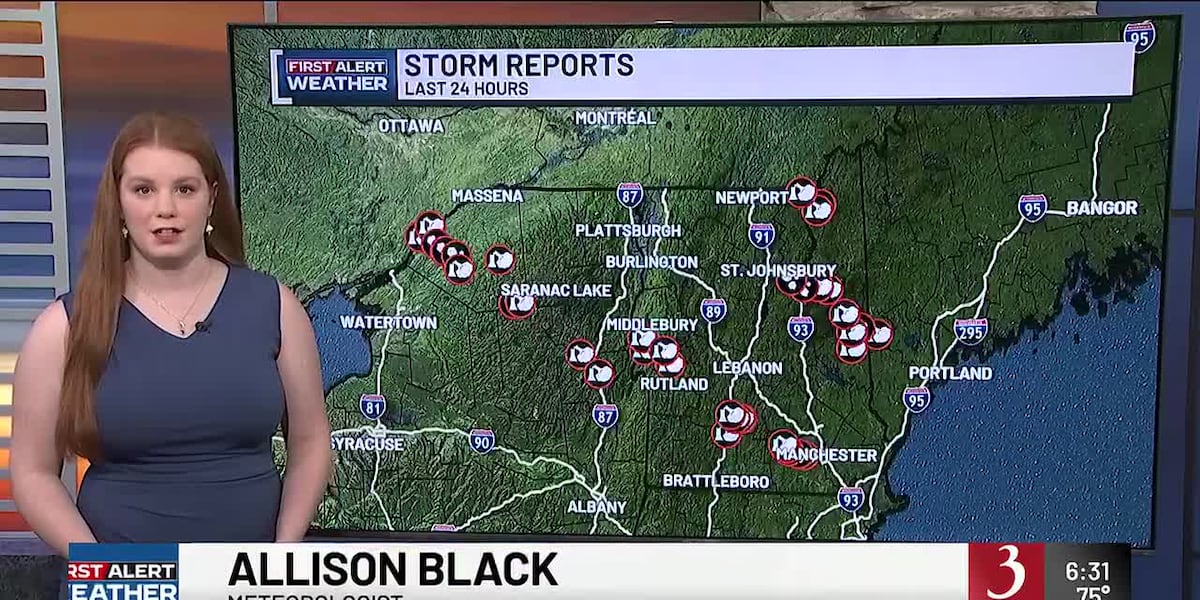
Initial reports of storm damage, spanning from Vermont’s Northeast Kingdom to its southwestern reaches, unequivocally confirm the tangible impact of these potent weather systems. Such post-event assessments are critical for quantifying the scope of disruption, informing resource allocation for subsequent recovery efforts, and highlighting the immediate, widespread consequences for local communities and infrastructure resilience.
Operational Vulnerability and Logistical Impedance in Regional Activities
The pervasive threat of severe weather extends its influence beyond immediate public safety concerns, significantly impinging upon scheduled regional activities and imposing substantial logistical complexities on various organizations. This disruption fundamentally underscores the inherent vulnerability of planned operations to dynamic environmental variables and atmospheric instability.
A notable instance involves the Vermont Green Women’s team, a full-time club in its inaugural season, which has achieved significant competitive milestones, including Northeast Division and Eastern Conference titles. Their critical preparation for the USL-W National Final in Seattle became directly and intricately intertwined with the unfolding severe weather patterns over New England, introducing unforeseen strategic challenges.
The team conducted a pre-storm training session under prevailing heat conditions on Tuesday afternoon, a tactical adaptation designed to strategically position their activities before the anticipated arrival of more severe weather. This decision reflects a nuanced attempt to balance performance readiness and competitive advantage with paramount athlete safety and welfare.
However, the training session was visibly compromised, with the squad not operating at full complement or optimal intensity. This partial attendance or reduced participation implies operational challenges for team management, potentially impacting tactical cohesion, physical conditioning, and mental readiness—all critical factors ahead of a high-stakes national championship where marginal gains are paramount.
The logistical complexities for a professional sports team at such a critical juncture are substantial, encompassing precise travel arrangements, athlete welfare protocols, maintaining peak physical and psychological performance, and managing equipment. Adverse weather can introduce cascading delays, necessitate costly last-minute adjustments, and add considerable psychological and financial stress to an already demanding national competition schedule.
For the USL-W league, the broader implications involve ensuring the integrity and fairness of its competitive schedule, alongside the safety of its participants, even when events are geographically distant from the immediate weather threat. The ripple effects of regional disruptions, particularly impacting team travel and final preparations, can disproportionately extend to national competitions, affecting competitive equity.
The intersection of a team’s peak competitive phase with significant, disruptive weather events critically highlights the strategic imperative of robust contingency planning in professional sports organizations. Operational resilience, encompassing adaptable scheduling, flexible resource deployment, and comprehensive risk mitigation strategies, becomes a key determinant in minimizing financial exposure and reputational damage associated with disrupted training or travel.
Beyond the sports sector, the widespread severe thunderstorm watch and its associated threats imply broader operational challenges for regional transportation networks, critical utility providers, and local businesses. Disruptions to power grids, communication infrastructure, and transit routes can trigger significant cascading economic effects, impacting commerce, daily life, and supply chains across New England.
The explicit need for campers to seek safe cover, for example, directly points to the tangible economic impact on the outdoor recreation and tourism sectors. Event cancellations, premature departures, and damage to campsites represent quantifiable financial losses for operators, local economies dependent on these activities, and the broader regional tourism industry, requiring significant recovery investment.
Systemic Climate Resilience and Adaptive Governance Strategies
The recurring nature and increasing intensity of severe weather events across New England necessitate a deeper, more systemic examination of their implications and the continuous evolution of adaptive strategies across diverse sectors. The documented facts underscore an ongoing, multidimensional challenge that demands proactive institutional foresight and integrated governance.
The consistent issuance of Severe Thunderstorm Watches by the National Weather Service reflects an established and effective institutional framework for public safety and risk communication. The precision in forecasting specific threats, such as wind gusts up to 70 mph and two-inch hail, demonstrates advanced capabilities in meteorological science, modeling, and effective public dissemination, crucial for informed decision-making.
However, the ultimate efficacy of these advanced warnings relies heavily on consistent public adherence and the inherent robustness of local emergency response infrastructures. The readiness of individual storm chasers, equipped with chainsaws and first aid kits, highlights a critical response gap that citizen engagement frequently fills, providing invaluable complementary support to formal governmental services, particularly in remote areas.
The presence of wildfire smoke, originating from distant sources, introduces a trans-regional climatic forcing factor that profoundly complicates local weather dynamics and public health considerations. This phenomenon unequivocally points to broader climate patterns and the interconnectedness of atmospheric systems, necessitating a more holistic and inter-jurisdictional approach to environmental monitoring, public health advisories, and long-term air quality management.
For the professional sports industry, exemplified by the Vermont Green Women’s team, the operational adjustments made in response to weather threats illustrate an accelerating need for sophisticated risk management frameworks. This extends beyond immediate safety protocols to encompass strategic scheduling, resilient facility management, and athlete conditioning under increasingly variable and extreme environmental conditions, impacting peak performance.
The pursuit of a national title, as in the case of the Vermont Green, significantly amplifies the stakes associated with weather-induced operational disruptions. Substantial financial investments in team travel, athlete support infrastructure, and media coverage are all exposed to the unpredictable nature of severe weather, demanding robust and agile contingency planning at both the league and individual team levels to mitigate competitive and reputational risks.
The documented storm damage across Vermont serves as a tangible and quantifiable reminder of the significant economic exposure faced by local communities. Infrastructure repair, property insurance claims, agricultural losses, and business interruptions represent substantial financial burdens that local and state governments, along with private citizens and businesses, must absorb, often straining local economies.
From a broader institutional perspective, these recurring events strongly reinforce the continuous imperative for strategic investment in resilient infrastructure, enhanced early warning systems, and comprehensive public education campaigns focused on climate adaptation. The overarching goal must be to evolve from reactive crisis response to proactive, integrated climate resilience, thereby minimizing both human and economic costs over the long term.
The critical role of media organizations in disseminating vital weather information also carries significant institutional weight and societal responsibility. Their capacity to accurately track conditions, report damage, and amplify official warnings is integral to public safety, fostering informed decision-making, and maintaining societal cohesion during rapidly evolving environmental crises. This function is a cornerstone of effective hazard communication.
Ultimately, the confluence of increasingly severe weather phenomena, trans-regional environmental factors like wildfire smoke, and the complex operational demands of regional activities underscores a profound, multidimensional adaptive challenge. Stakeholders across government, industry, and civil society must continually refine and integrate their strategies to navigate an increasingly volatile climate landscape, ensuring both immediate public safety and long-term societal resilience through proactive governance and collaborative action.