
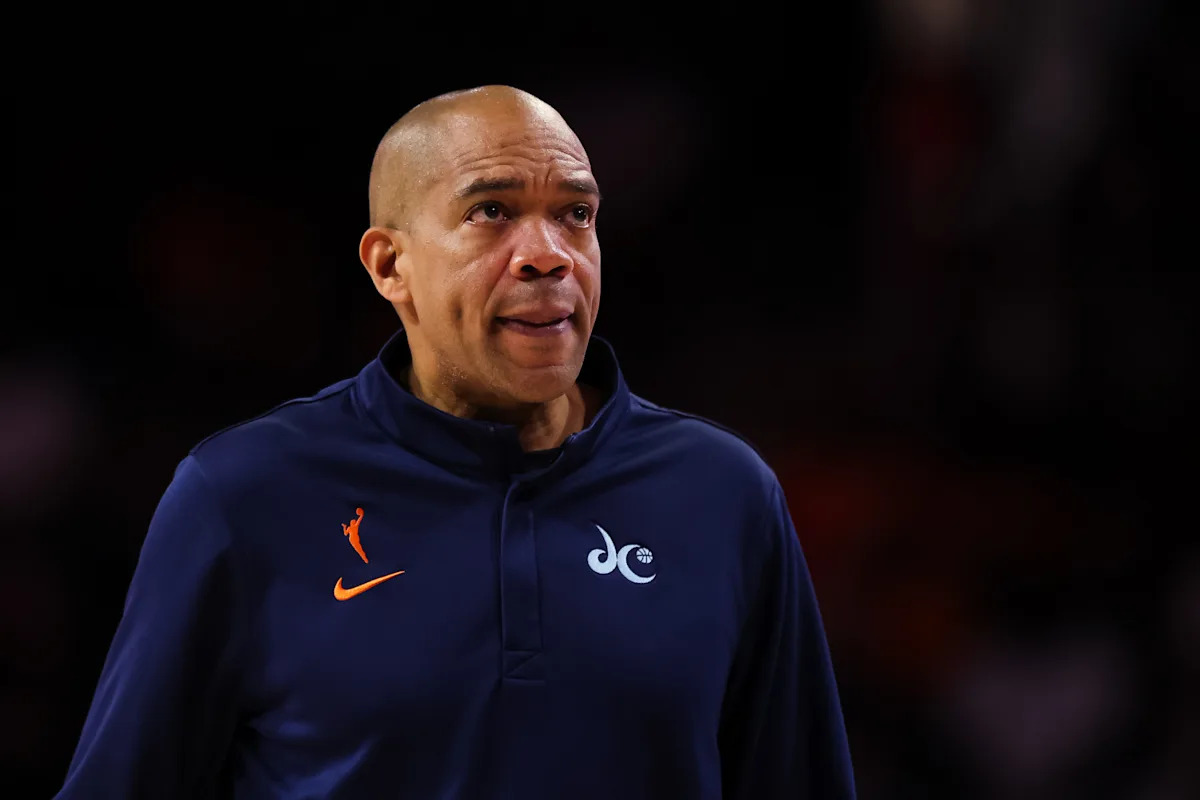
The ejection of Washington Mystics coach Sydney Johnson during a high-leverage sequence against the Atlanta Dream transcends standard sideline decorum. This incident represents a significant breakdown in the professional boundary between coaching staff and officiating crews, necessitating an abrupt intervention by law enforcement to preserve game flow and venue governance. Occurring with four minutes remaining in the third quarter, the event underscores the volatility inherent in professional sports when tactical frustrations intersect with rigid disciplinary enforcement.
Tactical Friction and Officiating Recalibration
The catalyst for the escalation was a transition play initiated by Atlanta Dream forward Angel Reese, a scenario that inherently tests defensive thresholds and officiating consistency. A foul called on Mystics guard Alicia Florez Getino served as the flashpoint for Johnson’s dissent. In professional basketball, such high-speed sequences are often the subject of intense scrutiny regarding verticality and contact thresholds.
Johnson’s decision to aggressively challenge the crew suggests a strategic, albeit high-risk, attempt to influence the officiating narrative for the remainder of the contest. By forcefully signaling dissatisfaction, coaches often attempt to trigger a recalibration of future calls. However, the rapid transition from tactical argument to a double technical foul indicates that the threshold of professional tolerance was surpassed, leading to an immediate vacancy in sideline leadership.
Operational Consequences of Bench Leadership Vacancy
The removal of a key strategist forces an unplanned shift in game management, requiring assistant coaches to assume primary decision-making roles under duress. This transition impacts substitution patterns and late-game tactical adjustments, disrupting the operational rhythm established during pre-game scouting. For the Mystics, navigating the closing stages of a competitive matchup without their primary strategist introduced significant structural instability.
The psychological toll on the roster is equally critical. When players are forced into the role of peacekeepers—evidenced by athletes attempting to de-escalate their own coach—it detracts from the cognitive focus required for elite physical performance. This role reversal can undermine the traditional authority structure, potentially compromising team discipline in high-pressure scenarios.
Security Protocols and Venue Governance
The involvement of three police officers to escort Johnson from the court introduces a layer of venue governance typically reserved for extreme disruptions. This suggests that standard protocols—which rely on voluntary compliance—were deemed insufficient to maintain order. The physical presence of law enforcement serves as the ultimate enforcement mechanism for league regulations, ensuring the game proceeds without external interference.
This level of security involvement carries substantial reputational risks. A police-escorted ejection is a high-visibility event that triggers mandatory reviews by league disciplinary committees. The optics of such a removal influence public perception and may necessitate more stringent security measures for future high-stakes matchups.
Regulatory and Financial Implications
From a regulatory perspective, the WNBA’s disciplinary framework is designed to penalize actions that threaten the integrity of the game. While double technical fouls carry standardized fines, the nature of this escalation may prompt additional sanctions, including potential suspensions. Organizations are expected to maintain professional decorum that aligns with the league’s global brand values.
Ultimately, the incident provides a case study in the pressures of modern professional basketball. The high visibility of marquee players and the increasing stakes of regular-season play create an environment where tactical disagreements can spiral into institutional crises. Moving forward, the Mystics must evaluate their internal conduct protocols to ensure that competitive intensity does not compromise operational stability.

Photo by Veronika_Andrews on Pixabay.