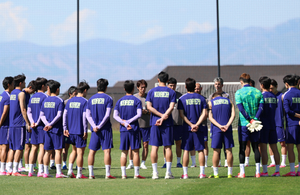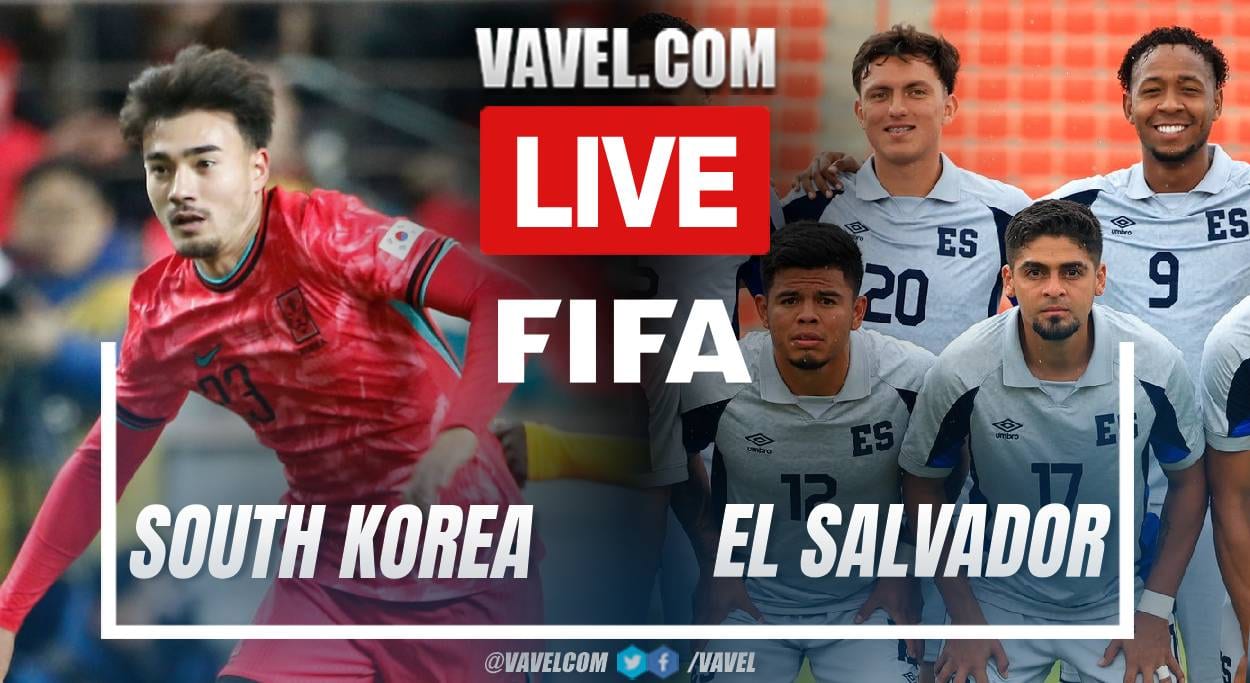
The upcoming friendly between South Korea and El Salvador at BYU South Field serves as a definitive operational audit for the Taeguk Warriors. Following a high-efficiency 5-0 victory over Trinidad and Tobago, head coach Hong Myung-bo is pivoting from general conditioning to the stabilization of tactical rhythms. This fixture represents the final opportunity to calibrate high-intensity pressing and defensive transitions before the World Cup opener against Czechia on June 11.
Strategic redundancy in the attacking third has emerged as a primary objective. While captain Son Heung-min remains the centerpiece of the offensive identity, recent shifts emphasize a multi-layered front. The goal-scoring symmetry between Son and his second-half replacement, Cho Gue-sung, in the previous outing suggests a deliberate effort to mitigate the risks of over-reliance on a single marquee player. This offensive depth allows for tactical flexibility, enabling the squad to maintain clinical finishing across various phases of substitution.
Defensively, the integration of Lee Gi-hyuk has introduced a sophisticated dimension to South Korea’s build-up play. In just his second international cap, Lee demonstrated an elite capacity for ball distribution from the back, functioning as a deep-lying playmaker. By exposing younger talents to high-leverage minutes, the coaching staff is addressing long-term depth concerns while testing the psychological resilience of the backline against sophisticated transition play.
Goalkeeping remains a sector of active evaluation, with the rotation between Jo Hyeon-woo and Kim Seung-gyu maintaining a state of competitive tension. The inclusion of third-string keeper Song Bum-keun underscores a philosophy of constant readiness. This internal competition ensures that the starting unit remains sharp and that the defensive hierarchy is solidified through performance metrics rather than seniority.
For El Salvador, World No. 100, the match functions as a benchmark for institutional restructuring. Having missed qualification for 2026, head coach Hernán Darío Gómez is utilizing this high-fidelity stress test to evaluate the technical ceiling of his current talent pool. Facing a top-30 opponent provides El Salvador with the necessary data to bridge the performance gap between Central American competition and the global elite, focusing on defensive organization and counter-attacking efficiency.
The logistical choice of Provo, Utah, provides an acclimatization advantage, allowing the South Korean squad to adapt to North American environmental variables. With localized data on ball speed and player fatigue from their previous residency, the technical staff can focus on micro-adjustments. This match is the culmination of a rigorous preparation cycle, designed to ensure the Taeguk Warriors enter the World Cup with maximum competitive leverage.