The Decommissioning of the Ocean Observatories Initiative
The National Science Foundation (NSF) has initiated the systematic decommissioning of the Ocean Observatories Initiative (OOI), a core pillar of the United States’ oceanographic research infrastructure. Aligned with broader policy directives to restructure federal scientific agencies and environmental frameworks, this shift represents a profound reallocation of scientific assets, reversing decades of capital investment in global environmental monitoring.
Fiscal Trade-offs: Capital Loss versus Operational Savings
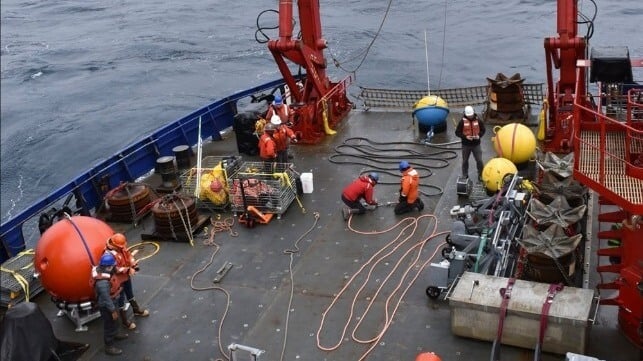
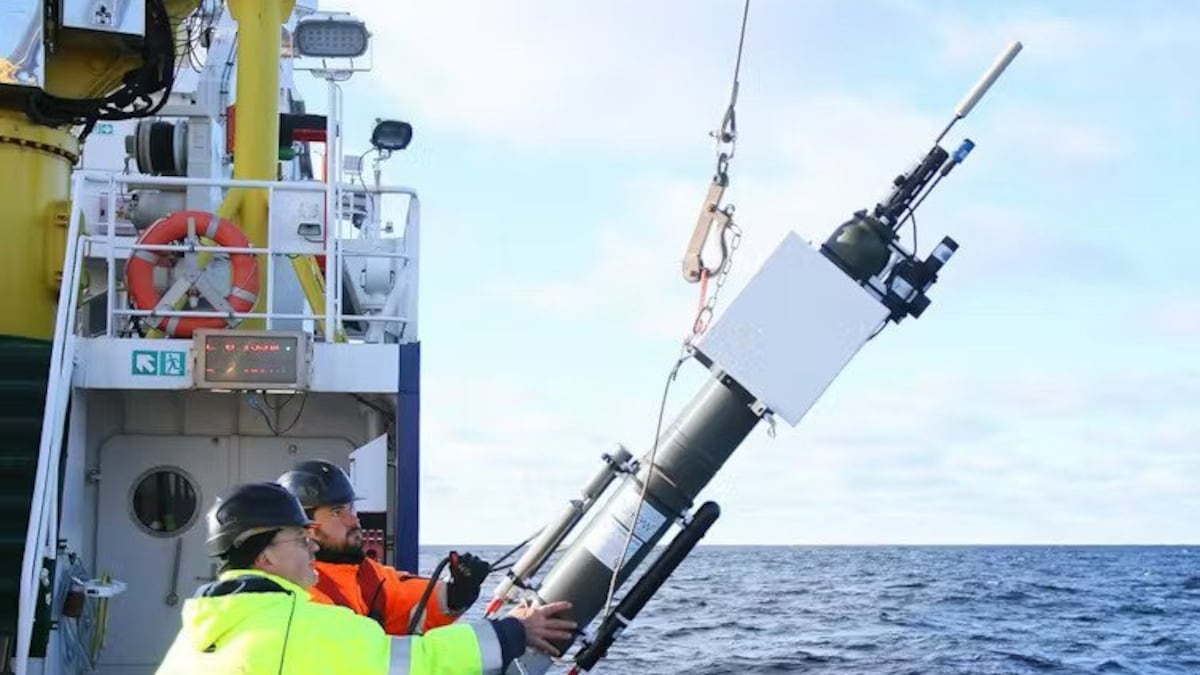
The retirement of this network involves a complex fiscal trade-off. While halting operations is projected to save approximately $50 million annually in recurring maintenance, it effectively writes off a $370 million initial capital expenditure. Furthermore, the decision to actively retrieve 900 surface buoys and subsea landers—rather than leaving them dormant—demands substantial immediate funding, redirecting specialized vessels and personnel from active research to decommissioning logistics.
Logistical Complexity and the Coastal Endurance Array
Physical extraction of the OOI infrastructure is already underway along the West Coast, targeting the Coastal Endurance Array off the Pacific Northwest. This region, vital for studying ocean acidification and ecological shifts, serves as the operational blueprint for the broader, highly complex maritime retrieval. Decommissioning teams must allocate scarce, highly competitive ship-days to recover heavy instrumentation from remote, high-latitude environments, including the North Pacific, the North Atlantic near Greenland, and the Southern Ocean.
Disrupting Decadal Climate Baselines and Data Continuity
The premature removal of these instruments permanently severs continuous, real-time data streams that were projected to feed global climate models for another 15 years. In physical oceanography, the integrity of environmental baseline trends depends entirely on uninterrupted time series. By introducing an irreparable gap in variables like sea surface temperature, salinity, and carbon absorption, this disruption severely undermines future modeling precision, maritime safety, and fisheries management.
Erosion of Institutional Expertise and Global Leadership
Beyond hardware, dismantling the network unravels a highly specialized domestic workforce of oceanographers, marine technicians, and mariners. Reductions in operational budgets constrain the marine services sector, threatening to disperse this institutional expertise globally. Consequently, the retreat from open-access global monitoring reduces the United States’ influence in international oceanography, potentially shifting leadership in environmental observation to other nations.