Curiosity Rover’s Organic Molecule Discovery Reshapes Mars Exploration Strategy
NASA’s Curiosity Mars rover has identified the most diverse collection of organic molecules ever found on the Red Planet, according to a new paper published in Nature Communications. The findings, derived from a rock sample drilled in 2020, confirm that ancient Mars possessed the necessary chemical conditions to support life, significantly influencing the strategic direction of astrobiology research.
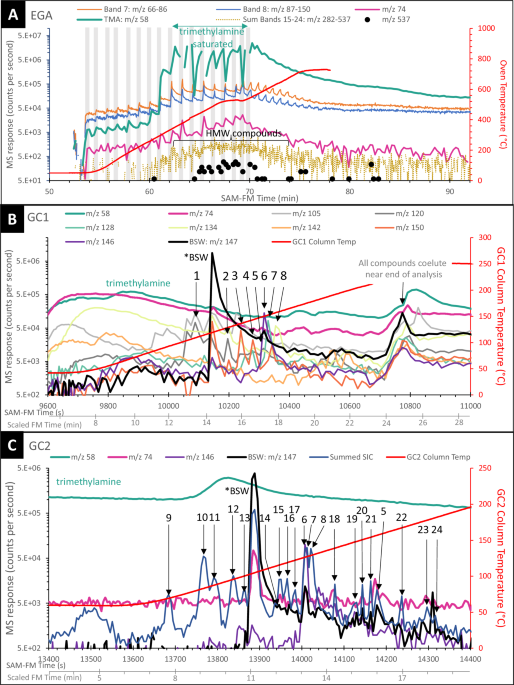
The analysis of the sample, nicknamed “Mary Anning 3,” revealed 21 distinct carbon-containing molecules. Seven of these compounds were detected for the first time on Mars, marking a substantial increase in the known inventory of Martian organic chemistry. This discovery provides critical data points for understanding the planet’s past habitability, even as scientists continue to evaluate whether the molecules originated from biologic or geologic processes.
Methodological Breakthrough: The TMAH Technique
The identification of this diverse molecular inventory highlights a significant methodological advancement in in-situ planetary analysis. The results followed a complex data analysis pipeline required to interpret the findings from the rover’s Sample Analysis at Mars (SAM) instrument suite. Crucially, the discovery hinged on the first use of the TMAH (tetramethylammonium hydroxide) technique on Mars. Standard pyrolysis techniques often fail to release complex organic molecules that are tightly bound within the rock matrix. By employing the TMAH chemical process, scientists were able to break down the rock and extract a wider range of organic compounds that would otherwise remain hidden.
This operational innovation demonstrates the value of adapting analytical methods to specific geological contexts and enhances the scientific yield of long-duration missions. The ability to perform such complex chemical analyses on Mars, rather than relying solely on remote sensing, provides a critical advantage for NASA’s exploration strategy. It allows for real-time adjustments to mission objectives and sample selection, maximizing the potential for significant discoveries while validating the investment in sophisticated instrumentation capable of performing complex reactions in a harsh extraterrestrial environment.
Astrobiological Implications and Past Habitability
The discovery of this diverse collection of organic molecules strengthens the scientific consensus regarding the ancient habitability of Mars. The presence of these carbon-containing compounds, which are fundamental building blocks for life as we know it, confirms that the necessary chemical ingredients existed during a period when liquid water was abundant on the planet’s surface. This shifts the focus of astrobiology from determining whether life was possible to understanding the mechanisms through which these molecules formed and whether they led to biological systems.
A key strategic challenge presented by the findings is the inherent ambiguity regarding the origin of the molecules. The source explicitly states that scientists cannot definitively determine whether the compounds were created by biologic or geologic processes. This ambiguity necessitates a re-evaluation of current biosignature identification protocols. Future research must focus on developing methods to differentiate between abiotic synthesis and biological activity, a critical step for confirming the existence of past life on Mars.
Strategic Guidance for Future Missions and Sample Return
The findings reinforce the importance of studying specific geological environments where conditions were favorable for both the formation and preservation of organic matter. The sample, collected from a part of Mount Sharp that once hosted lakes and streams, confirms the strategic value of targeting ancient aqueous environments. These locations, rich in clay minerals, are now prioritized for future exploration as potential repositories of biosignatures, guiding the selection of landing sites for subsequent missions.
The results from Curiosity’s mission directly inform and strengthen the scientific justification for the Mars Sample Return (MSR) program, a joint effort between NASA and the European Space Agency (ESA). The MSR mission, which involves the Perseverance rover collecting samples for eventual return to Earth, relies on the premise that high-priority samples exist on Mars. Curiosity’s discovery of a diverse organic inventory in a similar geological setting validates this premise and increases confidence in the potential scientific yield of the returned samples.
The long-term success of NASA’s Mars exploration strategy hinges on a continuous feedback loop between in-situ analysis (Curiosity and Perseverance) and advanced laboratory analysis on Earth (MSR). The discovery of these organic molecules by Curiosity demonstrates the value of this layered approach. It provides a proof-of-concept for the types of scientific questions that can only be answered by bringing samples back to Earth, where more powerful instrumentation can be used to resolve the ambiguity between biologic and geologic origins.
Geological Context and Preservation Mechanisms
The specific geological context of the discovery, in an area enriched with clay minerals, provides crucial insight into the mechanisms of organic preservation on Mars. The source notes that clay minerals are “especially good at preserving” these molecules. This suggests that the interaction between organic matter and specific mineral phases plays a vital role in protecting these compounds from degradation over billions of years.
The findings highlight the strategic importance of understanding how environmental factors, such as radiation exposure, affect organic molecules over geological timescales. The discovery that these compounds have survived billions of years of exposure to radiation, which can break down these molecules, suggests that certain geological environments offer superior protection. This understanding informs future mission planning by guiding scientists to search for specific mineralogical signatures that indicate high preservation potential.
The identification of specific preservation mechanisms allows for a more targeted search for biosignatures. By understanding how organic molecules are sequestered within clay matrices, scientists can refine analytical techniques to specifically target these environments. This strategic focus on preservation mechanisms enhances the efficiency of future exploration efforts, ensuring that missions are designed to maximize the probability of finding well-preserved evidence of past life.
Competitive Landscape and Future Research Trajectory
The discovery reinforces NASA’s leadership position in astrobiology research and planetary exploration. While other space agencies, including the European Space Agency (ESA) and the China National Space Administration (CNSA), have active Mars programs, Curiosity’s findings provide a significant competitive advantage in understanding the planet’s past habitability. This scientific leverage strengthens NASA’s justification for continued funding and international collaboration on future missions.
The findings also influence the broader international discourse on space exploration and the search for life beyond Earth. The confirmation of diverse organic molecules on Mars, coupled with similar discoveries on other celestial bodies, reinforces the idea that the building blocks of life are common throughout the solar system. The long-term trajectory of Mars exploration is increasingly focused on the search for definitive evidence of past life. Curiosity’s findings represent a significant step toward achieving this goal by confirming the necessary chemical foundation. The strategic shift from simply searching for water to actively searching for preserved organic matter in specific geological contexts ensures that future missions are optimized for the ultimate goal of answering whether life once existed on Mars.