
French Quarter Fest 2026: Strategic Riverfront Expansion Drives Economic Momentum
The 2026 French Quarter Festival has undergone a significant strategic expansion, incorporating Goldring–Woldenberg Riverfront Park to accommodate its burgeoning scale and attendance, which nears one million annually. This expansion along the Mississippi riverfront aims to enhance the visitor experience while reinforcing the festival’s core mission of celebrating New Orleans’ historic French Quarter.
This move to a larger, adjacent venue represents a critical operational adjustment for organizers, French Quarter Festivals Inc. By utilizing Riverfront Park, the festival can now better manage crowd flow, diversify offerings, and alleviate congestion within the Quarter’s traditional street grid. The strategic placement of dedicated zones for food and beverage vendors and a children’s playground demonstrates a deliberate effort to cater to a broader demographic, including families, thereby increasing potential revenue streams and extending visitor dwell time.
Key stages, including the Abita Beer and Tropical Isle Hand Grenade stages, are now situated within Riverfront Park, complementing stages like the Pan-American Life Insurance stage near the New Orleans Jazz Museum. This spatial reorganization is calculated to distribute festival traffic, maximize exposure for artists and sponsors, and enhance the overall logistical efficiency by connecting multiple cultural hubs.
New Orleans and Company reports hotel occupancy rates exceeding 90%, underscoring the festival’s substantial economic impact. This robust demand directly benefits the city’s hospitality sector, signaling a strong start to the series of anticipated festival weekends and highlighting the event’s national appeal as a key driver of tourism revenue.
With over 300 local musicians and more than 70 food and beverage vendors featured, the festival reinforces its foundational objective of supporting the local economy and cultural ecosystem. It provides invaluable exposure and economic opportunities for local artists, students, and entrepreneurs, solidifying its reputation as a community-centric event.
The programming strategically balances heritage preservation with contemporary appeal, featuring established artists like Irma Thomas and Big Freedia alongside emerging local acts. This approach ensures the festival remains relevant and attractive to both long-time patrons and new audiences, fostering intergenerational engagement with New Orleans’ rich musical traditions.
The logistical integration of Riverfront Park, including provisions for picnic blankets and hammocks, prioritizes visitor comfort and encourages extended stays. This amenity-rich approach transforms the festival from a series of performances into a comprehensive cultural immersion, boosting visitor satisfaction and encouraging repeat attendance.
The festival’s opening parade, commencing Thursday morning, amplifies community engagement and public visibility, ceremonially launching the four-day event and drawing early crowds to the expanded grounds.
Daniel Barth’s observation that the festival’s primary draw is its authentic local bands underscores its success in cultivating a loyal visitor base drawn to its genuine New Orleans flavor, distinguishing it from more commercialized events.
Operational hours, 11 a.m. to 8 p.m. daily, are structured to maximize engagement throughout daylight, allowing ample time for attendees to explore the diverse offerings across numerous stages and vendor areas.
The strategic decision to maintain free admission remains a cornerstone of the festival’s accessibility and community outreach, lowering the barrier to entry and reinforcing its role as a public celebration of New Orleans culture.
The presence of sponsored stages like Abita Beer and Tropical Isle Hand Grenade within Riverfront Park signifies crucial corporate and brand partnerships essential for funding extensive operations and artist lineups, demonstrating the event’s commercial viability.
The expansion into Riverfront Park creates new opportunities for site-specific installations and activations, potentially diversifying the festival’s appeal and generating revenue through partnerships with art and cultural organizations.
The festival’s ability to draw visitors nationally positions it as a significant contributor to New Orleans’ broader tourism economy, stimulating spending across various local businesses beyond accommodations.
The organizational capacity required to manage this scaled event speaks to the maturity and professionalism of French Quarter Festivals Inc., whose successful implementation of the Riverfront Park expansion showcases strategic planning and operational expertise.
The festival’s continued growth, while maintaining its mission, demonstrates a successful strategy of balancing expansion with cultural authenticity, vital for preserving its unique character and increasing its economic footprint.
The inclusion of a children’s playground within Riverfront Park is a deliberate strategy to enhance family-friendliness, a key factor in attracting diverse visitor segments and creating a more inclusive environment.
The zoning of food and beverage vendors near the train tracks within the new park suggests a thoughtful approach to managing sensory experiences and optimizing traffic flow for attendees moving between festival areas.
The festival’s role in providing a major platform for local musicians and students is a critical component of its cultural mandate, supporting the arts community and serving as a talent incubator for New Orleans’ music scene.
The phrase “decades-old celebration” implies a long-standing tradition and institutional memory that provides a strong brand identity and loyal following, leveraged in strategic expansion and programming decisions.
The integration of new and expanded spaces along the riverfront is a direct response to increasing popularity and scale, ensuring the event can grow without compromising attendee experience or urban integrity.
The specific mention of Irma Thomas and Big Freedia as headliners represents a strategic booking approach bridging generational and stylistic divides, ensuring broad appeal and maximizing audience reach.
Encouraging attendees to bring picnic blankets and hammocks signifies an operational design focused on comfort and extended leisure, creating a relaxed atmosphere that encourages longer engagement.
The sustained success and expansion of French Quarter Fest underscore its importance as a cultural and economic anchor, with its ability to adapt while staying true to its roots serving as a model for urban festivals.
The festival’s four-day structure, commencing on a Thursday, is a strategic choice to maximize visitor engagement and economic impact over an extended period, benefiting the city’s hospitality and service sectors.
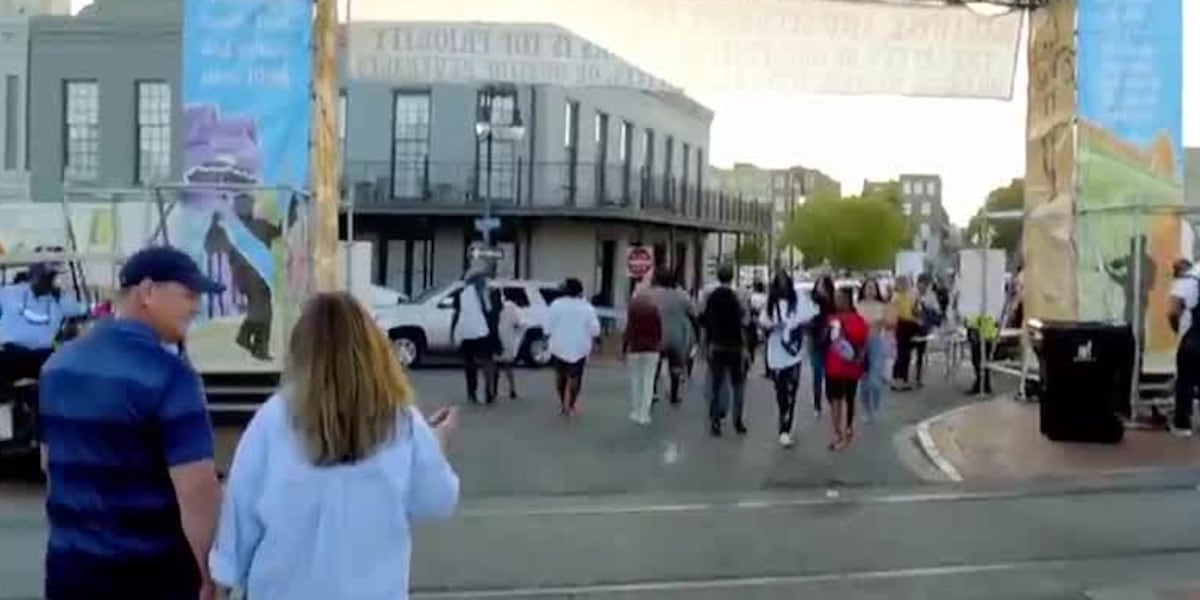
The visual of crowds carrying folding chairs and suitcases on a Thursday morning illustrates the immediate and significant visitor influx the festival generates, indicating a well-established attendance pattern.
The festival’s designation as a “free music festival” is a critical element of its public service mission and broad appeal, allowing it to attract a diverse audience and maximize cultural reach.
The reference to a “stretch of festival weekends” suggests French Quarter Fest is part of a larger calendar contributing to New Orleans’ reputation as a major cultural tourism destination.
The strategic decision to expand into Riverfront Park enhances the festival ecosystem by creating diverse activity zones, improving infrastructure, and potentially attracting new vendors and sponsors aligned with a riverfront setting.
The integration of a children’s playground broadens the festival’s demographic appeal and enhances family-friendliness, positioning it to capture a larger share of the family market and increase overall economic potential.
The presence of named stages like Abita Beer and Tropical Isle Hand Grenade highlights the importance of brand integration, providing recognizable anchors for attendees within the expanded layout.
The festival’s ability to showcase “incredible talent, everybody from Irma Thomas to Big Freedia, old and new, and everything in between” demonstrates a curatorial strategy honoring musical lineage while embracing contemporary innovation.
The statement that the expanded park offers “more than just music” indicates a strategic diversification of attractions, aiming to create a more holistic and engaging experience by incorporating culinary and family-oriented offerings.
Encouraging attendees to “bring your picnic blanket, bring your hammocks” signals an operational design prioritizing comfort and a relaxed, communal atmosphere, fostering longer stays and deeper engagement.
The festival’s continued growth, evidenced by its expansion, reflects successful operational management and strategic vision, indicating an organizational structure capable of handling increased complexity while maintaining cultural objectives.
The festival’s role as a “major stage” for local musicians and vendors is a critical element of its economic and cultural impact, essential for the visibility and sustenance of New Orleans’ creative industries.
The strategic decision to host the festival across more than 20 stages within the French Quarter and Riverfront Park allows for distributed experiences, minimizing bottlenecks and maximizing attendee access to diverse performances.
The festival’s opening parade at 10 a.m. Thursday serves as a ceremonial kickoff, generating immediate public engagement and directing attendees towards festival zones opening at 11 a.m.
The high hotel occupancy rate of over 90% directly indicates the festival’s significant contribution to the city’s tourism economy and benefits for the hospitality sector.
The festival’s ability to draw visitors “across the country” highlights its national prominence and role as a key driver of inbound tourism for New Orleans.
The inclusion of a children’s playground within Riverfront Park represents a strategic effort to broaden demographic appeal and enhance family-friendliness.
The positioning of food and beverage vendors near the train tracks in Riverfront Park demonstrates thoughtful spatial planning, creating distinct zones of activity and managing crowd flow.
The commitment to featuring over 300 musicians and 70 food and beverage vendors underscores the festival’s scale and comprehensive offering of local talent and cuisine.
The festival’s decades-long history, combined with its current expansion, illustrates a successful strategy of evolving while remaining rooted in its mission to celebrate the French Quarter.
The strategic decision to offer free admission remains a core tenet, ensuring broad accessibility and reinforcing the festival’s role as a public cultural event.
The mention of specific stages like Abita Beer and Tropical Isle Hand Grenade within Riverfront Park signifies continued strong brand partnerships vital for financial sustainability.
The festival’s programming, featuring a mix of “old and new” talent, reflects a strategic approach to appeal to a wide range of musical tastes and generational preferences.
The encouragement for attendees to bring picnic blankets and hammocks suggests an operational focus on creating a comfortable and leisurely environment, promoting longer stays and deeper engagement.
The festival’s expansion into Riverfront Park is a direct response to its growing popularity and a strategic move to enhance visitor experience and accommodate larger crowds.
Photo by beebutter on Pixabay.