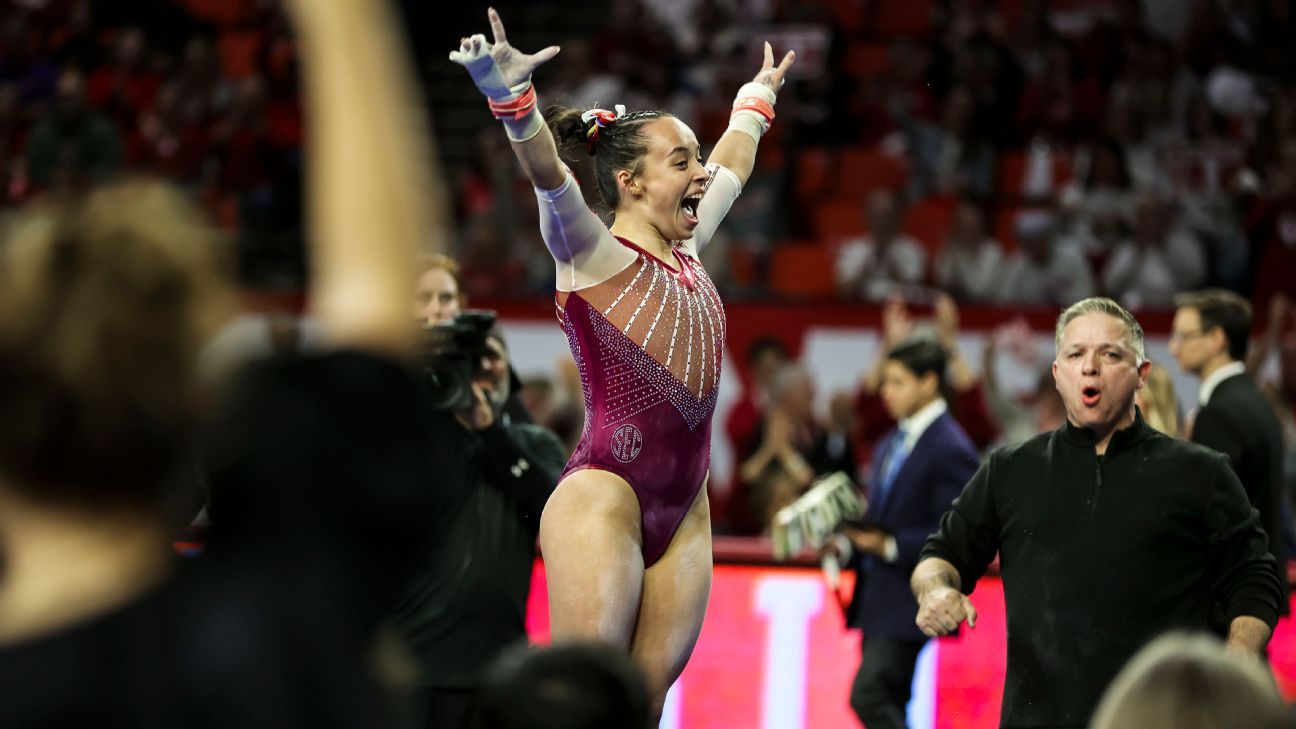
Torrez Claims NCAA All-Around Title in Unforeseen Triumph
Oklahoma senior Faith Torrez secured the NCAA all-around gymnastics championship with a remarkable performance, a result that defied expectations given her season-long injury struggles. Torrez, who had limited her participation to uneven bars and balance beam since February, made her all-around debut in the semifinals. Her victory, with a total score of 39.7875, positions her as a significant individual performer against a field including Olympic and world champions.
Torrez’s surprise at her achievement highlights the unexpected nature of her win, underscoring a strategic pivot in her training and competitive approach. She indicated that training floor exercise again was a late-season decision, made after the SEC championships, driven by performance potential and opportunity. This late surge in readiness and execution demonstrates high adaptability from both the athlete and coaching staff within competitive gymnastics.
Championship Field Set Amidst Upsets
The 2026 NCAA Women’s Gymnastics National Championship field is finalized with No. 1 Oklahoma, No. 2 Florida, No. 3 LSU, and No. 13 Minnesota advancing from a competitive semifinal round in Fort Worth, Texas. These four programs, collectively holding 11 NCAA titles, represent a mix of established powerhouses and a surprising contender making its debut in the national final.
Minnesota’s advancement as the lowest seed since the implementation of seeding in 2014 signifies a major competitive disruption. Their presence in the championship round challenges established hierarchies, suggesting a strategic advantage or superior performance execution in the semifinal phase, potentially leveraging a less-pressured environment compared to higher-seeded programs.
UCLA and Chiles Miss Championship Cut
In a notable upset, No. 4 seed UCLA and star gymnast Jordan Chiles failed to qualify for the NCAA National Championship, finishing third in their semifinal session. This outcome deviates sharply from pre-competition expectations, particularly for a program anticipated to contend for the national title.
The Bruins’ performance was significantly impacted by an early fall from Chiles on the uneven bars, a critical error that forced the team to count a lower score from teammate Nola Matthews. This early miscue, combined with subsequent wavering performances on vault, proved insurmountable against Minnesota’s consistent execution and Oklahoma’s steady performance, illustrating the razor-thin margins and high stakes in elite collegiate gymnastics where a single rotation can drastically alter outcomes.
Despite the team’s elimination, Jordan Chiles secured the individual floor title with a score of 9.9750, her second NCAA floor championship. However, this individual success does not mitigate the team’s overall disappointment or the strategic implications for UCLA’s program moving forward, particularly concerning athlete development and competitive resilience under pressure.
The elimination of UCLA, the sole top-four seed not to advance, underscores the competitive parity and unforgiving nature of the NCAA gymnastics semifinals. The Bruins’ final score of 197.2750 placed them just behind Oklahoma and Minnesota, highlighting how minor execution differences can lead to significant shifts in final standings.
Arkansas, seeded ninth, also failed to advance, further emphasizing the intense competitive pressure within the semifinal sessions. These outcomes suggest a strategic imperative for top-tier programs to maintain peak performance consistency across all rotations, as any lapse can have cascading effects on team advancement and individual accolades.
The collective performance of the advancing teams, particularly Oklahoma’s top seeding and Florida and LSU’s strong showings, sets a compelling stage for the national championship. Oklahoma, the defending champion, demonstrated resilience and consistent execution, reinforcing their status as a dominant force in collegiate gymnastics.
Florida and LSU, with their respective championship histories, bring significant competitive experience to the final. Their consistent performances in the semifinals indicate strong program management and athlete preparedness, positioning them as formidable contenders against the top-ranked Sooners.
Minnesota’s journey to the national final as a No. 13 seed represents a significant narrative of overachievement and strategic execution. Their ability to outperform higher-ranked opponents suggests effective coaching, athlete motivation, and a capacity to perform under pressure, potentially disrupting the established competitive order.
The competitive landscape of NCAA gymnastics is characterized by a blend of individual brilliance and team synergy, where the slightest deviation in execution can lead to substantial shifts in rankings and outcomes. The semifinal results underscore the importance of roster depth and the athletes’ ability to consistently deliver high-level performances across all apparatus.
The financial and media implications of these results are also noteworthy. The national championship, broadcast on ABC/ESPN+, garners significant viewership, and the success of established programs like Oklahoma, Florida, and LSU, alongside the Cinderella story of Minnesota, provides compelling narratives for sports media. The absence of a high-profile program like UCLA may impact viewership engagement for segments of the audience following specific athletes or teams.
From a strategic perspective, the performance of each program in the semifinals provides valuable data for future recruitment, training methodologies, and competitive planning. For coaches and athletic directors, understanding the factors contributing to both success and unexpected elimination is crucial for refining long-term program development and maintaining a competitive edge in a highly contested collegiate sport.
The competitive leverage gained by the advancing teams is substantial, offering them a platform to further solidify their program’s legacy and attract future talent. Conversely, programs like UCLA face the challenge of analyzing their performance, identifying areas for improvement, and strategizing for subsequent competitive cycles to regain their position among the elite.
The NCAA gymnastics championship represents a significant intersection of athletic achievement, institutional pride, and media attention. The outcomes of the semifinals have not only determined the national finalists but have also generated considerable discussion regarding competitive dynamics, athlete resilience, and the strategic imperatives governing success at the highest levels of collegiate sports.
The structural implications of Minnesota’s advancement are particularly significant. As the lowest-seeded team to reach the finals since 2014, their success suggests a potential shift in competitive balance, or at least a demonstration that consistent, high-level execution can overcome historical program prestige and seeding advantages. This outcome provides a competitive benchmark for other programs aiming to ascend the national rankings.
Furthermore, the narrative of Faith Torrez’s individual triumph, emerging from injury to claim the highest individual honor, offers a compelling case study in athlete perseverance and adaptive coaching strategies. Her journey highlights the importance of individualized athlete care and the potential for late-season performance surges when managed effectively, a factor coaches across all sports monitor closely for program development.
The financial investment in collegiate athletics, particularly in gymnastics programs attracting significant media rights and sponsorship opportunities, means consistent performance and championship contention are key drivers of revenue and institutional prestige. The advancement of established programs and the emergence of new contenders directly influence these economic factors, shaping future resource allocation and strategic priorities.
The media narrative surrounding the NCAA gymnastics championships is often driven by star athletes and team rivalries. The unexpected elimination of UCLA and Jordan Chiles, despite her individual floor title, creates a void in some anticipated storylines but simultaneously amplifies the drama surrounding the remaining contenders. This dynamic influences broadcast strategies and fan engagement, as media outlets adapt to highlight prevailing narratives of triumph and unexpected challenge.
The strategic decisions made by coaching staffs, from training regimens to competitive lineups, are under intense scrutiny following such high-stakes events. The success of Oklahoma, Florida, and LSU, alongside Minnesota’s breakthrough, provides a rich dataset for analyzing effective program management, athlete development pathways, and the tactical approaches that yield national championship results.
The capital movement within collegiate athletics, encompassing recruiting budgets, facility investments, and coaching salaries, is intrinsically linked to competitive success. Programs that consistently reach the national championship, and particularly those that win, tend to attract greater financial support and investment, creating a self-reinforcing cycle of excellence.
The performance leverage demonstrated by the advancing teams is a testament to their operational efficiency and strategic planning. For Minnesota, this leverage has propelled them to an unprecedented national final appearance, while for established powers like Oklahoma, it represents the sustained application of resources and expertise to maintain a championship-caliber program.
The downstream effects on the sport include the potential for increased interest in programs that defy expectations, such as Minnesota, and the continued elevation of individual athletes who capture national attention, like Faith Torrez. These narratives can inspire future generations of gymnasts and influence participation trends at lower levels of the sport.
The competitive implications extend beyond the immediate championship outcome. The performances in the semifinals will inform future seeding, recruitment strategies, and the overall perception of program strength within the NCAA gymnastics landscape, shaping the competitive environment for seasons to come.
The institutional impact is evident in the prestige and recognition afforded to the advancing universities. A national championship title or even a strong final appearance significantly enhances a university’s brand, contributing to alumni engagement, student recruitment, and overall institutional reputation, thereby influencing capital allocation and strategic planning across various university departments.