
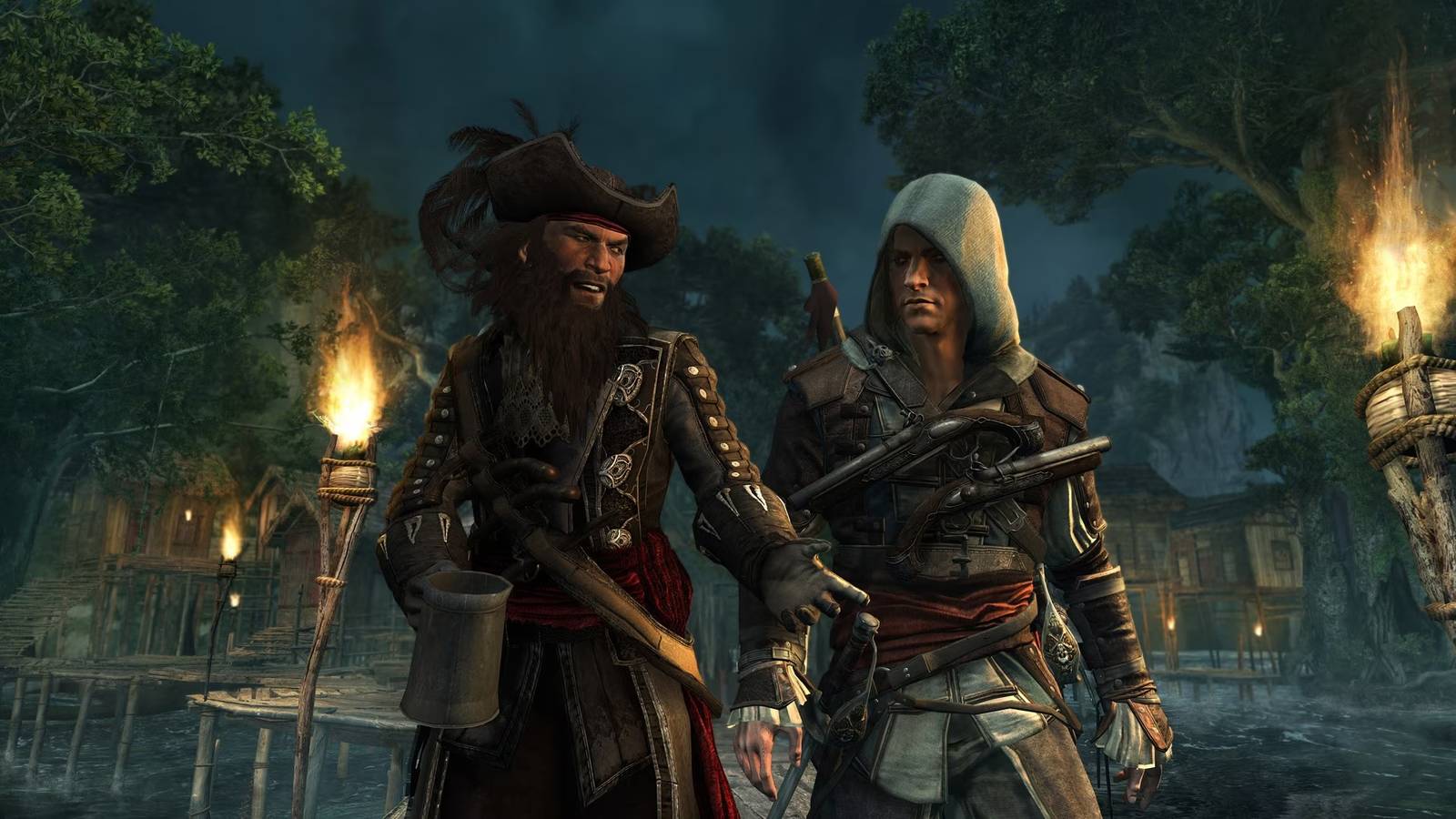
Narrative Strategy in Iconic Dialogue
Blackbeard’s memorable line in Assassin’s Creed 4: Black Flag, “In a world without gold, we might’ve been heroes!”, is a deliberate narrative construct designed to imbue his final moments with profound thematic weight. This dialogue serves as a critical anchor, encapsulating the game’s central narrative arc.
The quote directly confronts the core conflict of the game’s portrayal of pirates: the tension between avarice and the potential for nobler pursuits. By framing Blackbeard’s demise with this sentiment, developers signaled an intent to explore the complexities of its historical figures beyond simplistic archetypes of lawlessness.
This narrative choice elevates Edward Thatch (Blackbeard) from a historical footnote to a figure capable of introspection and regret. The line posits a hypothetical existence where societal structures and economic incentives did not dictate actions, allowing for a contemplation of alternative capabilities.
The strategic foregrounding of this sentiment in Blackbeard’s death scene underscores the game’s broader thematic exploration of freedom, ambition, and the corrupting influence of wealth. It positions the narrative as a commentary on the socio-economic conditions that shaped the Golden Age of Piracy.
The impact of this line on player perception is significant, fostering a nuanced understanding of the pirate ethos. It encourages players to consider character motivations within a broader historical and philosophical context, moving beyond a simplistic ‘good versus evil’ dichotomy.
The inclusion of such a thematically rich final statement for a supporting character demonstrates a commitment to narrative depth within the Assassin’s Creed franchise, investing in character development and thematic resonance.
The writer’s intention to connect Blackbeard’s words to the game’s main theme highlights a sophisticated approach to interactive storytelling. Even seemingly minor dialogue can reinforce overarching narrative concepts and enrich the player experience.
This focus on thematic encapsulation in dialogue has implications for narrative-driven games. Developers seeking lasting impressions must prioritize integrating character moments with core messages, as exemplified by Black Flag.
The line’s iconic status within the Assassin’s Creed canon underscores the power of well-written dialogue to define a game’s legacy. Memorable quotes become central to a game’s identity and player reception.
Dialogue writing in video games has evolved towards sophisticated narrative integration. Assassin’s Creed 4: Black Flag‘s approach represents a mature application, prioritizing thematic resonance and character depth.
This emphasis on thematic depth influences critical reception. Publications and players often highlight dialogue offering insight into themes and characters, rewarding narrative excellence.
The incentive for developers to craft impactful dialogue is to create a more immersive player experience. Memorable lines and thematic coherence contribute to a game’s quality and potential for long-term engagement.
The competitive advantage of games that successfully integrate narrative themes into dialogue is substantial, differentiating them in a crowded market.
The historical context of the Golden Age of Piracy, with its blend of lawlessness and fortune-seeking, provides fertile ground for thematic exploration, questioning the nature of heroism and villainy.
The contrast between pirate actions and potential heroism creates compelling dramatic irony, allowing players to contemplate the moral ambiguities of pirate life.
This narrative device humanizes characters, making their struggles more poignant and fostering deeper emotional connection to the game’s world.
The strategic placement of this line at the climax of intense combat amplifies its dramatic impact, creating a powerful and memorable moment.
The success of this line in achieving iconic status speaks to the power of well-written dialogue in defining a game’s legacy.
The evolution of the Assassin’s Creed series shows a progression in narrative ambition, with Black Flag‘s approach showcasing a mature application of thematic integration.
The financial implications for game studios are clear: games that resonate narratively often enjoy longer sales cycles and stronger community engagement.
The cultural impact of such iconic lines extends beyond the game, influencing gaming discourse and creating shared touchstones.
Focusing on thematic implications of piracy, rather than just action, positions Assassin’s Creed 4: Black Flag as a thoughtful experience appealing to players valuing narrative substance.
The writer’s explanation of the line’s origin serves as a case study for game writers, illustrating dialogue’s power to encapsulate a game’s essence.
The competitive advantage in the gaming market is increasingly tied to narrative experience quality, rewarding titles with profound storytelling and memorable characters.
Long-term franchise leverage lies in consistently delivering engaging narratives, with moments like Blackbeard’s words contributing to brand equity.
Dialogue’s structural element is a critical tool for thematic reinforcement, character development, and lasting cultural impact.
The historical context of the early 1700s actively shapes the narrative’s thematic concerns, questioning heroism and societal incentives.
Using a historically notorious figure like Blackbeard for this thematic statement amplifies its resonance and allows for deeper exploration of the ‘what if’ scenario.
The performance leverage of such a line is measured by its enduring presence in discussions, serving as a shorthand for the game’s narrative quality.
The capital investment in narrative design yields significant returns in player engagement and critical reception, elevating the game beyond a product to an experience.
Exposure of the game’s core themes through concise dialogue ensures accessibility and communicates deeper intentions effectively.
The institutional context of game development, where narrative aligns with design goals, is exemplified by this quote’s purpose-driven creation.
The downstream effects on the industry include an emphasis on narrative depth and character-driven storytelling, incentivizing investment in writers.
Neglecting narrative elements can lead to games perceived as shallow or forgettable, failing to capture player imagination long-term.
Framing pirates’ actions within a context of potential heroism adds philosophical inquiry to the narrative.
The writer’s insight into the original line suggests a rigorous editing process for maximum impact and clarity, a hallmark of professional narrative development.
Competitively, iconic lines result from strategic planning and execution, setting a benchmark for quality.
Capital movement in the industry favors titles with narrative innovation, making investments in depth a strategic choice.
The performance leverage of games like AC4, integrating thematic depth, translates into strong brand recognition and sustained player interest.
Exposure of the game’s narrative ambition through memorable quotes contributes to critical and commercial success.
The institutional imperative for studios is to foster environments prioritizing narrative excellence for impactful experiences.
Successful narrative integration can inspire developers and elevate storytelling standards in interactive media.
A lack of narrative depth can result in games that are quickly forgotten, failing to leave a lasting impression.
Using Blackbeard to encapsulate the central theme demonstrates a sophisticated understanding of leveraging character moments for narrative impact.
The writer’s explanation of the quote’s origin provides insight into the iterative process of narrative design, emphasizing the importance of refining dialogue for clarity and emotional resonance.