
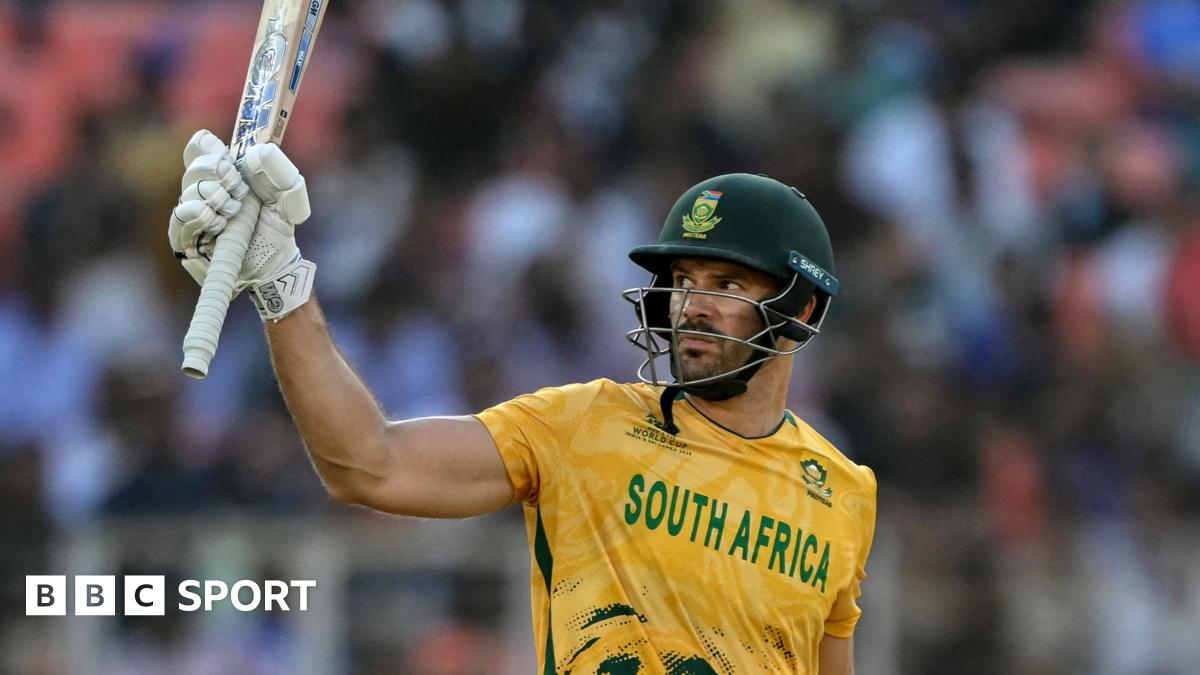
South Africa’s strategic ascent in the T20 World Cup Super Eight stage was underscored by a clinical nine-wicket victory over the West Indies, extending their unbeaten streak to six matches. This result not only secures their standing at the summit of the group but also exposes systemic vulnerabilities in the Caribbean side’s high-risk operational philosophy. The match was defined by a stark disparity in top-order efficiency and a superior adaptation to the specific environmental variables of the venue.
Top-Order Efficiency and Powerplay Domination
The Proteas’ pursuit of the 177-run target was facilitated by a 95-run opening partnership between Aiden Markram and Quinton de Kock, which effectively neutralized the West Indian bowling attack within the initial eight-over window. Markram’s unbeaten 82 off 46 deliveries was a masterclass in calculated aggression, maintaining a high strike rate while ensuring wicket security. This performance leverage allowed South Africa to dictate the tempo of the chase, reaching the target in 16.1 overs and significantly optimizing their Net Run Rate (NRR).
Quinton de Kock’s contribution of 47 runs from 24 balls provided the necessary early momentum, utilizing a strike rate nearing 200 to dismantle opening spells. By securing eight boundaries early, de Kock forced the West Indies into defensive field placements, creating operational gaps for Markram to exploit. Ryan Rickelton’s unbeaten 45 further stabilized the innings, ensuring no mid-innings slump—a historical failure point for teams facing the West Indies’ variety of spin and pace.
West Indies: Top-Order Volatility vs. Lower-Order Resilience
The West Indian innings was characterized by extreme volatility, recovering from a precarious 83-7 to reach a competitive 176-8. This recovery, driven by Jason Holder (49 off 31) and Romario Shepherd (52* off 37), highlighted a breakdown in the top-order strategy. The early loss of Brandon King and Shai Hope set a negative tone, as the unit struggled to build partnerships against a disciplined South African attack led by Kagiso Rabada and Lungi Ngidi.
Shai Hope’s cameo at a strike rate of 266.67 illustrated the high-risk nature of the West Indian blueprint, which prioritizes boundary hitting over situational stability. While effective against lesser bowling units, this approach faltered against the Proteas’ tactical precision. The quick dismissals of Nicholas Pooran and Andre Russell—the core of the Caribbean power-hitting lineup—left a void that the middle order could not fill, forcing the lower order into a recovery role rather than an accelerative one.
Bowling Discipline and Environmental Calibration
South Africa’s success was anchored by the bowling efficiency of Ngidi and Rabada, who exploited the West Indian tendency to attack early. Ngidi’s ability to induce false shots was central to the early collapse, while the spin department maintained economical spells that restricted scoring options during the middle overs. This multi-dimensional attack allowed South Africa to restrict the chase regardless of the opposition’s perceived batting depth.
Conversely, the West Indian bowling attack lacked the discipline required to restrain the Markram-de Kock axis. The failure to find consistent lengths or generate early breakthroughs forced frequent bowling rotations that failed to disrupt the South African rhythm. This lack of environmental calibration resulted in a lack of penetration, leaving the West Indies in a precarious position where their upcoming fixture against India becomes a virtual quarterfinal.
Tournament Implications and Stakeholder Outlook
The margin of victory has profound implications for the Super Eight standings. By concluding the chase early, South Africa has fortified its NRR, the primary tiebreaker for semifinal qualification. This strategic acceleration demonstrates a sophisticated awareness of the tournament’s mathematical landscape. For the West Indies, the loss removes any margin for error, placing immense pressure on the co-hosts to deliver a victory against India to avoid an early exit.
South Africa’s performance re-establishes them as a primary title contender, moving away from historical narratives of underperformance in ICC events. Under Aiden Markram’s leadership, the squad has fostered a culture of clinical execution and situational awareness. As the Super Eight stage nears its conclusion, South Africa’s ability to win through both defensive bowling and dominant chasing marks them as the most balanced unit in the competition.

Photo by Daniele_K on Pixabay.