White Sox Ascendancy Challenges Giants’ Dominance Narrative
The Chicago White Sox’s strategic offseason investment, specifically the acquisition of a high-impact player from Japan, has fundamentally altered their competitive standing. Once an organizational afterthought, they are now a team commanding significant attention. This rapid transformation, notably including unusual endorsements, contrasts sharply with pre-season expectations and places the San Francisco Giants under unexpected defensive scrutiny.
This dynamic creates palpable tension for the Giants, previously perceived as a more robust and effectively managed franchise. The prevailing narrative has shifted from anticipated Giants’ dominance to implicit questions about their operational acumen when juxtaposed with the White Sox’s revitalized performance. This reversal amplifies the stakes for their upcoming series.
Front Office Scrutiny Intensifies Amidst Performance Shift
The White Sox’s front office, led by executive Chris Getz, faces a critical juncture where past performance, marked by substantial losses in the 2024 and 2025 seasons, is now being re-evaluated against current on-field success. Getz, a former utility player, navigates the dual pressure of explaining historical strategic missteps while capitalizing on the team’s current momentum.
Public and media scrutiny on Getz is amplified by documented operational oversights, such as misidentifying a traded player’s throwing arm. These instances historically signaled organizational deficiency. However, the current success offers a potential counter-narrative, enabling a reinterpretation of his tenure and a shift in discourse from criticism to a more nuanced assessment of his strategic impact.
Munetaka Murakami’s Impact on Franchise Relevance and Performance
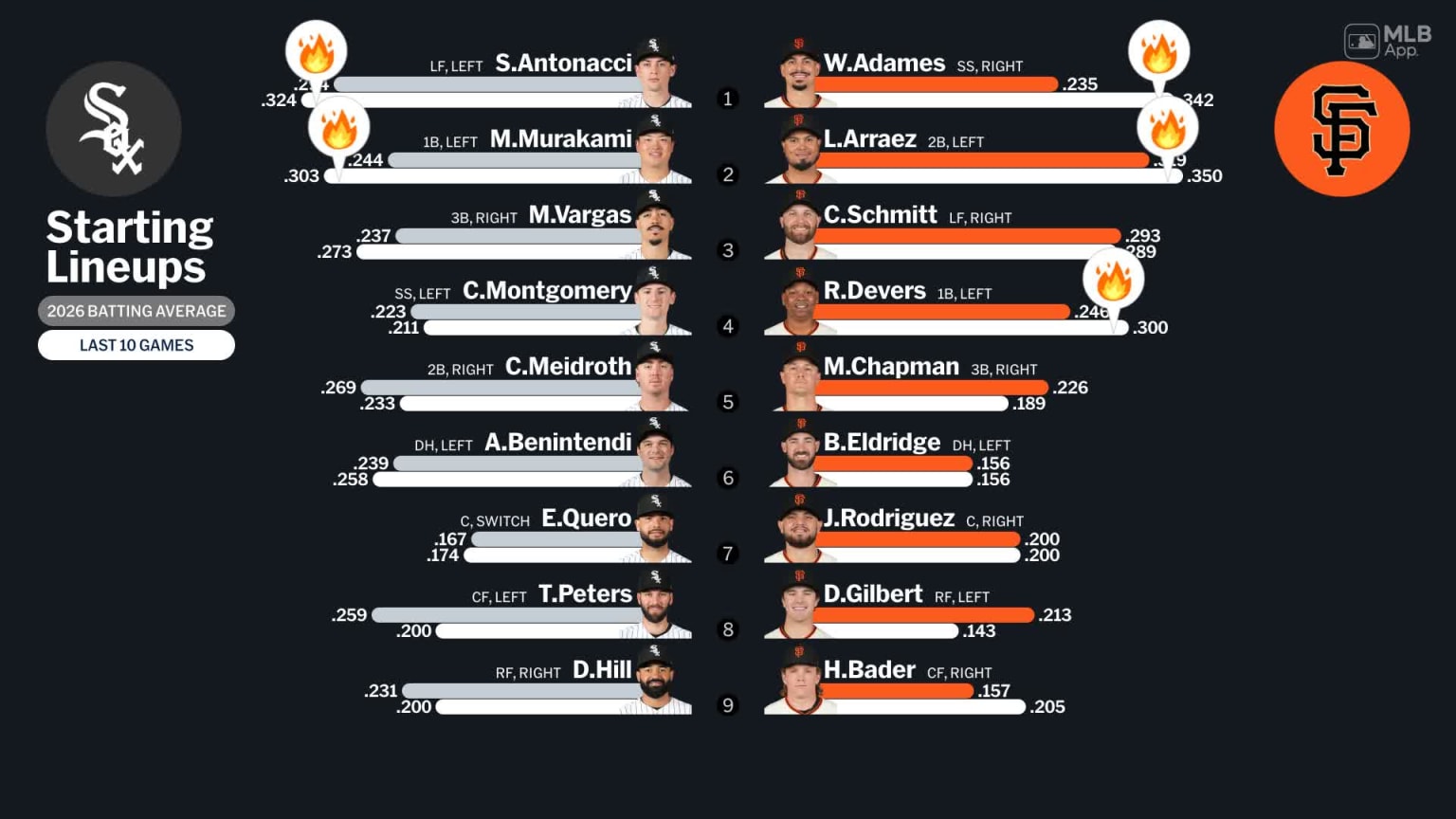
Munetaka Murakami’s immediate and substantial contributions since his acquisition from Japan serve as the primary catalyst for the White Sox’s resurgence. He has injected a level of offensive firepower that has redefined the team’s identity. His slugging prowess has elevated performance metrics and recaptured the attention of a fanbase previously disengaged by prolonged underperformance.
This influx of talent and subsequent on-field success has generated a positive feedback loop, enhancing fan engagement and media coverage. The franchise’s ability to secure a high-caliber international player and integrate him effectively highlights a strategic pivot now yielding tangible results, moving them from an ’embarrassing afterthought’ to a team demanding strategic consideration.
Pitching Matchup and Betting Market Dynamics
The series opener between the White Sox and Giants features a pitching matchup with significant implications for the betting market, particularly concerning projected total runs. White Sox ace Davis Martin demonstrates exceptional form with a 1.61 ERA and a 6-1 record, showing particular strength on the road (1.95 ERA).
Martin’s strong performance contrasts with the Giants’ offensive struggles, ranked 30th in runs scored, and a recent three-game losing streak. Giants’ starter Trevor McDonald has also shown vulnerability at home, allowing six earned runs in his last two starts. This confluence of factors tilts perceived advantage towards the Under in betting markets.
Giants’ Offensive Woes and Shifting Market Sentiment
The San Francisco Giants’ offensive output in May, reflected in a 92 wRC+, indicates performance below league average, signaling systemic issues in run production. This statistical underperformance, coupled with their current losing streak, creates a challenging environment and influences market sentiment, positioning them as underdogs.
The White Sox’s recent success against the Giants, winning three of their last four meetings, further reinforces this sentiment. Betting lines, favoring the White Sox moneyline at -108 and the Under 7.5 runs at -125, directly reflect these underlying performance trends and market perceptions of each team’s current trajectory.
Strategic Implications of Divergent Franchise Trajectories
The contrasting trajectories of the White Sox and Giants highlight divergent strategic approaches and their immediate market consequences. The White Sox’s successful acquisition and integration of a star international player demonstrate a willingness to make bold personnel moves that can rapidly alter a franchise’s competitive posture and public perception.
Conversely, the Giants’ struggles, particularly offensively, suggest potential deficiencies in their player development, scouting, or acquisition strategies. This disparity necessitates a recalibration of expectations for both franchises, with the White Sox now viewed as a team on the rise and the Giants facing increased pressure to validate their operational reputation and pre-season projections.
Media Narrative Evolution and Fan Engagement
The media narrative surrounding the White Sox has dramatically shifted from consistent underperformance and public criticism to renewed interest and even a degree of cult fascination. This transformation is directly attributable to the on-field excitement generated by key acquisitions and improved performance.
This narrative shift impacts fan engagement, potentially re-engaging disillusioned supporters and attracting new interest. For the Giants, the pressure to maintain a positive media narrative is heightened, as any further stumbles will be viewed through the lens of their perceived operational superiority being challenged by a resurgent rival.
Capital Allocation and Performance Leverage Analysis
The White Sox’s offseason capital allocation, focused on acquiring a player like Murakami, has proven to be a high-leverage strategic decision. This investment has not only boosted on-field results but has also generated significant positive public relations and fan interest, creating a virtuous cycle.
The success of this strategy contrasts with potential underperformance of capital deployed by other franchises, such as the Giants, if their current struggles persist. This underscores the critical importance of strategic foresight and execution in player acquisition and team building, where effective capital deployment yields disproportionate performance leverage.
Competitive Positioning and Market Revaluation
The current competitive landscape sees the White Sox rapidly climbing the ranks, challenging established hierarchies and forcing teams like the Giants to reassess their strategic positioning. The unexpected strength of the Southsiders means matchups previously considered foregone conclusions now carry significant weight and intrigue.
This recalibration of competitive positioning has league-wide ripple effects, influencing trade deadlines, future free-agent strategies, and the overall market valuation of franchises. The Giants must contend with a resurgent rival, potentially impacting their long-term strategic planning and resource allocation.
Operational Benchmarking and Future Strategy Reassessment
The White Sox’s current success provides a new benchmark for operational effectiveness, particularly in international player acquisition and rapid team revitalization. This performance challenges long-held assumptions about which franchises are best-run and most adept at identifying and capitalizing on talent.
For the Giants, this situation necessitates a critical internal review of their operational strategies. The pressure to compete and demonstrably outperform rivals like the White Sox will likely influence future decision-making, from scouting and development to executive leadership and long-term talent investment.
Downstream Effects on League Dynamics and Parity
The emergence of the White Sox as a competitive force has downstream effects on league dynamics, influencing perceived parity and competitive balance. This shift can impact media rights negotiations, sponsorship valuations, and overall league interest by creating new compelling narratives and rivalries.
Furthermore, the success of a team previously considered an ’embarrassing afterthought’ can inspire other franchises to re-evaluate their long-term strategies, potentially leading to more aggressive international scouting or greater willingness to take calculated risks in player acquisition. This dynamic fosters a more fluid and unpredictable competitive environment across Major League Baseball.
Stakeholder Implications and Performance Leverage Assessment
For stakeholders, including ownership, investors, and fans, the White Sox’s resurgence offers significant positive returns, both financially and emotionally. Leveraging improved on-field performance into increased ticket sales, merchandise revenue, and enhanced brand value is a critical outcome.
Conversely, the Giants face potential negative stakeholder reactions if performance falters, especially given their reputation for operational efficiency. Demonstrating consistent performance leverage will be paramount, as sustained underperformance could trigger a reassessment of management and strategic direction.
Market Perception Shift: The ‘Cringe-Inducing’ Matchup
The description of the Giants-White Sox matchup as ‘cringe-inducing’ reflects a market perception fundamentally altered by the White Sox’s unexpected rise. This sentiment arises from the cognitive dissonance of a previously dismissed team now challenging a perceived superior operation.
This perception directly influences the series’ marketing, discussion, and analysis. It creates an environment where the Giants are pressured to validate their status, while the White Sox operate with minimal pressure, able to exceed expectations and disrupt established narratives.
Strategic Capital Deployment for Competitive Advantage
The White Sox’s offseason strategy, marked by significant investment in a high-profile international player, represents a calculated capital deployment aimed at generating immediate competitive advantage. This approach contrasts with incremental strategies, highlighting a willingness to disrupt the status quo for rapid improvement.
The success of this capital deployment is now measured against competitors like the Giants. The leverage gained by the White Sox is evident in their improved results and heightened market relevance, forcing strategic re-evaluation by rivals.
Operational Excellence vs. Strategic Agility: A Developing Contrast
The narrative framing of the Giants as the ‘better-run operation’ versus the White Sox’s current surge establishes a compelling contrast between sustained operational excellence and agile strategic adaptation. While the Giants may possess established systems, the White Sox have demonstrated an ability to pivot and execute impactful changes rapidly.
This dynamic raises questions about the long-term sustainability of each approach. Whether established operational strength can overcome a rival’s newfound strategic agility will significantly impact how franchises benchmark their internal structures and external market positioning.
Future Implications for Franchise Valuations and Investment
The divergent performance trajectories have tangible implications for franchise valuations and future investment potential. A consistently improving team like the White Sox, especially with a star player, can command higher valuations and attract greater investment interest.
Conversely, sustained underperformance for the Giants, particularly if it challenges their reputation for operational efficiency, could lead to valuation stagnation or decline. This underscores the direct link between on-field success, market perception, and the financial health of sports franchises.
Media’s Role in Shaping Perceptions and Narratives
The media plays a crucial role in shaping narratives around both franchises, amplifying the White Sox’s resurgence and intensifying scrutiny on the Giants. The contrast between pre-season expectations and current realities provides fertile ground for commentary and analysis.
Media focus on specific executive missteps for the White Sox, juxtaposed with their current success, creates a complex public perception. This highlights how media framing influences stakeholder sentiment and the perceived legitimacy of organizational strategies, impacting fan morale and investor confidence.
Leveraging International Talent Acquisition for Competitive Edge
The White Sox’s success with Munetaka Murakami exemplifies the increasing importance of strategic international talent acquisition in MLB. This approach offers a pathway to elite talent potentially inaccessible through traditional domestic avenues, thereby creating a competitive edge.
The impact of such acquisitions extends beyond the field, influencing scouting budgets, international operations, and the global talent market. Franchises adept at navigating international markets are likely to gain a significant long-term advantage, as demonstrated by the White Sox’s current revitalization.
Performance Metrics Driving Strategic Recalibration
The performance metrics of both teams, particularly offensive output and pitching effectiveness, are critical drivers of strategic recalibration. The Giants’ struggles in runs scored and the White Sox’s ace’s dominant ERA provide clear data points for organizational assessment.
These metrics inform not only immediate tactical decisions but also long-term strategic planning, including player development, roster construction, and future acquisition targets. An organization’s ability to translate performance data into effective strategic adjustments is a key determinant of sustained success.
Pressure of Expectation Management: Giants Under the Microscope
The Giants are under immense pressure to manage expectations, having been positioned as the superior operation. Any deviation from this perceived standard, especially contrasted with the White Sox’s unexpected rise, will invite significant scrutiny.
This expectation management is critical for organizational leadership, requiring clear communication and demonstrable progress. The White Sox, conversely, are in a position to exceed expectations, fostering a more positive environment for strategic experimentation and growth.
Capital Movement and Franchise Relevancy in Modern MLB
Capital movement associated with player acquisitions, such as the White Sox’s investment in Murakami, directly correlates with a franchise’s ability to regain or maintain relevancy. Significant financial commitments signal intent and can catalyze on-field performance that captures public and media attention.
This strategic capital deployment has effectively pulled the White Sox from the periphery of MLB relevance back into the spotlight. The Giants must ensure their own capital deployment strategies continue yielding expected results to maintain their hierarchical position.
Competitive Leverage and Strategic Decision-Making in a Dynamic League
The White Sox’s current success provides significant competitive leverage, allowing them to operate with greater freedom and confidence. This leverage influences decision-making in trade negotiations, player development, and future contract extensions.
For the Giants, maintaining competitive leverage against a resurgent rival necessitates rigorous evaluation of their strategic decision-making processes. Perceived missteps or a lack of agility could erode their established advantage and create opportunities for competitors.
Long-Term Trajectory and Franchise Positioning in MLB’s Evolution
The current series and season narrative are critical in defining the long-term trajectory and franchise positioning for both the White Sox and Giants. The White Sox have an opportunity to solidify their resurgence, while the Giants must demonstrate adaptability and maintain their standing.
This period is crucial for establishing sustainable competitive advantage. Strategic decisions made now will have ripple effects for years, influencing fan loyalty, market perception, and overall organizational success within MLB’s competitive landscape.