The 2026 Beijing Summit: Necessity Over Ideology
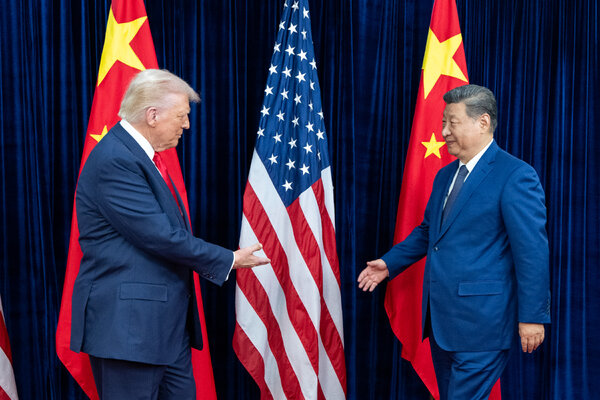
The May 2026 diplomatic mission to Beijing represents a significant recalibration of American foreign policy, dictated by the logistical and kinetic constraints of the protracted Iranian nuclear crisis. Originally delayed to follow an expected resolution in the Middle East, the summit now proceeds against a backdrop of strategic overextension. Washington’s inability to secure the Strait of Hormuz has introduced an asymmetrical vulnerability: while the blockade impacts 30% of Chinese oil imports, it has simultaneously exhausted American munitions stockpiles, diminishing the Pentagon’s conventional deterrent in the Pacific.
Institutional Realignment: The Ascendancy of the Treasury
The summit’s architecture signals a departure from traditional security-first hierarchies. By appointing Treasury Secretary Scott Bessent as the primary negotiator, the Trump administration has effectively indexed bilateral success to capital flow and trade reciprocity rather than systemic containment. This shift is codified by the consolidation of the State Department and National Security Council under Marco Rubio, a move designed to streamline executive action and reduce the bureaucratic friction that historically hampered ‘deal-making’ diplomacy.
This institutional streamlining prioritizes immediate economic gains—such as intellectual property concessions and domestic job preservation—over the long-term pursuit of technological hegemony. The inclusion of financial titans from BlackRock, Blackstone, and Goldman Sachs serves as a stabilizing buffer, ensuring that the American financial sector remains a stakeholder in Chinese market access despite escalating political rhetoric.
Resource Exhaustion and the ‘Shore-Watching’ Doctrine
The 2025 bombing campaigns in the Middle East have left a measurable vacuum in the US defense industrial base. Beijing has responded with a strategy of ‘watching from the shore,’ leveraging American resource depletion to advance its regional interests without direct military expenditure. By remaining passive during the Hormuz blockade, China allows the crisis to erode the perception of American maritime invincibility while positioning itself as a more predictable economic partner for a fractured European Union.
This disparity in military capital allocation grants Xi Jinping significant leverage. Any American request for Chinese mediation in the Middle East now carries a high premium, likely requiring the relaxation of strategic technology controls—specifically regarding high-end AI semiconductors. The administration’s willingness to trade long-term technological advantages for immediate economic stability reflects a pragmatic, albeit volatile, departure from the 2017-era trade war framework.
The Erosion of Security Guardrails and Market Realities
The 2026 summit is notable for its lack of foundational arms control agreements. With Beijing refusing to engage on nuclear expansion or AI-governed weaponry, the relationship has shifted toward an unregulated arms race moderated only by financial entanglement. While the release of high-profile detainees like Jimmy Lai offers a domestic political victory for Washington, it does little to address the ‘Taiwan deterrence paradox’: the US commitment to regional security remains firm in rhetoric, but its operational capacity is currently tethered to the replenishment cycles of its industrial base.
For global investors, this summit clarifies that the rule-based order has been supplanted by high-stakes bilateralism. Market stability is no longer maintained by multilateral institutions like the WTO, but by negotiated settlements between two superpowers facing internal economic pressures and external military limits. The goal in 2026 is no longer systemic victory, but the management of a managed decline in total conflict risk.