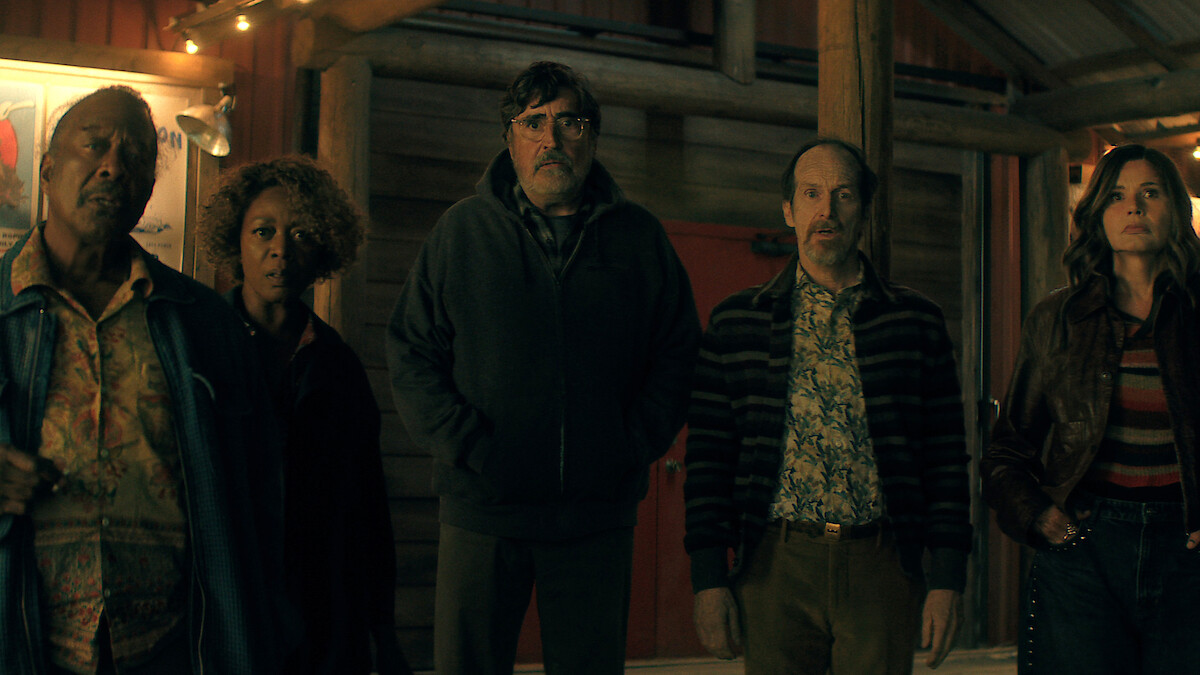
The debut of the eight-episode supernatural mystery series The Boroughs represents a critical case study in the evolving macroeconomic frameworks of subscription video-on-demand (SVOD) platforms. As production companies face intensifying margin pressure, this project highlights how platforms navigate shifting showrunner alliances, optimize regional economic incentives, and deploy targeted casting to capture distinct subscriber demographics.
Platform Talent Migration and Creative Asset Retention
The positioning of The Boroughs within Netflix’s slate is inextricably linked to broader talent retention strategies and shifting studio dynamics. Executive producers Matt and Ross Duffer, who championed the project, recently concluded their landmark flagship overall deal to transition to a new production pact with Paramount. This high-profile migration underscores the competitive friction platforms face when managing legacy creative portfolios while simultaneously defending subscriber retention metrics.
To mitigate the churn risk associated with such talent transitions, platforms increasingly rely on a continuous pipeline of spin-offs and adjacent genre IPs. For Netflix, this transitional catalog includes both an animated spin-off released in early 2025 and this high-concept thriller. Securing the creative leadership of showrunners Jeffrey Addiss and Will Matthews—who transition here from intricate fantasy world-building to grounded, character-driven supernatural mystery—demonstrates a deliberate diversification of the platform’s high-budget genre portfolio.
Regional Economic Multipliers and Infrastructure Optimization
The physical production of The Boroughs highlights the strategic reliance of major studios on secondary production hubs that offer competitive tax credits and robust local supply chains. Filming spanned a six-month window across 2024 and 2025, leveraging more than 20 distinct locations throughout New Mexico. This geographically dispersed footprint demonstrates the logistical scale required to mount high-concept series outside of traditional Hollywood studio zones.
The macroeconomic injection into the New Mexico economy was quantifiable, directly engaging over 300 local vendors and employing a combined cast and crew exceeding 350 individuals. This capital expenditure highlights the role of long-form television as an economic multiplier for regional hospitality, logistics, and technical services. It also illustrates why state governments continue to expand fiscal incentives to anchor multi-month studio commitments.
Operationally, the production’s most innovative efficiency was the adaptive reuse of commercial real estate. Production designers converted the defunct Budaghers (historically known as Traditions) outlet mall—located along the corridor between Albuquerque and Santa Fe—into the fictional, highly manicured retirement community that serves as the narrative’s central setting. This tactical reclamation of distressed suburban infrastructure bypassed high studio soundstage rental fees while providing a controlled, structurally sound set environment.
Narrative Architecture and Demographic Targeting
At its creative core, The Boroughs executes a calculated subversion of genre-casting conventions. By centering a supernatural crisis around a retirement community, the narrative unlocks a highly prestigious yet underutilized cohort of veteran actors. The ensemble—including Alfred Molina, Geena Davis, Alfre Woodard, Denis O’Hare, Clarke Peters, and Bill Pullman—delivers a level of prestige and performance authority that elevates the project above standard genre fare.
This casting matrix serves a dual-demographic acquisition strategy. It appeals directly to older, historically underserved SVOD subscribers who rarely see age-peer protagonists driving high-concept action, while simultaneously capturing younger viewers drawn to the critical prestige of the ensemble. The narrative deliberately frames the advanced age of its characters not as a comedic liability, but as a critical cognitive and experiential asset in resolving systemic crises.
Socio-Corporate Critiques and Interpersonal Anchors
The driving force of the narrative arc is the personal trajectory of Sam Cooper (Alfred Molina), a recently widowed, retired aeronautical engineer. Cooper’s forced entry into the retirement facility is dictated by a binding, non-negotiable contract co-signed with his late wife, Lilly. The operating corporation’s refusal to release him from this financial commitment introduces a layered critique of corporate predatory practices and consumer vulnerability.
This institutional entrapment serves as the catalyst for Cooper’s initial isolation and his fractured relationship with his daughter, Claire (Jena Malone), reflecting the emotional toll of displaced autonomy. This grounded, domestic friction anchors the supernatural elements of the plot in recognizable human conflict. Cooper’s eventual integration into the community is facilitated by his neighbor Jack (Bill Pullman), whose optimism acts as a vital psychological counterweight, illustrating the strategic importance of mutual-aid networks in confronting external threats.
Amortization of Sunk Costs and Season 2 Feasibility
While critical reception has lauded the series’ tight scripting and veteran performances, the greenlight for a second season will ultimately depend on a strict evaluation of cost-per-hour metrics against subscriber completion rates. The physical infrastructure established in New Mexico—specifically the repurposed commercial real estate at Budaghers—represents a significant sunk asset that dramatically lowers the marginal cost of future production cycles.
Netflix must balance the high talent-amortization costs of maintaining an ensemble of established cinema stars against the long-term lifetime value (LTV) of an elder-led, prestige franchise. If the series demonstrates strong audience retention, the regional partnerships and physical sets established in New Mexico are primed for rapid reactivation, serving as an operational model for disciplined, high-value content development in a saturated market.