
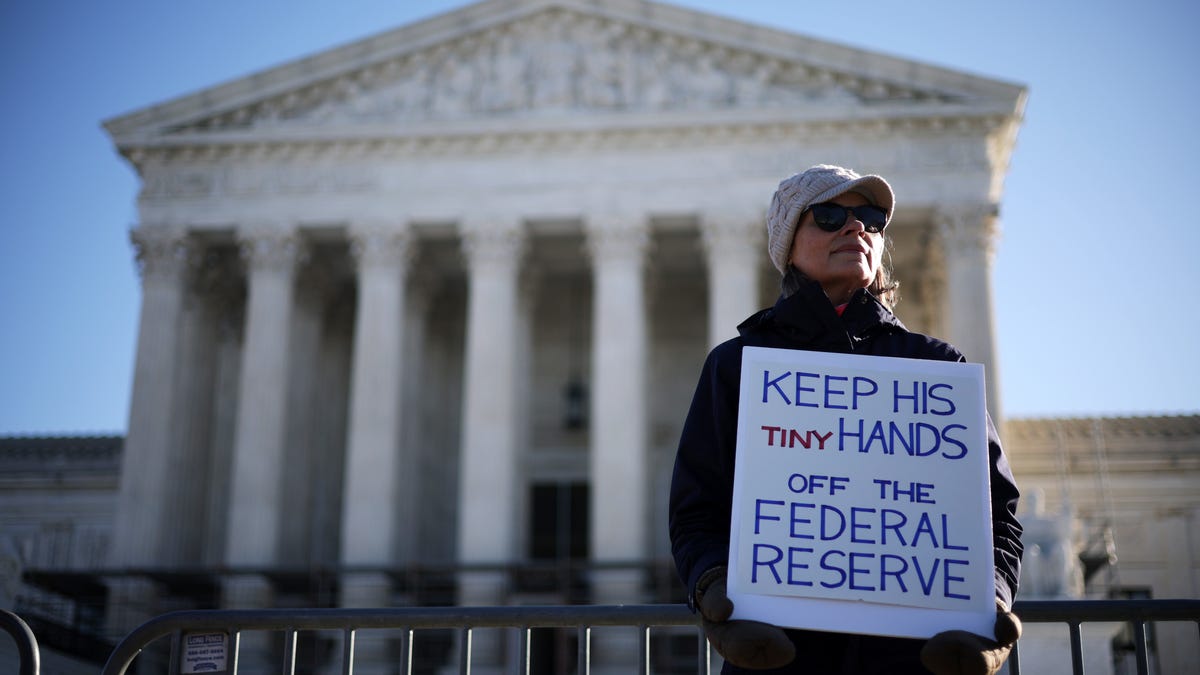
Judicial Safeguard of Central Bank Autonomy
In a pivotal 5-4 ruling, the Supreme Court has decisively blocked President Trump’s attempt to remove Federal Reserve Governor Lisa Cook. This decision serves as a robust judicial affirmation of the Federal Reserve’s statutory insulation from direct political interference, reinforcing the structural independence essential for sound monetary policy.
The core of the ruling addresses the critical tension between executive prerogative and legislative intent. Congress established the Federal Reserve Act with specific provisions to shield the central bank from partisan pressures, thereby safeguarding the integrity of monetary policy. The Court’s decision underscores the importance of these protections, reaffirming that the Fed’s operational independence is a cornerstone of economic stability.
Elevated Due Process for Fed Governor Removals
Authored by Chief Justice John Roberts, the Court’s majority opinion explicitly repudiated the administration’s argument that Governor Cook had received adequate due process. The ruling establishes a procedural prerequisite: any removal attempt must now provide a clear explanation of the evidence and offer the official a meaningful opportunity to respond. This significantly raises the legal threshold for terminating a Federal Reserve governor.
This enhanced due process requirement curtails the executive branch’s ability to effect summary dismissals as a tool for reshaping independent regulatory bodies. By mandating a higher standard, the Court has strengthened the tenure protections designed to prevent politically motivated dismissals.
Precedent for Central Bank Independence
The ruling highlights a nuanced judicial approach to administrative power, differentiating the Federal Reserve’s unique status. While the Court has historically afforded broad deference to presidential authority in other regulatory contexts, it has recognized the exceptional importance of insulating monetary policy from short-term political cycles. This decision reinforces the long-standing tradition of preserving central bank independence.
The Court’s reliance on institutional norms and the unique mandate of the Federal Reserve signals that historical frameworks continue to shape judicial interpretations of executive power, especially when foundational economic principles are at stake. This precedent is critical for maintaining the predictable operational environment necessary for effective central banking.
Strategic Stability for the Federal Reserve
For the Federal Reserve, this ruling brings immediate stability to its Board of Governors, preventing unilateral shifts in its composition. The ability of a governor to contest a removal through judicial channels guards against the executive branch’s potential to rapidly alter monetary policy direction through personnel changes.
Such legal protections are paramount for sustaining market confidence in the Fed’s independence. If governors could be removed without robust due process, the perceived impartiality of interest rate decisions would be compromised, potentially introducing significant volatility into financial markets and undermining economic forecasting.
Judicial Oversight as a Check on Executive Power
The decision mandates that lower courts will now conduct a substantive review to determine if President Trump possessed sufficient cause for Cook’s removal. This transition from an executive decree to a judicially scrutinized process compels the administration to substantiate its actions against specific statutory protections afforded to Fed governors.
The judiciary’s role in this dispute functions as a vital check on executive authority. By enforcing a legal justification for removal, the Court ensures that the Federal Reserve’s independence is a legally enforceable constraint on presidential power, not merely a customary practice.
Historical Context and Institutional Boundaries
The attempted removal of a sitting Federal Reserve governor is an unprecedented action in the institution’s history. While past administrations have exerted influence through public commentary or policy discussions, they have consistently respected the statutory tenure of board members.
This case signifies a departure from that historical practice, illustrating a potential shift in executive engagement with independent agencies. The Supreme Court’s intervention serves to reinforce the established institutional boundaries governing the relationship between the White House and the Federal Reserve.
Market Confidence and Economic Predictability
Financial markets depend on the predictability and perceived independence of the Federal Reserve’s policy-making. The uncertainty generated by the attempted removal could have fueled market volatility, as investors would have factored in potential political influence on critical interest rate decisions.
By upholding the status quo and reinforcing the Fed’s operational independence, the Court has mitigated systemic risk. This stability is crucial for long-term economic planning and preserving investor confidence in the U.S. financial system’s integrity.
Clarifying Limits on Executive Authority
The ruling clarifies that the executive branch lacks unchecked authority to unilaterally reshape independent agencies. While presidential appointments are significant, the removal of officials is subject to congressionally defined limitations and judicial interpretation.
This distinction is vital for maintaining the structural integrity of the administrative state, ensuring that independent regulators can execute their mandates free from the constant threat of politically motivated dismissals.
Future Legal and Regulatory Landscape
As the case proceeds to lower courts, defining “sufficient cause” for removal will likely be the central legal battle. The outcome will establish a lasting precedent for the evidentiary standards required to terminate an independent regulator’s tenure.
The Supreme Court’s decision to maintain Governor Cook’s position ensures that this critical debate will be resolved through established legal processes, reinforcing the rule of law in defining the scope of presidential power over independent federal bodies.