Executive Strategy and Inter-agency Friction
The intersection of federal budgetary stagnation and national aviation security has reached a critical inflection point. The executive branch’s proposal to mobilize Immigration and Customs Enforcement (ICE) agents to domestic transit hubs represents a significant departure from standard Department of Homeland Security (DHS) operational protocols. This maneuver is framed as a contingency for the escalating absenteeism among Transportation Security Administration (TSA) personnel—an attrition driven by the financial strain of an ongoing partial government shutdown.
Technical Divergence and Regulatory Liability
A primary structural hurdle to this deployment is the profound divergence in professional training and regulatory mandates. TSA screeners operate under specific Title 49 certifications, requiring months of technical instruction in radiological imaging and behavioral detection. Conversely, ICE agents are specialized in enforcement and interior investigations. Inserting non-certified personnel into the security-sterile area introduces significant liability risks, potentially compromising screening integrity and violating established international aviation safety standards. Union representatives note that ICE’s presence provides a general security optic but fails to address the technical bottleneck of qualified screening operations.
Systemic Labor Erosion and Fiscal Instability
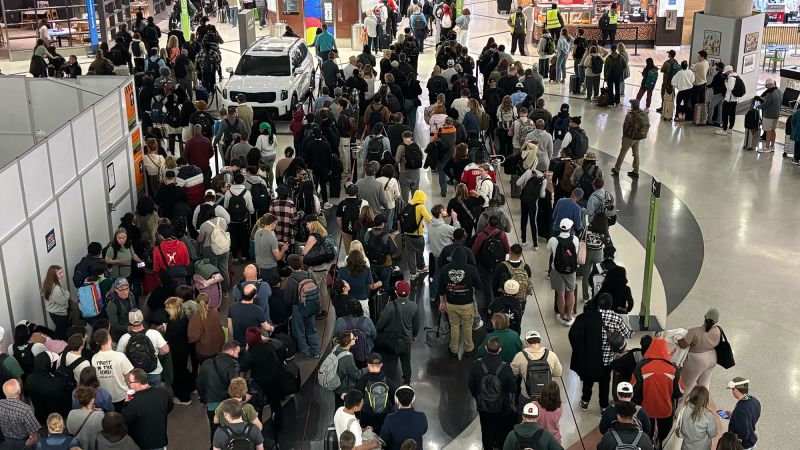
The financial suspension affecting 61,000 TSA employees has triggered a documented surge in resignations, creating a feedback loop of operational degradation. As experienced agents exit the federal workforce, the remaining personnel face record-breaking passenger volumes with diminishing resources. This labor crisis transcends terminal wait times; it represents a systemic erosion of federal civil service morale. The executive threat to utilize ICE as a tactical substitute may further exacerbate intra-departmental tensions, introducing a militarized enforcement culture into a civilian safety environment.
Economic Transmittance and Infrastructure Resilience
Aviation security efficiency serves as a direct proxy for national economic throughput. Protracted delays at Tier 1 hubs disrupt global supply chains, business travel, and tourism sectors. The uncertainty surrounding staffing levels forces airlines into defensive scheduling, while the threat of terminal closures looms over legislative negotiations. The resilience of U.S. aviation infrastructure is being stress-tested by this confluence of fiscal neglect and executive intervention, with potential economic losses projected to exceed the immediate costs of the budgetary dispute.
Legislative Leverage and Institutional Precedent
The timing of the deployment threat suggests a strategic attempt to gain leverage prior to congressional recesses, linking aviation functionality to broader border security funding objectives. Furthermore, the discourse surrounding private sector interventions—such as third-party offers to underwrite federal payroll—highlights an unprecedented crisis in state capacity. Such proposals, while symbolic, raise ethical concerns regarding the privatization of essential national security functions. Ultimately, the integrity of the national airspace depends on a return to predictable fiscal governance and the preservation of the distinct mandates between immigration enforcement and transportation safety.