NBA Late-Season Dynamics: Strategic Divergence and Competitive Integrity
The conclusive phase of the NBA regular season frequently manifests a profound divergence in organizational objectives, where immediate competitive imperatives yield to long-term strategic asset optimization. The impending matchup between the Dallas Mavericks and the Phoenix Suns offers a salient case study, sharply delineating how disparate standings positions—the former meticulously prioritizing future draft capital, the latter acutely managing Play-In tournament risks—fundamentally reorient operational decisions and player deployment strategies.
For the Dallas Mavericks, a subpar regular season performance, exemplified by their 25-54 record, has decisively shifted organizational priorities from immediate competitive success to long-term asset accumulation. This strategic pivot, widely termed ‘tanking,’ positions maximizing draft lottery odds as the paramount objective for the season’s concluding fixtures. Such a posture inherently reconfigures incentive structures for both playing personnel and front office management, de-emphasizing game outcomes in favor of future roster enhancement.
Strategic Devaluation: The Economics of Tanking and Future Asset Optimization
The Mavericks’ strategy starkly illuminates a foundational tension within the NBA’s competitive framework: the inherent conflict between immediate on-court performance and the long-term appreciation of organizational assets. This deliberate prioritization of a high draft selection entails a calculated forfeiture of short-term revenue streams and fan-base engagement, predicated on the substantial future competitive leverage gained. This intricate economic calculus is underpinned by the exponential value ascribed to elite draft prospects, whose integration can dramatically compress a franchise’s rebuilding cycle and fundamentally enhance future financial valuations and market appeal.
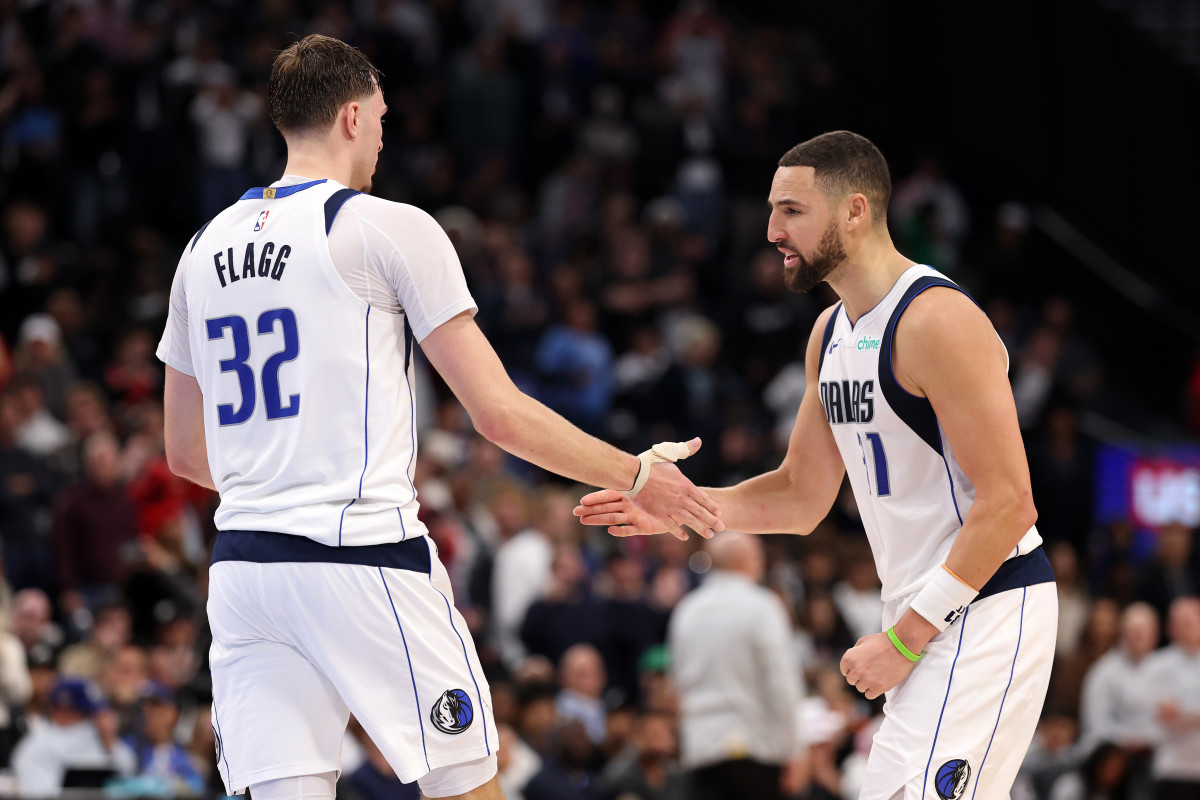
A direct corollary of this asset-centric strategy is the pronounced emphasis on individual player development, often at the expense of collective team victories. The observation of players like Cooper Flagg—noted for his ‘brilliance’ and ‘filling up the stat sheet’ amidst team defeats—exemplifies this shift. In a tanking paradigm, individual metrics, potential, and long-term projection supersede immediate win contributions, becoming the primary evaluation criteria. Flagg’s prominence in the ‘wider NBA conversation’ during a losing campaign underscores how individual narratives of future promise eclipse immediate game outcomes when organizational strategy predetermines competitive results.
Operationally, this extends to nuanced player workload management and extensive roster evaluation. The increased court time afforded to non-star personnel, such as Marvin Bagley III from the bench, signifies a deliberate strategy to utilize low-leverage contests as high-value audition platforms. This period functions as a comprehensive tryout for depth and role players, enabling management to rigorously assess their symbiotic fit within prospective roster configurations, while concurrently mitigating injury risks for cornerstone players whose long-term health is paramount in strategically inconsequential games.
Play-In Imperatives: Suns’ Strategic Risk Aversion and Player Load Management
Diametrically opposed to the Mavericks’ asset-driven strategy, the Phoenix Suns confront a distinct spectrum of strategic constraints, directly dictated by their current playoff seeding. With a 43-35 record, the Suns are institutionally positioned within the Western Conference’s 7th seed, compelling their participation in the Play-In tournament, where securing a pivotal victory is indispensable for advancing to the principal playoff bracket.
The Play-In tournament’s idiosyncratic structure engenders a critical, multi-faceted risk assessment for teams occupying the 7-10 seeding. Unlike their counterparts ensconced in the top six, the Suns cannot implement extensive rest protocols for their core players; maintaining competitive cadence is paramount for success in a high-stakes, single-elimination scenario. Simultaneously, a stringent imperative for player health management exists to guarantee optimal performance robustness throughout the rigorous postseason.
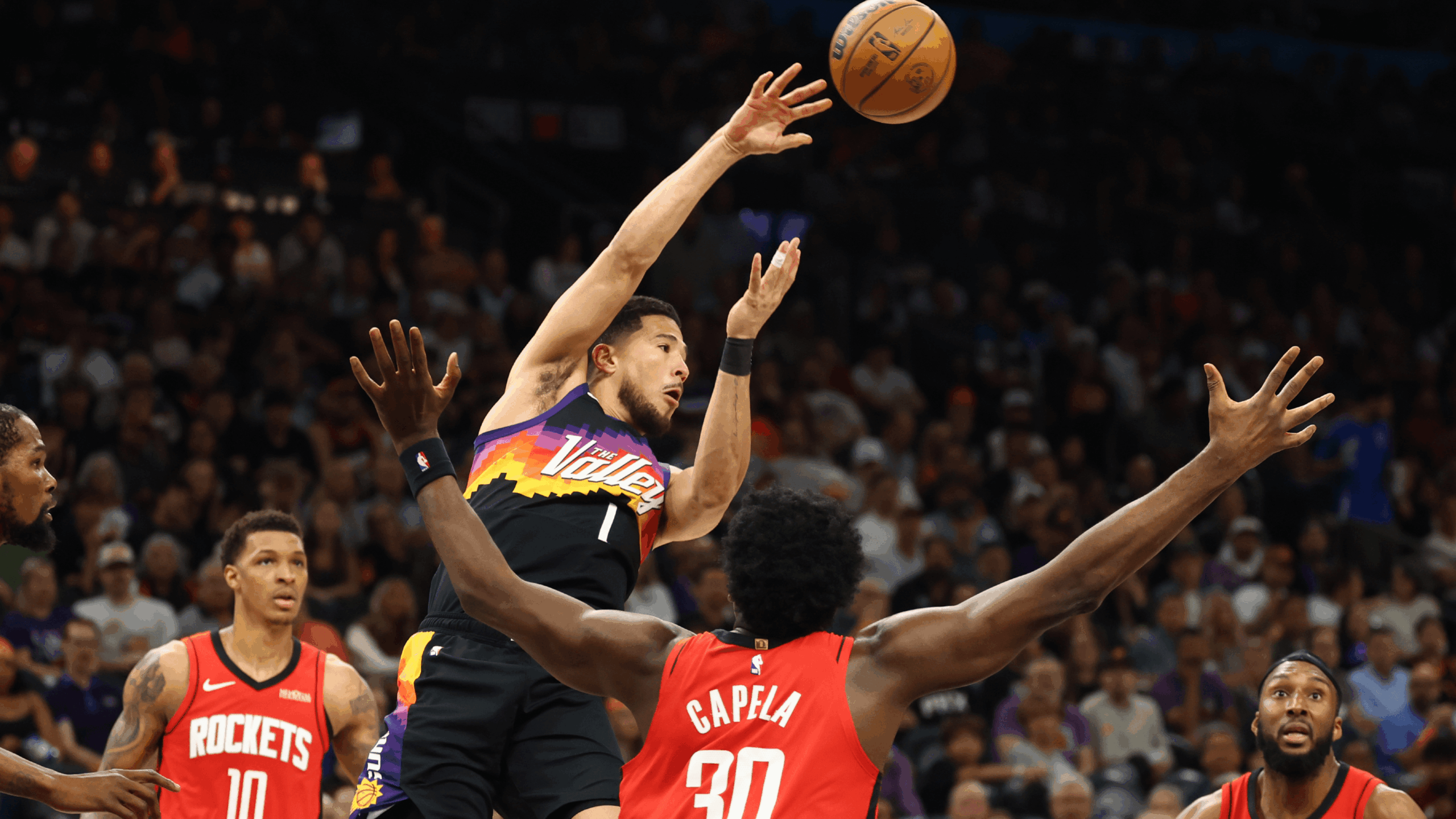
This intrinsic tension is acutely illustrated by the scrutiny of Devin Booker’s recent workload. Following a demanding 38:32 minutes played in the preceding fixture, the Suns’ strategic calculus involves an intricate balance: preserving competitive sharpness versus mitigating the severe risks of injury or cumulative fatigue. Analytical projections advocate that ‘lessening Devin Booker’s workload would make more sense,’ particularly given the demonstrably low competitive stakes of the current Mavericks game juxtaposed against the catastrophic potential impact of any injury to the team’s linchpin offensive asset.
The overarching strategic imperative for the Suns is to meticulously traverse the season’s concluding games without inadvertently depreciating their formidable postseason ceiling. The explicit pronouncement that the Suns’ championship aspirations ‘would crater if Booker is anything but at his best in the postseason’ unequivocally underscores the paramountcy of player health in the modern Play-In era. Here, a singular, untimely injury can irrevocably derail a season, even for a team that has already achieved a high regular-season seeding but remains subject to preliminary elimination rounds.
Systemic Impacts: Back-to-Back Challenges and Eroding Competitive Integrity
The shared operational constraint of competing on the second night of a back-to-back sequence amplifies the strategic divergence for both franchises. For the Mavericks, this schedule factor directly reinforces their strategic calculus: player rest and developmental exposure are prioritized over any semblance of competitive intensity. Conversely, for the Suns, it critically exacerbates the inherent tension between comprehensive risk mitigation and the maintenance of competitive readiness. The compressed turnaround inherently mandates meticulous management of player minutes, particularly for high-usage assets like Booker, whose performance leverage is unequivocally foundational to the team’s postseason aspirations.
This strategic maneuvering also demonstrably influences market perceptions and performance expectations, as evidenced by analysis of individual performance metrics, such as prop bets on Devin Booker’s assists. The market’s anticipation that Booker will underperform a modest assist prop directly reflects a sophisticated understanding that his role in a contest of negligible strategic import will be deliberately curtailed, effectively reallocating offensive responsibilities or emphasizing individual scoring over facilitating play for teammates.
Consequently, the competitive integrity of the regular season’s concluding contests is frequently undermined by these profound strategic incentives. When organizations like the Mavericks actively engage in asset optimization through tanking, game outcomes become ancillary to future roster planning. Similarly, when teams like the Suns prioritize player health and risk aversion, game intensity is consciously throttled. This confluence cultivates a late-season environment where game results are predominantly determined by overarching organizational strategy rather than unadulterated competitive fervor, directly impacting fan engagement and the perceived authenticity of competition.
Stakeholder Repercussions and Evolving Media Narratives
The strategic decisions enacted by both franchises generate profound repercussions for all stakeholders, encompassing fan bases, media entities, and the broader league apparatus. For Mavericks loyalists, the immediate engagement metric pivots from game-by-game results to an anticipatory focus on future prospects, with individual showcases like Flagg’s serving as vital catalysts for optimism amidst collective team underperformance. Conversely, Suns aficionados confront a narrative dominated by acute concerns over player wellness and the palpable anxiety inherent in the Play-In tournament’s precarious single-elimination format, where a solitary contest dictates seasonal destiny.
The media ecosystem dynamically reconfigures its narrative focus in response to these strategic realities. Instead of conventional reporting centered on game outcomes, coverage conspicuously reorients towards individual player statistical output, speculative draft projections, and the intricate strategic calculations underpinning player management. The emphasis on Flagg’s burgeoning Rookie of the Year candidacy and Booker’s critical workload considerations exemplifies this pronounced thematic shift, wherein individual developmental or health-centric narratives effectively supersede team results in strategically marginalized contests.
This intricate interplay underscores how the NBA’s structural architecture, notably the Play-In tournament, engineers a sophisticated matrix of incentives dictating late-season strategic choices. While ostensibly designed to heighten competitive zeal, the Play-In concurrently introduces novel, amplified risks for franchises like the Suns, compelling an arduous equipoise between immediate performance exigencies and paramount long-term player welfare. Similarly, the Mavericks’ calculated asset devaluation through strategic tanking, despite its potential to erode short-term fan engagement, represents a rational, system-optimized response to the league’s draft lottery framework, where a strategically managed decline can yield superior long-term competitive advantages.
Macro-Level Implications: Competitive Equilibrium and Structural Incentives
The late-season dynamics critically observed in this specific matchup unequivocally underscore macro-level systemic consequences for the NBA’s competitive equilibrium and overall operational integrity. The Mavericks’ strategic embrace of tanking, while economically rational from a singular franchise perspective, invariably provokes profound ethical and competitive questions concerning the intrinsic integrity of contests involving teams devoid of genuine winning incentives. This deliberate institutionalized phenomenon, where organizations actively de-prioritize victory to enhance future draft positioning, generates an observable disparity in competitive intensity that can materially skew the final standings for other franchises actively vying for postseason berths.
Conversely, the Suns’ intricate navigation of the Play-In tournament’s complexities exemplifies the operational ambiguities and inherent challenges introduced by evolving league structures. The Play-In paradigm institutes a heightened-stakes environment for mid-tier playoff contenders, compelling them to meticulously balance player health with the sustained maintenance of competitive rhythm, a dynamic fundamentally disparate from historical playoff qualification formats. The existential risk calculus for a team like the Suns—where a singular defeat can prematurely terminate their entire season—necessitates an exquisitely cautious and judicious approach to player workload deployment in strategically marginal regular-season encounters.
In essence, the juxtaposition of the Mavericks’ and Suns’ late-season strategies serves as a compelling microcosm of the intricate economic and competitive incentives that fundamentally govern the contemporary NBA. The immediate outcome of their direct confrontation assumes secondary importance to the overarching strategic directives: asset optimization for Dallas and acute risk management for Phoenix. These decisions, profoundly influenced by the league’s intricate structural design, are the ultimate arbiters of player deployment, media discourse, and stakeholder engagement throughout the pivotal concluding phase of the regular season.