Milan-Cortina 2026 Winter Olympics Conclude, Setting Precedent for Future Games
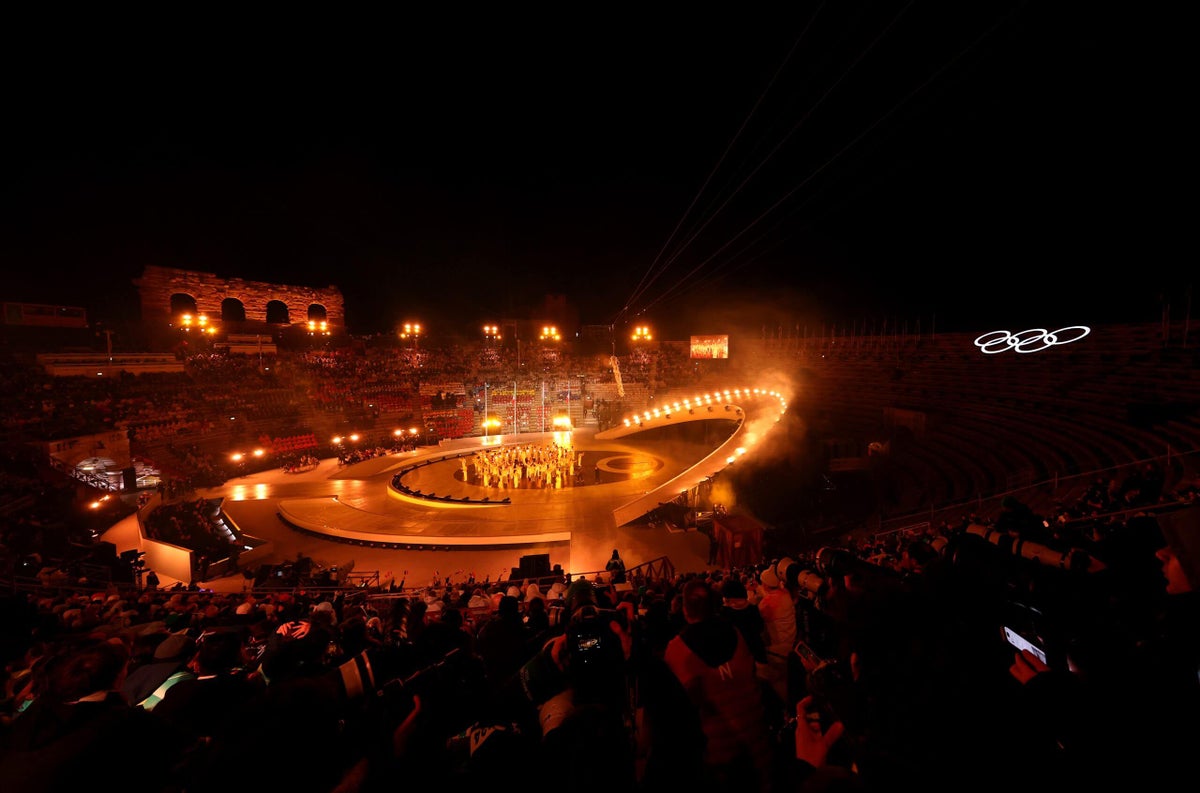
The Milan Cortina 2026 Winter Olympics officially concluded Sunday in the historic Verona Arena, concluding an event distinguished by its unprecedented geographical spread. International Olympic Committee (IOC) President Kirsty Coventry commended organizers for “delivering a new kind of winter Games” and establishing a “very high standard for the future,” a sentiment that signals a potential paradigm shift in Olympic hosting models.
France formally received the Olympic flag, transitioning to host the 2030 Winter Games. This handover signifies strategic continuity, as the 2030 edition is also projected to adopt a decentralized structure, with events slated across the Alps, Nice, and potentially speed skating in Italy or the Netherlands. This distributed model, pioneered by Milan-Cortina, addresses logistical complexities and aims to broaden economic and cultural impact across multiple regions.
A total of 116 medal events across eight Olympic sports and 16 disciplines were contested over 17 days, including the debut of ski mountaineering. The final medal events, such as the men’s and women’s 50-kilometer cross-country mass start races, concluded shortly before the closing ceremony, highlighting the demanding competition schedule.
The closing ceremony, held in the 2,000-year-old Arena di Verona, merged artistic expression with cultural tribute. Featuring interpretive dances, operatic performances, and pyrotechnics, the event honored athletes’ achievements and Italian heritage. The venue choice reinforces a trend of integrating historical and cultural landmarks into the Olympic experience, enhancing its symbolic value and global appeal.
Key athletic highlights included Team USA’s men’s hockey gold medal victory over Canada in overtime, an “instant classic” noted for its intensity. China’s Eileen Gu successfully defended her women’s freeski halfpipe title, solidifying her status in winter sports.
The operational scale of the Milan-Cortina Games, the most geographically dispersed Winter Olympics to date, presents a complex case study. The logistical challenges of managing venues across distant locations necessitate robust infrastructure and coordination. The IOC’s endorsement of this model suggests a potential recalibration of hosting requirements, favoring distributed, potentially more sustainable, approaches over concentrated mega-venues.
The financial implications of this decentralized model are significant. While it may reduce the burden on a single host city by distributing infrastructure costs and leveraging existing facilities, it introduces complexities in transportation, security, and unified fan experience. The economic benefits are spread more widely, potentially stimulating tourism and local economies across multiple regions.
Stakeholder incentives are notably varied. For the IOC, a successful decentralized Games validates a strategy that could make hosting more accessible to a wider array of bids, potentially increasing competition. For host nations and cities, the appeal lies in showcasing diverse landscapes and cultural heritage, attracting investment and tourism beyond traditional Olympic hubs.
However, the risk exposure for organizers is amplified. Extended distances between venues can increase operational costs, environmental impact from travel, and potential disconnects in the Olympic atmosphere. Ensuring consistent security, transportation, and fan engagement across a vast geographical area requires sophisticated planning and execution.
The debut of ski mountaineering signifies the IOC’s ongoing effort to introduce disciplines that resonate with younger demographics and evolving athletic trends, potentially attracting new audiences and sponsors.
The artistic direction of the closing ceremony, blending contemporary music and classical opera, reflects a broader trend in major sporting events to create multi-layered cultural experiences, integrating local talent and heritage with universal entertainment forms.
The transition of the Olympic torch to France for 2030 suggests an immediate application of lessons learned from Milan-Cortina. The French bid’s own plans for a spread-out model indicate strategic alignment with the IOC’s perceived success, potentially leading to a more streamlined preparation process for the next Winter Olympics.
National team performances, like the USA’s hockey victory, contribute to the narrative of athletic achievement and national pride, shaping public perception and inspiring future generations.
The financial architecture supporting future Olympic Games will likely be influenced by the operational efficiencies and challenges observed in Milan-Cortina. The balance between cost savings from existing infrastructure and increased complexity in managing a dispersed event will be a key consideration.
Reputational pressures on the IOC are constant; successful execution of a complex, multi-regional Games enhances credibility, while significant failures could undermine confidence in the Olympic model.
The legacy of the Milan-Cortina Games extends beyond medals. Infrastructure development, economic stimulus, and cultural exchange contribute to a lasting impact, reflecting the IOC’s deliberate effort to evolve the Olympics towards sustainability, cost containment, and broader inclusivity.
The strategic decision to embrace a more spread-out model reflects an adaptation to escalating costs and complexities of traditional, centralized Games. This approach allows for greater flexibility in site selection and potentially reduces the environmental footprint by utilizing existing facilities.
Performance leverage for host nations and cities lies in their ability to effectively manage complex logistical networks, requiring seamless coordination between governmental bodies, private partners, and local communities across all venues.
The competitive landscape for future Winter Olympic bids may shift, potentially making hosting more accessible to regions previously deterred by cost and scale, leading to a more diverse pool of candidates.
Athlete incentives evolve with this model; competing across diverse locations offers a unique dimension to their Olympic journey, with media crucial in conveying these varied experiences.
Financial capital movement is dispersed in a decentralized event, requiring intricate management and allocation, potentially leading to different economic multiplier effects and revenue-sharing models compared to traditional Games.
The institutional framework supporting the Games must be adaptable to this distributed structure, necessitating standardized protocols for security, transportation, and communication across wide geographical areas.
Cultural implications of hosting across diverse regions are profound, allowing for a richer tapestry of traditions and expressions, potentially fostering greater cross-cultural understanding.
Structural pressures, particularly the need to manage costs and environmental impact, continue to influence Olympic planning, indicating a strategic pivot towards more adaptable and sustainable models.
The distribution of advantage and disadvantage in this model is complex, posing challenges in maintaining a cohesive Olympic identity and ensuring equitable resource allocation across all venues.
Plausible evolution scenarios for future Winter Olympics are heavily influenced by the Milan-Cortina precedent. Likely trajectories include continued adoption of decentralized models, enhanced integration of technology, and a greater focus on legacy planning that benefits all participating communities.