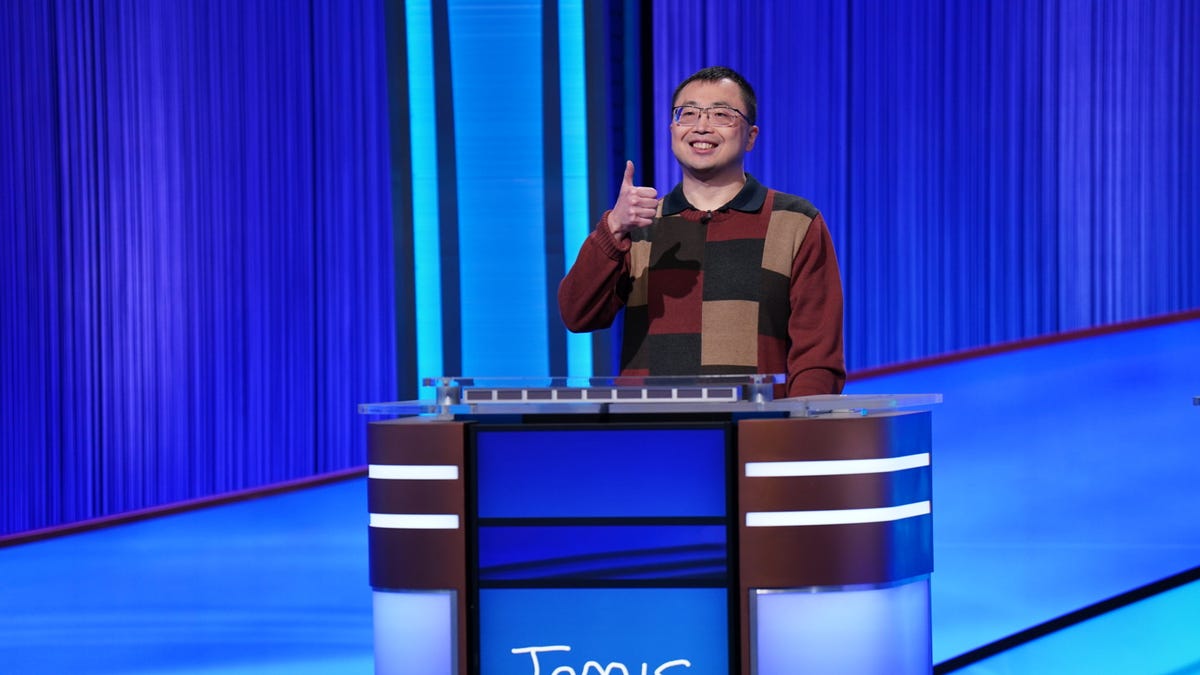
The 20-Win Threshold: Transitioning to All-Time Status
Jamie Ding has formally entered the pantheon of television’s most elite competitors by securing his 20th consecutive victory on Jeopardy!. This milestone elevates Ding into a tie for the seventh-most consecutive wins in the program’s history, transitioning his run from a seasonal highlight to a significant historical anomaly. His total earnings of $572,600 currently place him as the sixth-highest earner in regular-season play, indicating an aggressive fiscal efficiency that outpaces several champions higher on the longevity leaderboard.
Ding’s 20th performance, resulting in a $33,027 daily total, demonstrated a crucial recovery of operational stability. Following a statistically narrow victory on the previous day, this rebound highlights a resilient strategic framework capable of absorbing high-pressure scenarios without compromising capital accumulation.
Efficiency Metrics and Signaling Dominance
A granular analysis of Ding’s performance reveals a high-efficiency model defined by a 93.6% accuracy rate (618 correct responses against 42 incorrect). This ratio is the primary driver of his longevity; by minimizing capital forfeiture, Ding maintains board control during critical wagering sequences. Furthermore, his consistent ability to beat opponents to the signaling device—including challengers Prithish David and Alexandra Leith, who finished with $6,500 and $5,399 respectively—underscores a technical mastery that effectively neutralizes competitive variance.
Historical Benchmarking: The Pursuit of Pannullo and Jennings
Ding’s trajectory is now measured against the industry’s most rigorous benchmarks. His next objective is the 21-win record held by Cris Pannullo, the current sixth-place seed for all-time consecutive wins. While the gap to Ken Jennings’ 74-win record remains vast, Ding’s entry into the top-ten leaderboard shifts the narrative focus toward his potential for long-term dominance in the upcoming Tournament of Champions.
This success carries significant regional resonance in the Detroit market, where Ding’s background as a local high school standout provides a compelling community narrative. For Jeopardy!, champions of Ding’s caliber serve as vital marketing assets, reinforcing the program’s institutional relevance by merging intellectual rigor with high-stakes financial rewards.
Strategic Evolution and Modern Data Scrutiny
Ding’s current standing—7th in wins but 6th in earnings—reveals a strategic preference for high-value clues and calculated aggression in Daily Double and Final Jeopardy wagers. As he approaches game 21, the challenge lies in mitigating cognitive fatigue while adapting to a constantly refreshed pool of professional-grade challengers. In the modern era of the game, where every response is cataloged by data-driven communities like The Jeopardy! Fan, Ding’s ability to maintain a high signal-to-noise ratio in his performance suggests a psychological resilience that matches his technical proficiency.