Federal Panel Reinstates Two Majority-Black Districts in Alabama, Defying Supreme Court Order
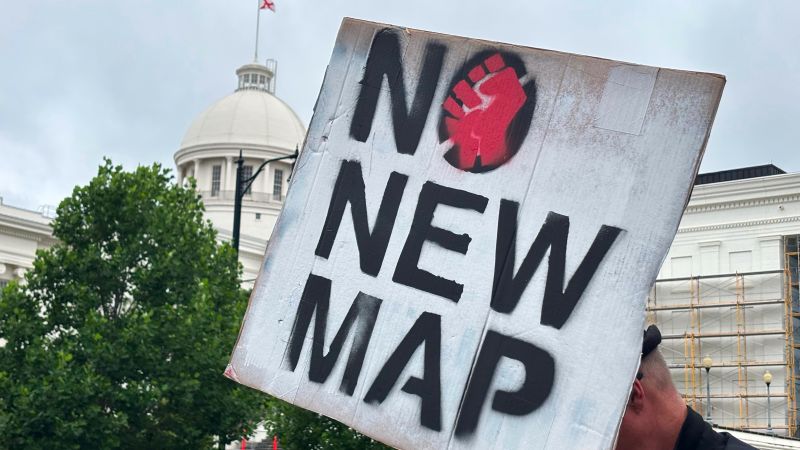
A three-judge federal court panel, notably including two appointees of former President Trump, has reinstated an Alabama congressional map featuring two majority-Black districts for the 2026 midterm elections. This decision directly contradicts a recent Supreme Court directive that had permitted a map with only one such district for the upcoming 2024 elections, marking a significant pivot in the state’s protracted redistricting litigation.
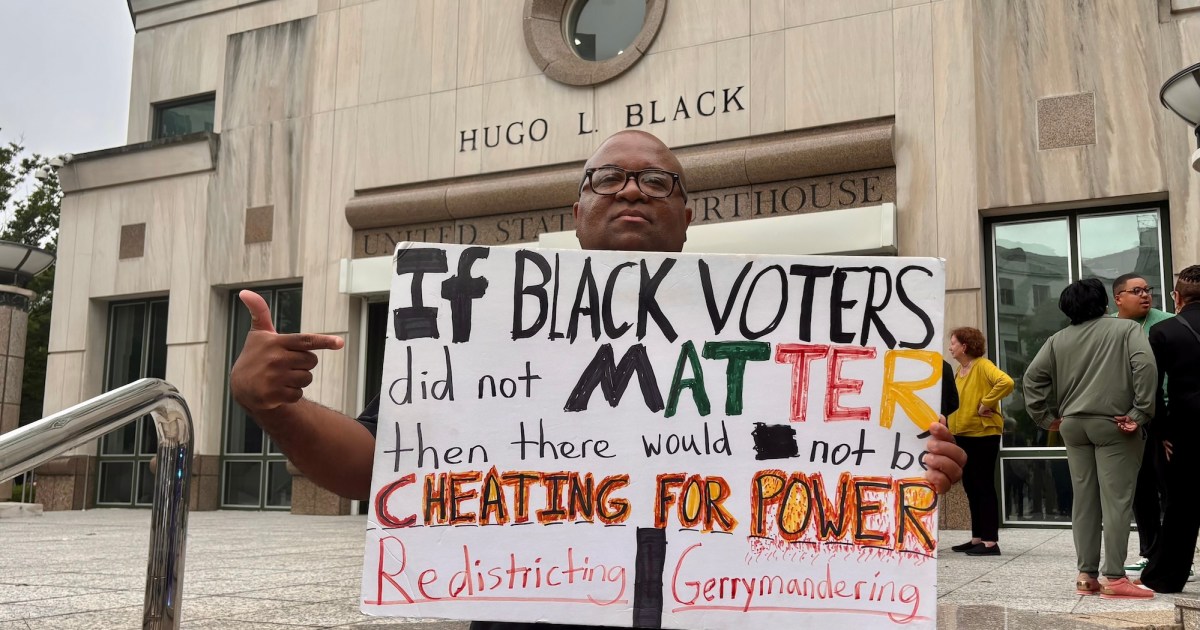
The panel’s ruling reasserts its prior finding, established last year after a comprehensive trial, that Alabama intentionally discriminated against Black voters by failing to create an additional majority-Black congressional district. This initial determination was made following the Supreme Court’s 2023 *Allen v. Milligan* decision, which mandated the creation of a new district to ensure equitable representation.
Judicial Conflict Over Voting Rights Enforcement
The Supreme Court’s conservative majority had previously reversed the lower court’s order, allowing Alabama to proceed with a map containing only one majority-Black district for the November 2024 midterms. This reversal came after the Court’s April *Louisiana v. Callais* decision, which legal analysts suggest significantly weakened the Voting Rights Act. The high court then directed the lower court to reevaluate its initial ruling in light of this new precedent.
The Supreme Court’s intervention, occurring just a week before the state’s primary elections, introduced substantial operational uncertainty. The decision to permit a map previously invalidated by the lower court, based on extensive evidentiary review, highlighted a profound divergence in judicial interpretation regarding voting rights protections.
Panel Issues Preliminary Injunction Against Alabama’s Map Plan
In what is being described as a ‘stunning rebuke’ of the Supreme Court’s directive, the three-judge panel issued a preliminary injunction. This injunction temporarily blocks Alabama’s plan to implement the congressional map approved by the Supreme Court, mandating the use of the court-ordered districts under which representatives were elected in 2024. This action preserves the status quo for upcoming electoral cycles while legal challenges continue.
The panel’s decision to grant a preliminary injunction signals a judicial assessment of immediate and irreparable harm should the state proceed with a map deemed discriminatory. This procedural step aims to maintain electoral stability and adhere to established legal findings while deeper legal questions are resolved.
Operational Implications and Electoral Stability Prioritized
Attorneys representing Black voters had specifically requested this preliminary injunction, reinforcing the panel’s 2023 finding of intentional discrimination. Their arguments emphasized the significant operational challenges and potential for electoral ‘chaos’ that would result from altering district lines close to an election. Changing electoral maps mid-cycle impacts candidate campaigns, voter registration, and the overall integrity of the electoral process.
The panel’s decision prioritizes electoral stability and its own factual findings over the state’s immediate legislative preferences, underscoring the judiciary’s role in safeguarding procedural fairness and established rights.
Setback for State Republicans’ Electoral Strategy
The ruling represents a notable setback for Alabama Republicans, who had sought to implement a map designed to enhance their prospects of winning a key House seat currently held by Democratic Representative Shomari Figures. The strategic goal of such redistricting is to create electoral advantages, a maneuver directly thwarted by the panel’s injunction.
The inability to deploy a more favorable map for the 2026 cycle compels state Republicans to compete within the existing, court-mandated district configurations, which were originally drawn to remedy past discriminatory practices.
Broader Implications for Voting Rights Enforcement
This latest development is part of a complex legal saga testing the boundaries of the Voting Rights Act in Alabama’s redistricting process. Repeated judicial interventions and reversals highlight the persistent tension between legislative autonomy in map drawing and the constitutional imperative to prevent racial discrimination in voting.
The panel’s adherence to its finding of intentional discrimination, even when faced with Supreme Court guidance derived from *Callais*, emphasizes a critical institutional dynamic. It suggests a lower court’s commitment to its factual determinations, based on an exhaustive trial record, asserting judicial independence in applying anti-discrimination principles.
Institutional Friction and Precedential Questions
The ‘stunning rebuke’ signifies more than a simple disagreement; it represents significant institutional friction within the federal judiciary. While lower courts are generally bound by Supreme Court precedent, this case illustrates the complexities when a higher court’s new guidance appears to conflict with a lower court’s detailed factual findings of discrimination.
This judicial interplay raises questions about the scope of deference owed by lower courts to evolving Supreme Court interpretations, especially when these interpretations may weaken established protections. The panel’s decision could influence how other federal courts interpret and apply voting rights law in light of recent Supreme Court rulings, potentially shaping future litigation nationwide.
Path Forward: Potential for Supreme Court Appeal
Despite the preliminary injunction, Alabama can appeal this ruling to the U.S. Supreme Court. Such an appeal would escalate the legal confrontation, forcing the high court to revisit a case where its previous directive has been directly challenged by a lower federal panel. An appeal would allow the Supreme Court to either reassert its authority and clarify *Callais*, or uphold the lower court’s factual findings regarding intentional discrimination. The outcome will have significant implications for redistricting law and Voting Rights Act enforcement nationwide.
Impact on Democratic Representation and Political Power
The legal battle over Alabama’s congressional maps directly impacts Black voters’ democratic representation. A second majority-Black district aims to enhance their ability to elect preferred candidates, increasing their political influence. Conversely, Republican efforts to implement a map with only one such district reflect a strategy to consolidate political power.
The resolution of this case will have tangible consequences for the distribution of political power, the composition of Alabama’s congressional delegation, and the broader national political landscape, underscoring the high stakes involved.
Evolving Legal Landscape and Stakeholder Uncertainty
The continuous evolution of legal interpretations of the Voting Rights Act, particularly post-*Callais*, creates an uncertain landscape. For civil rights advocates and Black voters, the panel’s decision offers a temporary affirmation, but the potential for further Supreme Court intervention keeps the legal ground contested.
For state legislatures and political parties, shifting judicial precedents necessitate constant adaptation of redistricting strategies and legal defenses. The substantial financial and operational resources expended in these ongoing legal battles reflect the profound impact of electoral district lines on long-term political control and policy outcomes.
Judiciary’s Role in Safeguarding Electoral Integrity
This case highlights the critical role of the federal judiciary in safeguarding electoral integrity and ensuring fair representation. The three-judge panel’s decision to stand by its findings of intentional discrimination, despite higher court guidance, underscores the judiciary’s function as a check on legislative power concerning fundamental rights.
Public perception of judicial impartiality and consistency is also at stake when direct disagreements between different levels of the federal court system become prominent. The Alabama saga serves as a potent reminder of the complex interplay between law, politics, and demography in shaping democratic governance.
Long-Term Structural Implications for Redistricting
The protracted nature of Alabama’s redistricting case, marked by multiple judicial reviews and reversals, points to deeper structural challenges in achieving consensus on fair electoral maps. The legal framework, while designed to prevent discrimination, often becomes a battleground for competing political interests, leading to cycles of litigation.
This pattern suggests that underlying issues of racial representation and political power remain unresolved through legislative means alone. Consequently, the judiciary is repeatedly called upon to arbitrate these fundamental disputes, shaping not only immediate electoral outcomes but also long-term institutional norms governing redistricting in the United States.
Enduring Significance of Local Judicial Findings
The panel’s insistence on its original factual findings regarding intentional discrimination, despite the Supreme Court’s broader legal guidance, reinforces the enduring significance of detailed judicial review. Lower courts, with their capacity for extensive evidentiary hearings, play a crucial role in establishing the factual predicates upon which higher legal principles are applied.
This case demonstrates that even with evolving Supreme Court jurisprudence, trial court findings of fact, particularly concerning discriminatory intent, can hold substantial weight and serve as a basis for continued judicial action, underscoring the multi-layered nature of the American legal system and its checks and balances.