Markets Reel as Trump’s Fed Chair Hint Sparks Precious Metals Sell-Off
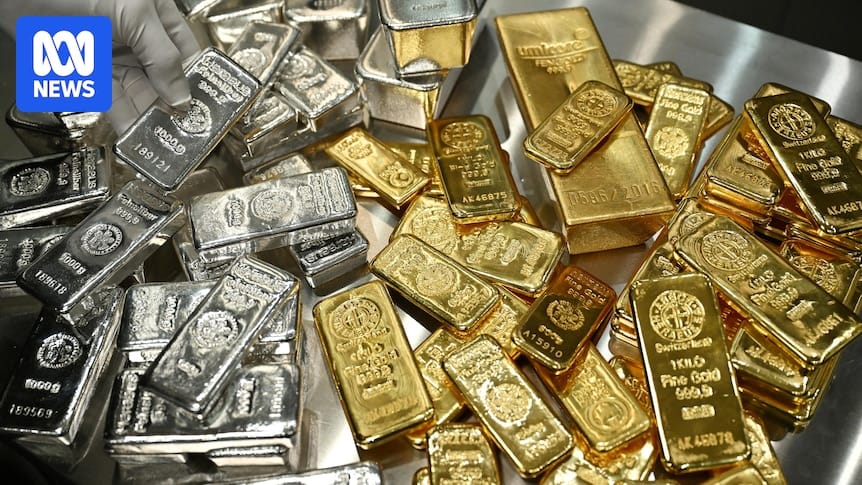
The glittering allure of gold and the steady gleam of silver, long considered havens for investors, experienced a sudden, sharp downturn this week. What had been a triumphant rally for precious metals abruptly stalled, with gold prices tumbling over 4% from their recent highs.
The catalyst for this dramatic shift? A seemingly innocuous announcement from U.S. President Donald Trump, hinting at an imminent decision regarding the next chair of the U.S. Federal Reserve. The market, sensitive to any signal from the White House concerning monetary policy, reacted with swift and decisive action.
A Rally Pauses, Then Reverses
Gold (GC=F) had been hovering near the significant $5,400 per ounce mark, a price point that itself represented a considerable gain from earlier in the year. Just days before, the precious metal had been reaching for highs north of $5,600, buoyed by a broader trend of investment seeking safety and potential returns amidst global economic uncertainties.
Silver (SI=F), often tracking gold’s movements but with added volatility, also saw its gains tempered. After a choppy session, the white metal steadied, but the momentum of its own rally had clearly been broken. This pause signaled a crucial turning point for investors who had benefited handsomely from the year’s run-up in precious metals.
Profit-Taking Amidst Uncertainty
The sharp decline, with spot gold prices falling to $5,156.64 per ounce, was largely attributed to investors deciding to book profits. After a record-breaking rally throughout the year, the market had reached a point where many saw it prudent to secure their gains.
The anticipation surrounding the Federal Reserve chair nomination provided the perfect trigger for this profit-taking. Investors are acutely aware that the leadership of the central bank wields immense power over interest rates, inflation, and the overall health of the economy. Any change in this leadership can signal a shift in monetary policy direction, impacting everything from currency values to commodity prices.
“The market is like a finely tuned instrument. Any hint of a change in the conductor’s approach can cause a significant shift in the orchestra’s performance,” noted a senior market analyst, who requested anonymity to speak freely about market reactions.
The Significance of the Fed Chair Role
The U.S. Federal Reserve, often referred to as the Fed, is the central banking system of the United States. Its primary mandates include maximizing employment, stabilizing prices, and moderating long-term interest rates. The decisions made by the Federal Open Market Committee (FOMC), heavily influenced by the Chair, have ripple effects across the globe.
The Chair of the Fed is arguably one of the most influential economic figures in the world. Their pronouncements on monetary policy, interest rates, and the economic outlook can shape financial markets for years to come. A more hawkish (interest-rate-hiking) chair could cool inflation but potentially slow economic growth, while a more dovish (interest-rate-cutting) chair might stimulate growth but risk higher inflation.
Given this profound impact, any news, even a hint, about who will occupy this pivotal role is bound to create significant market movement. President Trump’s announcement, therefore, was not just a domestic political event but a global economic signal.
Asia-Pacific Markets React
The volatility in precious metals was mirrored, albeit in a mixed fashion, across Asia-Pacific stock markets. As news of the potential Fed announcement spread, trading floors saw a degree of uncertainty. Some markets experienced declines, while others managed to hold steady or even see modest gains, reflecting a complex interplay of global and local economic factors.
This mixed reaction underscores the nuanced nature of market responses. While the precious metals sector reacted directly to the perceived shift in monetary policy outlook, broader equity markets contended with a wider array of influences, including corporate earnings, geopolitical tensions, and domestic economic data.
Why This Matters to the Average Investor
The fluctuations in gold and silver prices might seem distant to the everyday consumer, but they have tangible implications. Gold, in particular, is often seen as a hedge against inflation. When inflation is expected to rise, the value of traditional currency can erode, making gold a more attractive store of value.
Conversely, rising interest rates, often a tool used to combat inflation, can make interest-bearing assets like bonds more attractive than gold, which yields no interest. The Fed Chair’s decisions directly influence interest rate policy. Therefore, a change in leadership could signal a shift in the inflation-versus-growth debate, impacting the purchasing power of the money in your bank account and the returns on your investments.
For individuals with investments in mutual funds, retirement accounts, or even just savings, understanding these market dynamics is crucial. The performance of gold and silver can also influence the broader financial system, affecting corporate profitability and employment trends.
The ‘Dangerous Phase’ of the Rally
Market analysts had been describing the preceding precious metals rally as entering a ‘dangerous phase.’ This term typically refers to periods where prices have risen significantly and rapidly, increasing the risk of a sharp correction. Such rallies can be fueled by speculation and momentum trading, detaching prices from underlying fundamental values.
When a rally reaches such a point, any news that challenges the prevailing sentiment can trigger a cascade of selling. In this instance, the uncertainty surrounding the Federal Reserve’s future policy direction provided that trigger. It served as a reminder that what goes up, particularly in speculative markets, can indeed come down just as quickly.
The current market environment, characterized by ongoing economic recovery, persistent inflation concerns, and geopolitical uncertainties, makes assets like gold particularly sensitive. Investors are constantly weighing the risks of inflation against the risks of economic slowdown, and the Federal Reserve plays a central role in navigating this delicate balance.
Looking Ahead: What’s Next for Precious Metals?
The immediate aftermath of President Trump’s statement saw a significant sell-off. However, the longer-term trajectory for gold and silver will depend on several factors. These include the actual appointment of the Fed Chair and their subsequent policy decisions, the trajectory of inflation, global economic growth, and ongoing geopolitical developments.
Investors will be closely watching for clues about the Fed’s approach to interest rates. Will the new leadership prioritize combating inflation with potentially higher rates, or will they focus on supporting economic growth with lower rates? The answer to this question will significantly influence the attractiveness of gold and other precious metals as investments.
The precious metals market, though experiencing a temporary setback, remains a critical component of the global financial landscape. Its movements offer valuable insights into investor sentiment, economic expectations, and the underlying health of the global economy. The recent sharp correction serves as a potent reminder of the inherent volatility and interconnectedness of financial markets worldwide.