
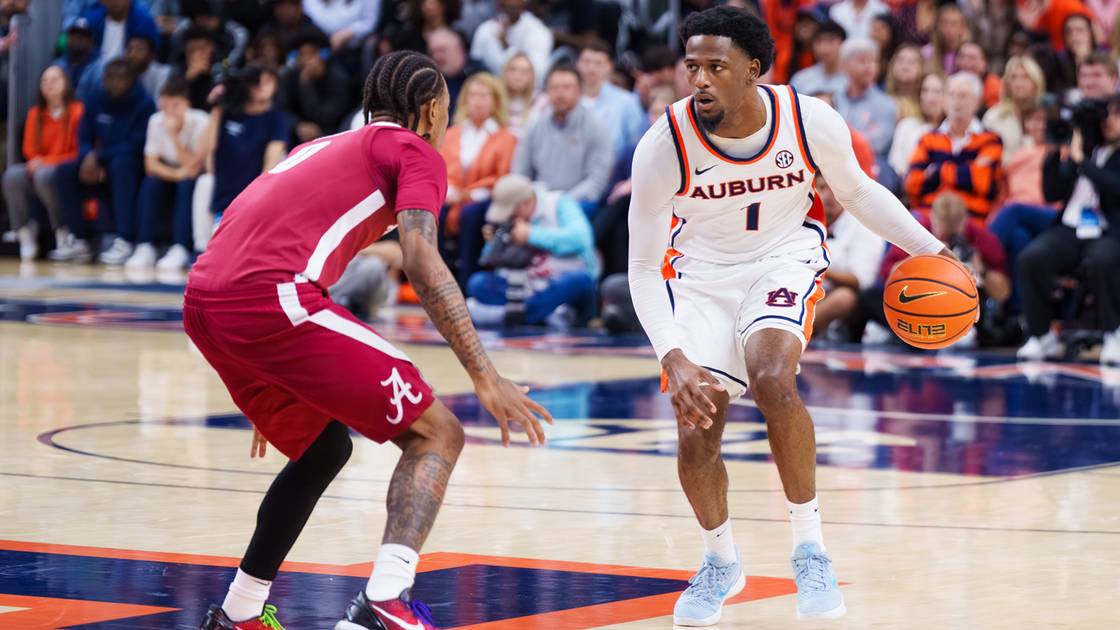
The scheduling of an unprecedented men’s basketball exhibition between Auburn University and the 20th-ranked University of Alabama at Legacy Arena in Birmingham marks a notable shift in how major collegiate athletic programs approach preseason competition. Historically structured as controlled, closed-door scrimmages or low-profile meetings against regional lower-division opponents, preseason schedules are increasingly being utilized to test high-profile competitive environments before official regular-season competition begins. By placing an arch-rivalry matchup titled The Feud into a neutral-site venue ahead of the official season opener, both athletic departments introduced a high-intensity operational and physical test under game-speed conditions.
The commercial framing of the Birmingham event, presented by Shipt Same Day Delivery, reflects an evolving commercial structure for non-countable preseason contests. Rather than remaining isolated within campus facilities, the event leveraged corporate sponsorship and an independent distribution framework to capture market attention in a metropolitan center equidistant from both campuses. Legacy Arena provides an institutional platform that mirrors the neutral-site configurations frequently utilized during post-season tournament play. For athletic administrators, deploying high-visibility rivalry assets in late October tests institutional event-staging capabilities, security protocols, and operational workflows long before conference championships take place.
Broadcast arrangements for the contest underscored a fragmented, modern media landscape operating outside standard collegiate television network packages. Streaming coverage was anchored digitally on the Knight Eady YouTube page, featuring national broadcaster Karl Ravech handling play-by-play responsibilities alongside former Auburn standout Daymeon Fishback and former Alabama player Richard Hendrix delivering color commentary. This production framework highlights how third-party sports management firms and digital video platforms can monetize and broadcast individual collegiate sporting properties that fall outside traditional multi-tier linear television rights contracts.
Simultaneously, institutional media platforms maintained independent parallel coverage to service established fan bases across localized territories. The Auburn Sports Network delivered the audio broadcast across terrestrial affiliates, including local frequency 94.3 FM, and through the official Auburn Tigers mobile application, with Andy Burcham and Randall Dickey calling the action. In addition to the audio feed, the network provided a specialized courtside camera broadcast via YouTube, creating complementary visual feeds that cater to multi-screen consumption habits. This multi-layered delivery framework underscores how athletic programs maintain control over direct-to-consumer distribution channels while licensing broader digital rights to external commercial entities.
Competitive Calibration and Strategic Risk Exposure
Entering the Birmingham contest, Auburn approached the matchup as its second of three scheduled exhibition games before officially commencing the regular season on November 4 against Southeastern Louisiana. The preliminary phase of Auburn’s schedule had already revealed specific developmental demands following an opening exhibition loss to Florida State University. That initial contest established immediate operational baselines, highlighting guard Tahaad Pettiford as a focal offensive weapon after he registered a team-high 20 points against the Seminoles. Evaluating backcourt distribution and shot creation against nationally ranked opponents provides coaching staffs with diagnostic film that internal practice environments cannot replicate.
The strategic stakes of preseason competition necessarily balance technical preparation against the immediate physical risks assumed by student-athletes. Auburn integrated guard George Kimble III back into live competition after more than a year of absence due to injury, marking a critical milestone in his athletic rehabilitation. Kimble demonstrated productive operational capability during his initial preseason minutes, recording six points, six rebounds, and a team-high six assists. For Auburn’s technical staff, assessing how recovering personnel absorb contact and sustain lateral defensive pacing against elite competition is vital before entering non-conference regular-season schedules.
For Alabama, entering the arena ranked 20th nationally and participating in its third exhibition game of the season, the Birmingham contest represented a deeper phase of tactical integration. Having already logged game repetitions and secured previous exhibition victories, Alabama possessed a distinct conditioning and structural continuity advantage. Operating against a ranked opponent within a highly charged arena environment accelerates roster evaluation for coaching staffs seeking to define specific rotation limits and secondary defensive pairings. The competitive balance between an Auburn squad recalibrating backcourt roles and an Alabama unit consolidating early preseason momentum created acute operational friction.
That friction manifested physically during the contest, where intense competition on the floor escalated beyond routine preseason parameters. Documented sequences during the exhibition showed a contentious battle for a rebound that led directly to physical shoving between opposing players. Such on-court confrontations illustrate the structural challenges of staging rivalry fixtures in an exhibition format. While coaches demand relentless physical effort to evaluate defensive rebounding execution, the absence of regular-season championship incentives can occasionally allow emotional friction to outpace technical discipline.
Institutional Fallout and Coaching Assessments
The postgame environment brought critical strategic clarity to Auburn’s developmental timeline following what was characterized as a fiery exhibition defeat against Alabama. Assistant coach Steven Pearl addressed the operational shortcomings observed during the physical loss, articulating the technical deficiencies that emerge when execution lapses against high-caliber opponents. In modern collegiate athletics, staff remarks following exhibition losses serve a dual institutional role, functioning both as internal performance accountability mechanisms and as public messaging to stabilize fan expectations before regular-season results impact official records.
Addressing performance metrics during exhibition play allows programs to insulate themselves against strategic liabilities before official non-conference schedules begin. Staging matchups of this caliber ensures that systemic flaws, including rebounding vulnerability, transition communication breakdowns, and composure lapses under physical pressure, are documented and corrected without incurring official losses in national ranking formulas. The loss to Alabama provides Auburn’s bench with quantifiable teaching material, exposing where offensive rhythm fractured when Alabama elevated defensive pressure on the perimeter.
Furthermore, physical altercations during exhibition play impose unique institutional and regulatory risks on participating universities. Under collegiate governance standards, flagrant physical conduct or unchecked emotional escalation can invite heightened scrutiny from officiating crews and athletic directors seeking to preserve institutional reputations. Balancing the aggressive disposition required for elite rebounding with structural emotional discipline remains one of the primary management tasks for technical staffs navigating high-visibility preseason rivalry contests.
The technical staff’s ability to integrate recovering players like Kimble alongside offensive scoring options like Pettiford will directly dictate Auburn’s tactical trajectory as the November 4 opener approaches. Because exhibition statistics and results do not count toward official NCAA tournament selection criteria, the institutional utility of The Feud rests solely on diagnostic feedback and physical conditioning. The data acquired against Alabama’s ranked roster provides a far more rigorous tactical stress test than standard non-conference tune-up contests could possibly offer.
Media Architecture and Local Economic Implications
The operational success of staging an event like The Feud at Legacy Arena extends into regional sports tourism and downtown commercial activity within Birmingham. Neutral-site athletic exhibitions generate localized economic velocity by drawing regional fan bases into central arenas, generating facility revenue and municipal hospitality spending. By utilizing a metropolitan hub central to both university communities, event organizers maximize physical attendance while minimizing team travel burdens prior to academic semester schedules.
The hybrid digital distribution approach utilized for the contest also offers a case study in how athletic entities can bypass traditional network gatekeepers for specialized sporting inventory. Aligning with an independent production model via Knight Eady and distributing over widely accessible video platforms democratizes access while aggregating proprietary viewer analytics. The pairing of recognized network commentators like Karl Ravech with institutional alumni Daymeon Fishback and Richard Hendrix provided professional broadcast authority combined with deeply contextualized rivalry insight.
Simultaneously, traditional radio syndication and mobile app streaming ensured that localized constituency groups maintained unobstructed access to Auburn-specific play-by-play. Andy Burcham and Randall Dickey’s multi-platform presentation, incorporating radio airwaves and courtside video camera streams, illustrates the necessity of omni-channel media strategies for modern collegiate athletic departments. These systems deepen community engagement, reinforce institutional sponsorship deliverables, and preserve continuity across changing broadcast formats.
Ultimately, the exhibition fixture between Auburn and Alabama demonstrated the expanding parameters of early season collegiate basketball. By combining neutral-site commercial presentation, innovative digital broadcasting, and high-intensity rivalry competition, both programs tested the absolute boundaries of preseason preparation. While Auburn departs with clear tactical challenges following a physical loss, the experience provides indispensable structural data that will inform their regular-season trajectory against Southeastern Louisiana and beyond.

Photo by Sponchia on Pixabay.