Indiana’s ‘Operation Safe Community’ and the Catalyst for Legislative Codification
The U.S. Immigration and Customs Enforcement (ICE) conducted a targeted five-day sweep, “Operation Safe Community: Indiana,” arresting 426 individuals across the state from August 30 to September 3. This substantial enforcement action, predominantly centered in the Indianapolis metropolitan area, signals a robust federal commitment to heightened immigration enforcement, consistent with prevailing policy directives.
ICE reported that apprehended individuals possessed records linked to serious offenses such as sex crimes, assault, domestic violence, drug trafficking, and weapons violations. This strategic emphasis on public safety through the targeting of individuals with criminal histories serves to frame the operation, influencing public discourse and shaping community perceptions of enforcement priorities and justification.
From Executive Action to Legislative Mandate: The Push for Permanent Immigration Policy
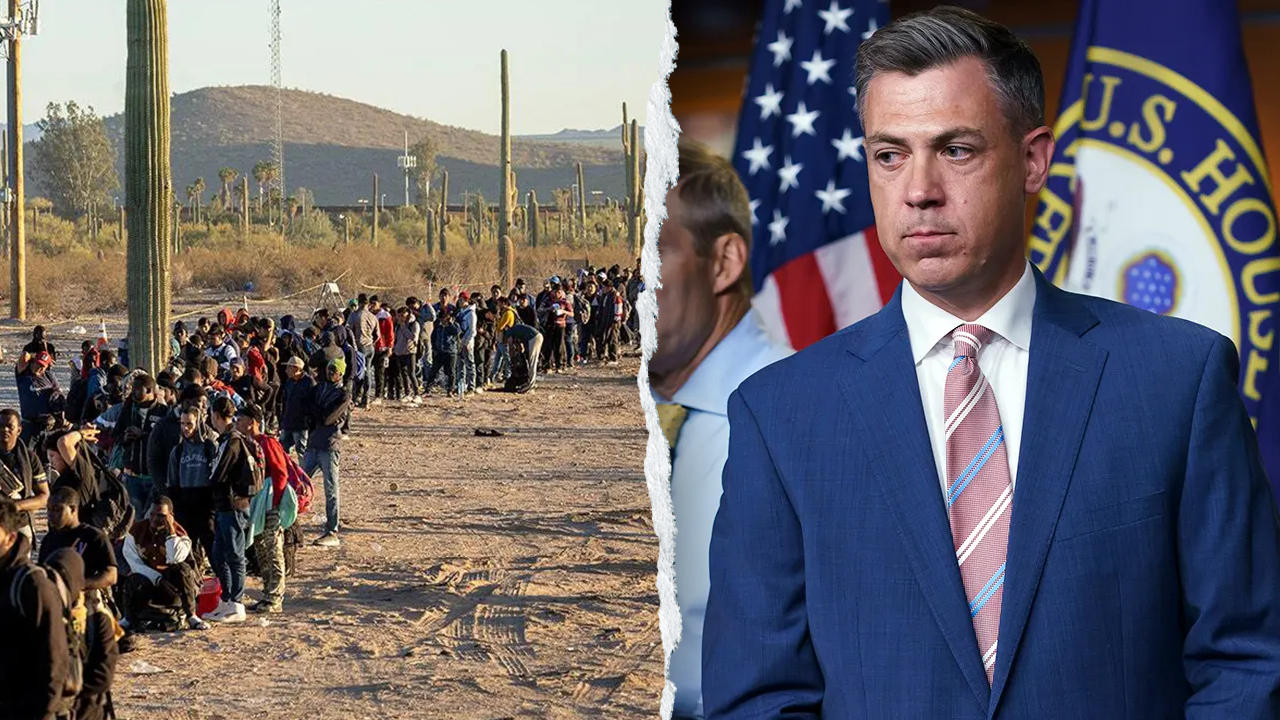
This large-scale enforcement action has directly galvanized Senator Jim Banks’ legislative drive to codify former President Donald Trump’s stringent immigration strategies into permanent federal law. Banks explicitly characterized the operation as a concrete manifestation of Trump’s projected 2024 electoral mandate for ‘mass deportation,’ thus strategically aligning the enforcement action with fulfilled campaign pledges and perceived voter expectations.
Banks’ advocacy underscores a fundamental tension in federal governance: the inherent impermanence of executive directives. While aggressive enforcement yields immediate operational impact, such policies are intrinsically vulnerable to reversal by successive administrations, fostering systemic policy instability and jeopardizing long-term strategic objectives for immigration management.
The legislative push to codify these measures is a deliberate strategic effort to insulate specific enforcement paradigms from future political realignments. This approach seeks to embed enduring statutory frameworks that transcend electoral cycles, thereby ensuring a consistent and permanent operational mandate for federal immigration agencies, independent of shifts in executive leadership.
Such ambitious legislative initiatives invariably generate significant institutional friction, precisely because they aim to constrain the broad discretionary authority traditionally vested in the executive branch regarding immigration policy implementation. This dynamic directly reshapes inter-branch relations and profoundly influences the balance of power concerning national enforcement priorities, establishing a complex legislative battleground.
Inter-agency Collaboration: Operational Synergy and Political Tensions
ICE’s official communication explicitly lauded robust cooperation with state and local law enforcement agencies as a pivotal factor in the successful execution of “Operation Safe Community: Indiana.” This pronounced inter-agency collaboration remains a foundational theme in federal enforcement strategies, consistently advanced by proponents as indispensable for maximizing operational reach and effectiveness across disparate jurisdictions.
However, this reliance on local partnerships concurrently introduces complex jurisdictional and political considerations. While federal agencies benefit significantly from critical local intelligence and logistical support, local law enforcement often confronts potential community backlash or internal policy divergences concerning their participation in federal immigration mandates, thus impacting community trust and resource allocation.
Republicans have consistently highlighted this federal-local cooperation as a cornerstone of effective immigration enforcement, underscoring its strategic centrality within their policy framework. This sustained emphasis reflects a broader political strategy designed to leverage all available governmental layers—federal, state, and local—to achieve comprehensive enforcement objectives, seamlessly integrating federal mandates with local operational capabilities.
The operational scale of the Indiana arrests, occurring amid a nationwide surge in ICE activity, strongly suggests a highly coordinated and amply resourced enforcement posture. This broader context positions the Indiana operation not as an isolated incident, but as an integral component of a larger, sustained strategic effort to escalate enforcement actions across the country, indicative of a consistent, high-priority policy direction.
Delayed Disclosure, Public Mobilization, and the Imperative of Legal Aid
A notable aspect of the operation’s public communication strategy was ICE’s delayed announcement, which transpired on September 16, nearly two weeks after the enforcement actions concluded on September 3. This significant lag in public disclosure carries strategic implications for managing public perception, safeguarding operational security, and proactively controlling the initial narrative surrounding such sensitive and often contentious operations.
While delayed announcements may serve legitimate purposes, such as preventing interference with ongoing operations or allowing for comprehensive information consolidation before release, they concurrently raise critical questions regarding transparency and accountability. Such practices significantly influence media framing and erode public trust, particularly within communities directly impacted by enforcement actions, thereby shaping the broader discourse on immigration policy.
In the immediate aftermath of the operation, nonprofit leaders and immigration law experts swiftly mobilized, providing critical guidance and support for individuals with detained family members. This prompt and organized stakeholder response underscores the predictable and profound societal impact of large-scale enforcement actions, highlighting the established infrastructure of legal and advocacy support that invariably emerges in their wake.
The consistently delivered advice profoundly underscored the urgent necessity for legal representation, emphasizing the inherent complexity and formidable difficulty of navigating the U.S. immigration court system. Experts, such as Stuart Mora, executive director of the Indiana Organizing Project, unequivocally stressed that securing an attorney is paramount, revealing the substantial legal disadvantage confronting unrepresented individuals within this specialized judicial domain.
The existence and accessibility of resources like the American Immigration Lawyers Association (AILA) and National Immigration Legal Services directories, which frequently offer free or low-cost services, point to a crucial support ecosystem. This network proves indispensable for mitigating the severe human and administrative costs associated with such extensive enforcement operations, thereby striving to ensure due process can be pursued effectively within a highly specialized and often adversarial legal domain.
Institutional Implications: Legal Frameworks, Discretion, and Systemic Strain
The pronounced necessity of legal counsel for individuals facing detention or deportation critically illuminates the intricate institutional frameworks that govern immigration proceedings. Immigration courts operate under a distinct set of rules and procedural norms, differing significantly from criminal courts, thus often demanding specialized legal expertise for effective case presentation and the navigation of complex administrative appeals.
The inherent complexity of these legal pathways dictates that the ultimate outcome of a detention or deportation case can be profoundly influenced by access to competent legal advice and representation. This reality generates a significant disparity in outcomes, as individuals with robust legal support are demonstrably better positioned to comprehend their available options and vigorously pursue avenues for relief, including asylum claims or cancellation of removal.
From an institutional perspective, the predictable surge in demand for legal services following such large-scale operations places considerable strain on existing legal aid organizations and pro bono networks. This heightened demand critically exposes the systemic need for robust legal infrastructure, essential to support individuals ensnared within the enforcement system and ensure that fundamental legal rights are upheld, even amidst aggressive operations.
The strategic rationale behind targeting individuals with documented records of specific criminal offenses carries significant institutional implications for the prosecution and adjudication of their cases. While these criminal histories are centrally cited by enforcement agencies to justify actions, the legal process within immigration courts nonetheless mandates due process, affording individuals the opportunity to challenge allegations or present mitigating circumstances.
Furthermore, the ambitious political push to codify executive immigration actions into law would fundamentally and irrevocably alter the administrative discretion afforded to future administrations. By deliberately transforming policy from executive directive to statutory mandate, Congress would establish a far more rigid and enduring legal framework, thereby significantly curtailing the capacity of future presidents to recalibrate immigration enforcement priorities through executive orders or departmental policy shifts.
Long-Term Policy Trajectories: Political Economy and Systemic Transformation
Senator Banks’ assertion that the Indiana operation directly reflects a prospective 2024 electoral mandate for ‘mass deportation’ strategically situates immigration enforcement within a broader political economy of governance. This framing posits that enforcement actions transcend mere administrative functions, becoming deeply intertwined with electoral promises and public expectations, thereby influencing voter behavior and shaping political accountability.
The sustained emphasis on federal-state-local cooperation further implies a strategic, long-term investment in a multi-layered enforcement apparatus. Should this model become permanently enshrined through legislation, it would effectively institutionalize a distributed network of enforcement responsibilities, thereby fundamentally altering resource flows and operational protocols across various governmental levels for generations.
Drawing from historical context, the Trump administration’s previous immigration push, which fueled ICE’s largest arrest month in agency history, provides a critical benchmark for evaluating the current operational scale. This trajectory indicates a consistent and escalating commitment to a specific model of immigration control that prioritizes maximizing apprehensions and removals, reflecting a sustained strategic imperative.
Should these legislative efforts ultimately succeed in codifying the proposed enforcement measures, it would herald a significant structural and enduring shift in U.S. immigration policy. Such a transformation would pivot policy away from its historical reliance on executive discretion, which inherently fluctuates with political cycles, towards a far more entrenched statutory framework, thus fundamentally altering the long-term trajectory of immigration governance and its core enforcement priorities.
The broader implications of such operations extend far beyond immediate arrests, encompassing profound effects on labor markets, community demographics, and the social fabric of affected regions. Although the provided source does not detail these specific societal impacts, the sheer scale of arrests and the resultant critical demand for legal aid inherently signal significant downstream effects on families, local economies, and the wider social infrastructure, underscoring the imperative for a comprehensive understanding of policy consequences.
Ultimately, the Indiana operation and the subsequent legislative push collectively underscore a pivotal and multifaceted moment in the protracted debate over U.S. immigration policy. This convergence vividly highlights the strategic interplay between executive action, legislative intent, inter-agency cooperation, and the profound societal and legal ramifications that invariably accompany large-scale enforcement initiatives, collectively shaping the evolving future landscape of immigration governance.