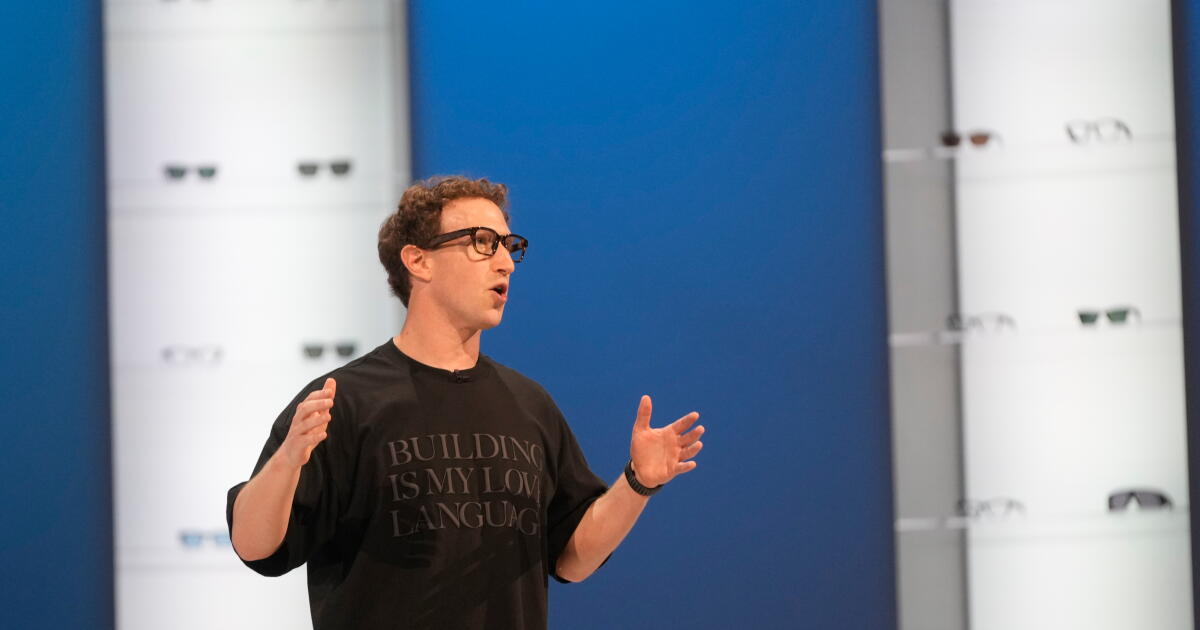
Meta has dramatically expanded its consumer hardware and artificial intelligence portfolio, unveiling a comprehensive strategy centered on its new AI agent, Muse, and a diversified lineup of wearable devices. Presented by Chief Executive Mark Zuckerberg, this product rollout from Menlo Park, California, includes the advanced $1,299 Quest VR headset, a pioneering $349 pair of audio-only smart glasses, and a forthcoming keychain device slated for a December release. This aggressive commercial push underscores Meta’s determination to lead the nascent fields of ambient computing and personal AI, even as it navigates intense resistance from policymakers and technology specialists concerning the speed and scope of AI deployment.
Strategic Hardware Bifurcation and Privacy Engineering
The product architecture reveals a calculated segmentation, strategically addressing diverse market needs and regulatory sensitivities. The high-fidelity $1,299 virtual reality headset is explicitly positioned for immersive spatial computing, targeting advanced media consumption, gaming, and interactive web navigation within a compact physical profile. In stark contrast, the $349 smart glasses intentionally omit optical cameras, relying exclusively on acoustic inputs and audio output for user interaction.
This deliberate design choice of a camera-free smart glasses model directly confronts escalating friction surrounding public surveillance and passive data collection. Wearable hardware incorporating image sensors has consistently generated significant regulatory and consumer apprehension, often viewed as an infringement on personal privacy. By offering an audio-only variant, Meta attempts to circumvent these sensor-related privacy barriers, establishing a less intrusive, yet persistently interactive, hardware link to its extensive user base. This bifurcation exemplifies how consumer electronics firms are adapting device form factors not merely for functionality, but as a proactive measure to mitigate public scrutiny and accelerate market adoption in privacy-sensitive sectors.
Muse AI: The Core of Meta’s Ambient Computing Ecosystem
At the technological core of Meta’s expanding hardware ecosystem is Muse, an advanced artificial intelligence agent designed for seamless vocal interaction and proactive task execution. Structured to handle complex functional demands, Muse can orchestrate commercial flight bookings, manage calendar appointments, and coordinate routine user actions. Mark Zuckerberg articulated a bold vision, forecasting Muse’s evolution into a “personal superintelligence” capable of supporting billions of individuals across a multitude of consumer interfaces.
The deployment of such an agentic interface signifies a pivotal shift from reactive search queries to anticipatory administrative delegation. By deeply embedding Muse within wearable accessories and companion devices, Meta aims to integrate its computational architecture directly into real-time decision-making and daily consumer logistics. This strategic integration seeks to capture high-intent transaction workflows, thereby reinforcing and extending the formidable software ecosystem sustained by Meta’s foundational properties, Facebook and Instagram.
Further expanding this ambient computing footprint, Meta is developing an independent, compact gadget designed for keychains. While specific functionalities remain under wraps, its December commercial distribution target signals an effort to establish persistent, low-friction access points that complement, rather than depend entirely on, conventional smartphone screens. This multi-device strategy aims for pervasive interaction, ensuring Muse is always within reach, solidifying Meta’s presence throughout the user’s daily life.
Aggressive Commercialization Amidst Governance Imperatives
The simultaneous launch of these devices and advanced AI capabilities occurs against a backdrop of intensifying tension between commercial platform operators and external oversight bodies. Politicians, AI ethicists, and technology professionals have publicly and repeatedly urged leading corporations to decelerate the development and widespread distribution of advanced AI models. Critics frequently cite compounding risks related to privacy erosion, pervasive data capture, algorithmic bias, and broader economic destabilization.
Despite these appeals for caution and systemic evaluation, Meta’s strategy unequivocally demonstrates a commitment to aggressive capital deployment and rapid hardware iteration. The swift sequencing of product announcements signals an institutional priority to establish dominant hardware market share and interface control before nascent regulatory frameworks can fully solidify. For platform conglomerates, securing the “interface layer” is paramount for insulating consumer distribution channels and preventing reliance on competing operating systems.
This inherent friction between corporate velocity and civic apprehension underscores the profound governance challenges posed by autonomous systems. While political representatives advocate for comprehensive systemic evaluation and safety protocols, commercial market imperatives often incentivize front-runner deployment. The embedding of proprietary autonomous agents like Muse directly into daily civilian activity via personal devices further complicates regulatory oversight by distributing complex processing models beyond centralized scrutiny.
Navigating Existential Discourse and Industry Schisms
Alongside the commercial announcements, Zuckerberg explicitly acknowledged profound disagreements within the technology sector regarding the severe structural dangers and hypothetical existential outcomes associated with advanced artificial intelligence. The debate over whether sophisticated computational systems could pose lethal or catastrophic risks to human civilization has deeply divided researchers, executives, and legislative bodies. Views within the sector span from outright dismissals of existential catastrophe to urgent warnings that autonomous systems currently lack sufficient safety boundaries and ethical alignment mechanisms.
Acknowledging these wide-ranging perspectives underscores the delicate reputational balancing act required of leading technology executives. Companies must simultaneously champion the transformative potential of “personal superintelligence” while responsibly addressing legitimate concerns from both internal stakeholders and external watchdogs regarding unchecked autonomous capability. This inherent tension between rapid technical commercialization and critical existential risk discourse reflects an industry operating without shared consensus on foundational standards for systemic safety and societal impact.
Meta’s persistent product rollouts confirm that high-level safety disputes have not altered its corporate release timelines. As sophisticated smart glasses, ambient audio wearables, and companion keychain devices enter the commercial market, operational integration continues to outpace legislative, philosophical, and ethical consensus. The widespread availability of personal AI agents like Muse will inevitably test whether rapid market adoption can outpace — or will be curtailed by — the increasingly urgent regulatory and social concerns surrounding pervasive ambient artificial intelligence.