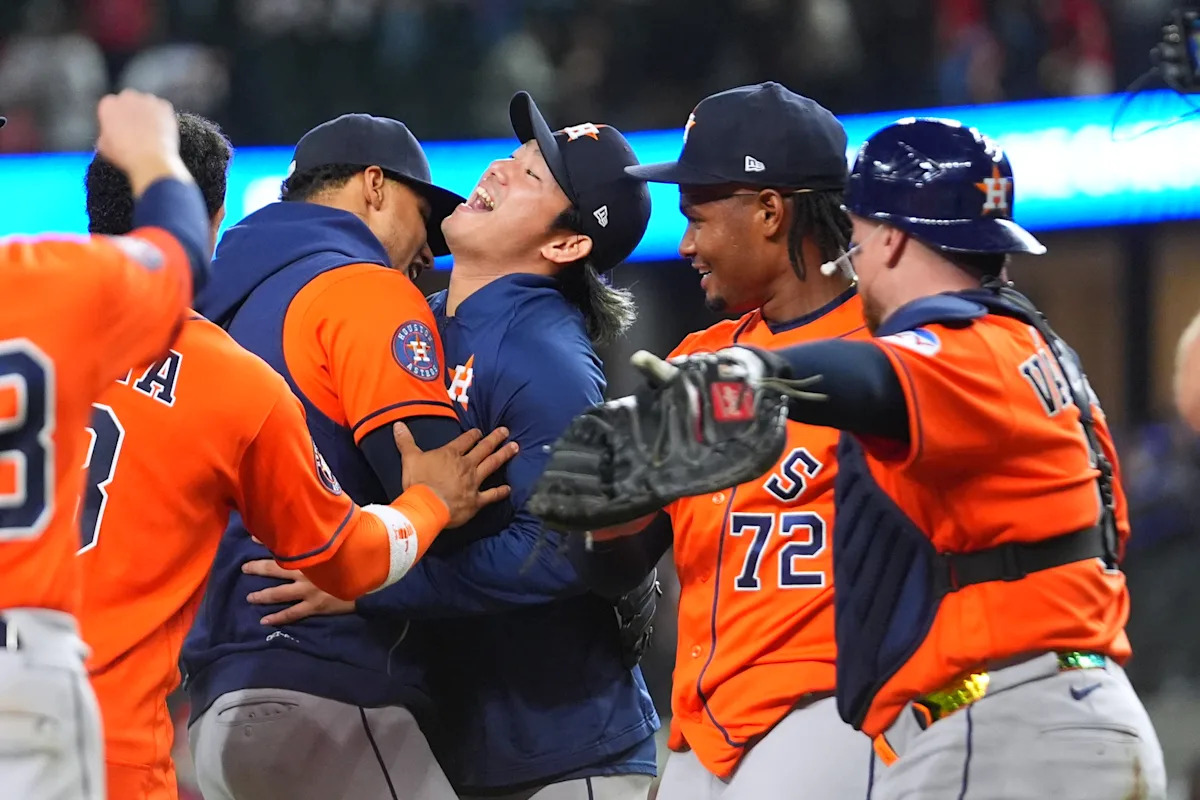
The Houston Astros’ combined no-hitter against the Texas Rangers on May 25, 2026, serves as a definitive pivot point for Major League Baseball, terminating a league-wide drought that persisted since September 2024. This achievement, orchestrated by Tatsuya Imai and preserved by the relief tandem of Steven Okert and Alimber Santa, validates a contemporary operational shift: prioritizing collective efficiency and high-leverage sequencing over the traditional endurance of a single starter.
Tactical Redemption: Imai’s Statistical Rebound
For Tatsuya Imai, the six-inning hitless performance was a necessary course correction following a volatile return from the injured list. On May 12, Imai surrendered six earned runs, elevating his ERA to 9.24 and casting doubt on his acclimation to the MLB environment. This 9-0 victory over a divisional rival demonstrates a stabilization of his underlying metrics, suggesting that his previous struggles were an outlier in his transition from the Japanese NPB to the North American circuit.
By limiting the Rangers to zero hits, Imai showcased a refined command of his secondary offerings, particularly the high-spin variations that define the Astros’ pitching laboratory. This recovery is vital for Houston’s front office, which has positioned Imai as a cornerstone of their rotation. The decision to trust his stuff in a high-stakes divisional matchup reflects a data-driven confidence in his ability to disrupt modern offensive launch angles.
The Logistics of Relief Sequencing
The transition to Steven Okert and Alimber Santa highlights the risk-mitigation strategies inherent in modern clubhouse management. Rather than chasing an individual milestone for Imai—who was recently activated from the IL—the Astros prioritized arm health and win probability. This committee-based approach to the no-hitter mirrors the 2024 Chicago Cubs’ blueprint, suggesting that the era of the high-pitch-count workhorse is being superseded by specialized relief deployment.
Veteran catcher Christian Vázquez acted as the tactical anchor, navigating three distinct pitching profiles without a loss in continuity. Maintaining hitless momentum while rotating through diverse velocities and movement patterns requires elite game-calling. Vázquez’s ability to synchronize these arms against the Rangers’ lineup underscores the intrinsic value of defensive leadership in achieving historical outliers.
Technical Precision: Analyzing the Final Out
The game’s conclusion was a microcosm of Houston’s analytical dominance. The final out was secured via a sweeper clocked at 83.8 mph with a spin rate of 2739 rpm. This high-RPM offering produced a hit distance of zero feet, illustrating the effectiveness of horizontal movement in neutralizing exit velocity. This specific pitch type is a staple of Houston’s developmental system, designed to exploit the aggressive plate coverage of modern hitters.
This technical execution highlights a league-wide trend where pitching dominance is measured by deception and movement rather than raw velocity alone. For the Rangers, the 9-0 loss exposes systemic flaws in their scouting and offensive coordination, particularly an inability to adjust to high-spin, high-movement profiles over nine innings.
Market Context and Cultural Integration
The first no-hitter in nearly two seasons revitalizes MLB’s commercial narrative, positioning the Astros as defensive frontrunners for the 2026 postseason. Culturally, Imai’s post-game inquiry regarding field-celebration etiquette highlights the nuances of international player integration. His focus on procedural execution over individual glory reflects a professional detachment typical of elite international competitors, further solidifying his standing within the Houston clubhouse.