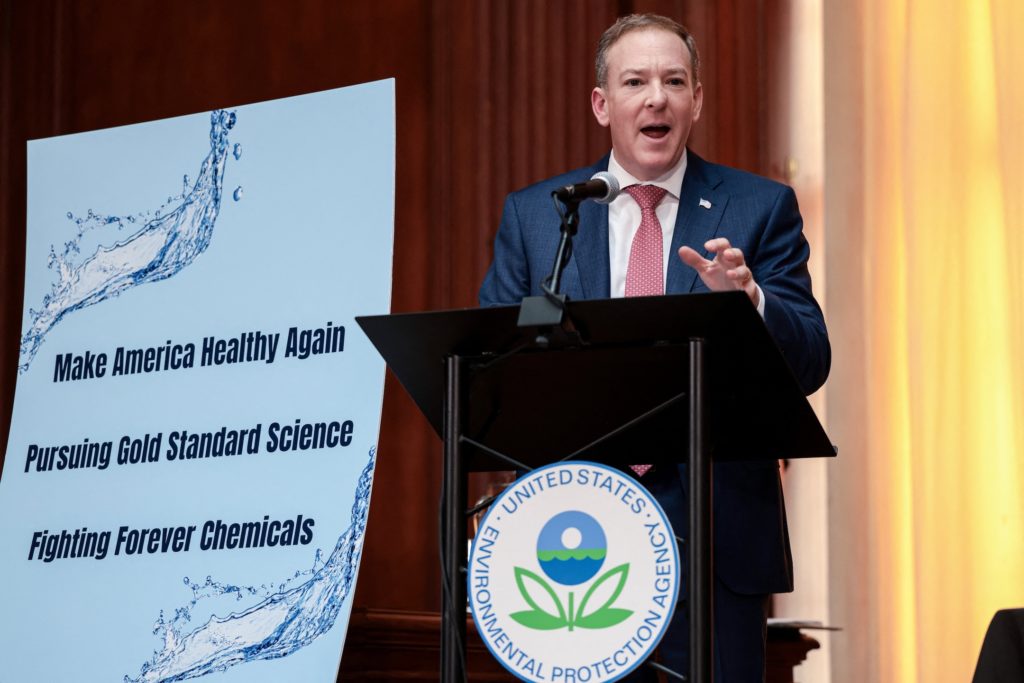
The Strategic Pivot in PFAS Regulation
The Trump administration has launched a formal initiative to rescind established national drinking water standards for per- and polyfluoroalkyl substances (PFAS). This policy reversal targets the Biden-era mandates, which represented the first federal effort to impose legally binding concentration limits on these pervasive ‘forever chemicals.’
By prioritizing the removal of these constraints, the administration aligns with industry arguments that federal mandates impose prohibitive compliance costs and create excessive legal exposure for municipal water systems and manufacturers.
The Destruction Technology Paradigm
Replacing mandatory concentration caps, the EPA is pivoting toward an strategy centered on large-scale chemical destruction. Officials characterize this transition as an investment in technological innovation, emphasizing emerging, though largely untested, neutralization capabilities.
This framework mirrors carbon-capture models, shifting the focus from upstream source reduction to downstream technological mitigation. By emphasizing future destruction potential, the policy decouples regulatory compliance from the immediate physical presence of contaminants in the water supply.
Economic and Operational Uncertainty
The reliance on unproven destruction technology introduces significant implementation risks. Current scientific consensus confirms laboratory-scale success, but the transition to industrial-grade, fully neutralized PFAS degradation remains speculative.
For water utilities, this shift creates a volatile planning landscape. While the repeal of mandates may lower immediate capital requirements, it leaves providers vulnerable to evolving liability frameworks and future litigation as public health scrutiny remains high.
Market Dynamics and Risk Distribution
The rollback offers a strategic reprieve for industrial sectors previously facing stringent remediation costs. However, this reallocates systemic risk; if destruction technologies fail to reach commercial viability, public health burdens remain unmitigated, potentially escalating long-term costs for municipal infrastructure and public healthcare systems.
Institutional Consequences
This reversal underscores the instability of U.S. environmental policy, where regulatory requirements fluctuate based on executive cycles. This volatility hinders long-term infrastructure investment, as utilities face a landscape where compliance metrics are subject to sudden repeal.
Furthermore, moving toward an incentive-based model assumes that private-sector innovation will outpace environmental contamination risks—a premise currently contested by public health advocates and environmental scientists who argue that the shift lacks the precautionary safeguards necessary for water safety.
Conclusion: The Path Forward
The administration’s trajectory prioritizes market-led solutions over prescriptive federal regulation. Whether this approach successfully mitigates the health risks of ‘forever chemicals’ depends entirely on the rapid, yet currently unvalidated, scaling of destruction technologies. Stakeholders must now navigate a period defined by regulatory ambiguity and extreme technological speculation.