Masters Betting Market Dynamics Shift as Scheffler’s Odds Lengthen Amidst Personal and Competitive Flux
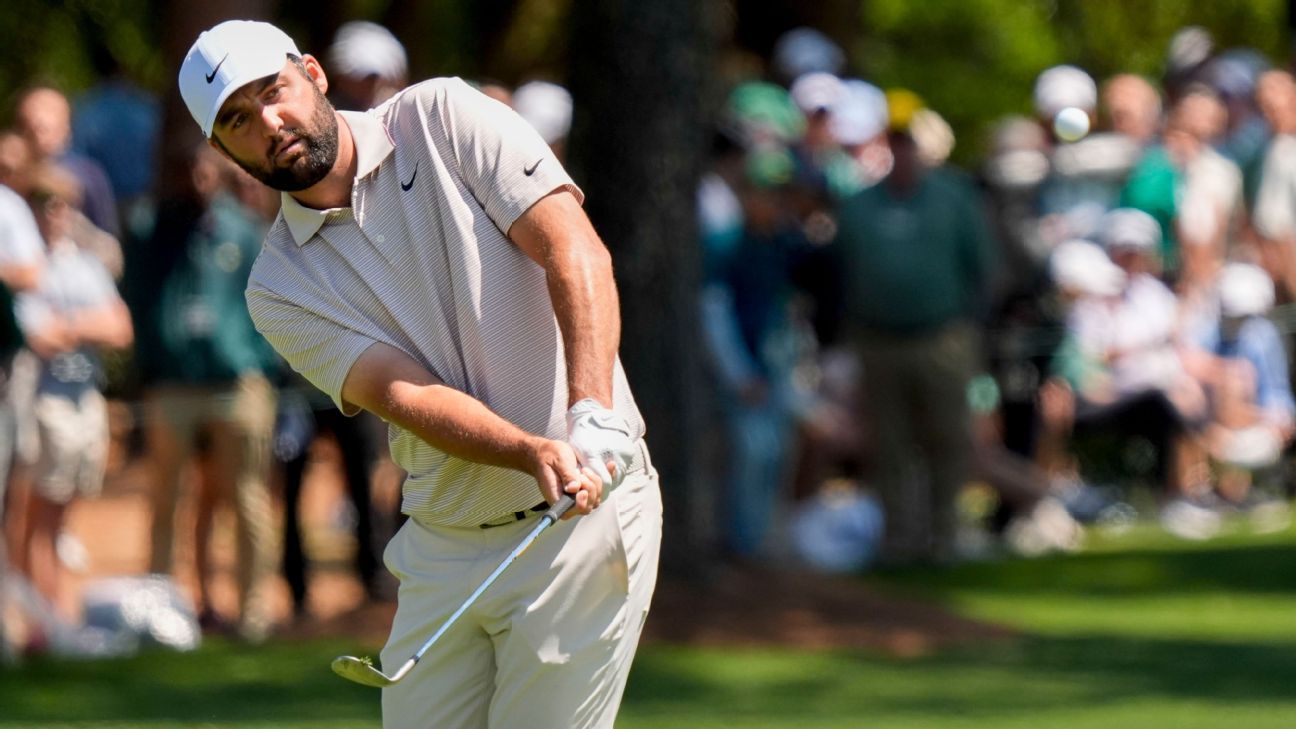
Scottie Scheffler, the pre-tournament favorite for his third Masters green jacket, is seeing his betting odds lengthen, a significant indicator of shifting market sentiment. Currently priced at +510 on DraftKings, Scheffler’s odds have moved from +485 at the week’s start and are considerably higher than his peak of +380 earlier in the year-long betting cycle. This recalibration extends beyond his on-course performance, reflecting a complex interplay of factors influencing market expectations.
The current +510 price point, with some bookmakers reaching +600, marks Scheffler’s longest pre-tournament odds since 2023, when he was +700. This historical comparison underscores the market’s responsiveness to evolving player circumstances, even for a dominant figure like Scheffler, whose wife recently gave birth to their second child, Remy.
Conversely, Bryson DeChambeau has become a significant public betting favorite, representing BetMGM’s largest liability. His odds have slightly improved to +1050 from +1075 at DraftKings, signaling sustained betting momentum. This growing interest positions him as a key contender in the evolving market.
Jon Rahm, a LIV Golf counterpart, has also seen a marginal shortening of his odds to +900 from +910. Despite this adjustment, bookmakers note DeChambeau garners substantially more betting volume, indicating a divergence in public betting conviction.
Variations in odds are evident across sportsbooks, with Caesars listing DeChambeau and Rahm at +800 and +850 respectively, highlighting distinct market positions and perceived probabilities.
Emerging contenders like Ludvig Åberg (+1650), Cameron Young (22-1), and Akshay Bhatia are also attracting attention. Bhatia, in particular, has seen a dramatic shift from 57-1 to 51-1, signaling increased speculative and potentially informed betting activity.
Five-time major champion Brooks Koepka (37-1) and the 2018 Masters champion remain under observation due to their historical performance at Augusta National, though their specific odds are not detailed here.
Scheffler Family Welcomes Second Child, Introducing New Dynamics to Player Focus
The recent birth of Scottie Scheffler’s son, Remy, just weeks before the Masters, introduces a significant personal milestone that inevitably impacts his preparation and focus. Scheffler confirmed the arrival, noting, “We had another boy a couple of weeks ago, and, yeah, it’s been really nice and fun.” This personal joy is now integrated with his professional commitments at Augusta National.
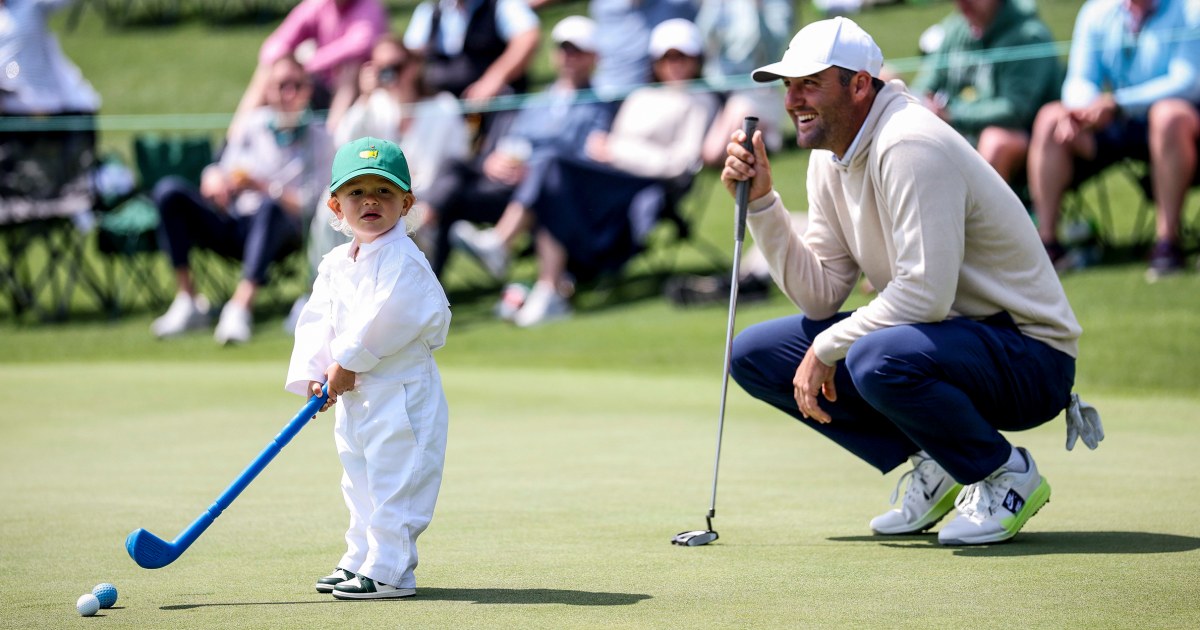
The presence of his wife, Meredith, and their two young sons, Bennett (nearly two) and newborn Remy, at Augusta underscores this integration. Observing Scheffler’s practice rounds with his family nearby, including his parents, highlights the logistical and emotional considerations of a high-profile athlete navigating major championship demands alongside new parenthood.
Scheffler’s reflections on his children’s understanding of the Masters reveal a nuanced perspective on legacy. He acknowledges that his young sons cannot yet grasp the significance of the green jacket, expressing a desire to share these experiences as they mature. This paternal outlook frames his pursuit of further success at Augusta National.
Performance Context and Evolving Market Perceptions
Scheffler’s dominant 2025 season, featuring six wins in 4.5 months, set an exceptionally high benchmark. While his 2026 season began solidly with a win at The American Express and subsequent top-five finishes, the perceived level of overwhelming dominance has not yet matched the previous year’s narrative. This subtle shift in perception, distinct from pure statistical output, influences market evaluations.
The market’s pricing of Scheffler reflects a dynamic assessment of his historical performance, current form, and the impact of external factors, including personal life events. The lengthening of his odds, while still placing him as the favorite, signifies that oddsmakers and bettors are incorporating a broader spectrum of variables.
DeChambeau’s prominence in the betting market as a liability for BetMGM suggests a significant segment of bettors perceive substantial value or a heightened chance of success. This could stem from his recent form, strategic approach, or a perceived vulnerability in the leading contender.
The upward trend for players like Åberg, Young, and Bhatia indicates a vibrant betting environment that rewards emerging talents and players on positive performance trajectories. Bhatia’s significant odds improvement, moving from 57-1 to 51-1, points to a surge in speculative interest and potentially informed betting.
The strategic implications for stakeholders are considerable. Bookmakers must manage liabilities and balance their books, while bettors seek opportunities based on perceived market mispricings. DeChambeau’s status as a major liability for BetMGM exemplifies the financial risks and rewards inherent in the sports wagering ecosystem.
For Scheffler, the challenge lies in reconciling the immediate demands of new fatherhood with the immense pressure of elite competition. His ability to compartmentalize and perform under these evolving circumstances will be critical to his success at Augusta National, a factor closely monitored by both the sporting and financial communities.
The narrative surrounding Scheffler’s odds highlights the market’s sensitivity to the human element in elite athletics. While his talent is undisputed, life events can introduce volatility and opportunity, creating a more dynamic betting landscape.
The competitive positioning of DeChambeau and Rahm, as reflected in market movements, signals their status as credible threats to Scheffler’s dominance, contributing to the overall intrigue and financial activity surrounding the Masters.
Ultimately, the shifting odds for Scheffler and his competitors serve as a real-time barometer of market sentiment. This sentiment combines statistical analysis, performance trends, and the human factors that influence outcomes in professional sports, creating a compelling narrative that resonates beyond the fairways.
The dynamic interplay between personal milestones and professional ambition significantly impacts financial markets and fan engagement. Strategic betting decisions, such as increasing exposure to DeChambeau based on market overreactions to Scheffler’s personal news, exemplify contrarian opportunities. Bookmakers, conversely, may tighten odds on heavily backed players to mitigate payouts.
This sophisticated sports betting environment merges information, sentiment, and probabilistic modeling. Scheffler’s family news, while personal, has tangible financial implications within the wagering ecosystem, demonstrating the interconnectedness of athlete narratives and market behavior.
Scheffler’s historical performance leverage at majors, particularly the Masters, remains a strong factor despite adjusted odds. His proven track record at Augusta National anchors his contender status, irrespective of short-term market fluctuations.
Capital movement in betting markets, exemplified by DeChambeau’s liability and other players’ odds shifts, shows money seeking perceived value. This allocation reflects market participants’ assessments of risk and reward for each golfer’s prospects.
The competitive landscape is now perceived as more open. The market’s recalibration suggests a tighter field than previously indicated by Scheffler’s odds, creating strategic opportunities for rivals to capitalize on any perceived dip in his absolute dominance, potentially leading to a more contested tournament.
Sportsbooks employ sophisticated risk management, utilizing analysts and algorithms to set odds and balance liabilities. Scheffler’s situation presents a complex challenge requiring careful management of exposure to his potential victory versus other outcomes.
The media’s amplification of Scheffler’s personal news and its potential impact directly influences betting decisions, showcasing the symbiotic relationship between sports journalism and the wagering market.
Scheffler’s long-term performance leverage, should he succeed amidst personal and professional demands, would further solidify his legacy and influence future market perceptions of his resilience. Conversely, any performance dip could be attributed to these external factors, shaping future betting lines.
Strategic decisions by players like DeChambeau and Rahm are influenced by the perceived competitive environment. Awareness of potential distractions for Scheffler may encourage more aggressive strategies from rivals aiming to seize the moment.
The capital invested in betting on DeChambeau and others signifies a strong belief from bettors in their ability to outperform market expectations, serving as a powerful indicator of market sentiment and potential future performance trends.
The institutional framework of professional golf, with its majors and media coverage, provides the stage for these dynamics. The Masters, with its prestige and historical significance, amplifies the stakes for all involved.
A golfer’s performance leverage at the Masters is multifaceted, encompassing skill, course management, mental resilience, and pressure handling. The current narrative suggests Scheffler’s ability to manage new fatherhood’s pressures will be as critical as his putting.
Capital movement in the betting ecosystem creates a feedback loop where odds adjustments influence further decisions. This dynamic market demonstrates how information, however personal, can have significant financial repercussions.
The competitive implication is that the door may be slightly ajar for rivals to challenge Scheffler’s dominance, fostering a more aggressive and opportunistic approach throughout the tournament.
The institutional imperative for the PGA Tour and Augusta National is to maintain event integrity and prestige. The narrative surrounding Scheffler, while adding intrigue, requires careful management to keep the focus on the competition.
A player’s performance leverage is not static; it’s influenced by personal circumstances, which are now demonstrably impacting the betting markets for the 2026 Masters.